
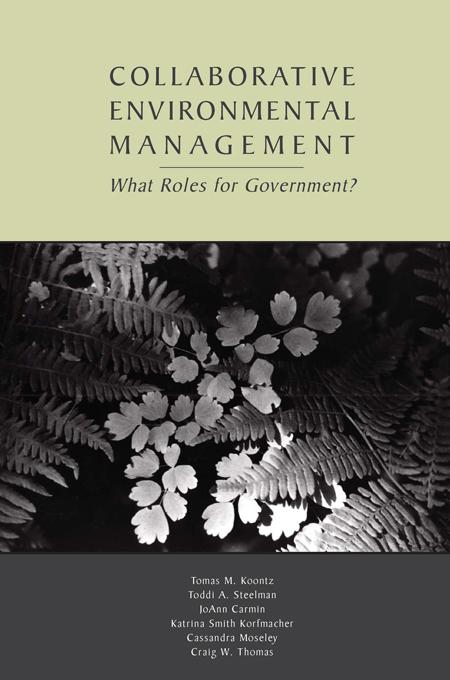
Collaboration has become a popular approach to environmental policy, planning, and management. At the urging of citizens, nongovernmental organizations, and industry, government officials at all levels have experimented with collaboration. Yet questions remain about the roles that governments play in collaboration--whether they are constructive and support collaboration, or introduce barriers. This thoughtful book analyzes a series of cases to understand how collaborative processes work and whether government can be an equal partner even as government agencies often formally control decision making and are held accountable for the outcomes. Looking at examples where government has led, encouraged, or followed in collaboration, the authors assess how governmental actors and institutions affected the way issues were defined, the resources available for collaboration, and the organizational processes and structures that were established. Cases include collaborative efforts to manage watersheds, rivers, estuaries, farmland, endangered species habitats, and forests. The authors develop a new theoretical framework and demonstrate that government left a heavy imprint in each of the efforts. The work concludes by discussing the choices and challenges faced by governmental institutions and actors as they try to realize the potential of collaborative environmental management.
Paga facilmente con carta, Klarna, Apple Pay o Google Pay. Non sei soddisfatto? Hai sempre 14 giorni per il rimborso. Leggi di più nei nostri termini. Per qualsiasi domanda, scrivici a hello@memmo.org.
Memmo rende lo studio più facile, ovunque tu sia nel mondo. Qui trovi i tuoi libri di testo e strumenti di studio intelligenti, tutto in un unico posto: riassunti, quiz, podcast e flashcard. E poi c'è Ted, il tuo compagno di studio che risponde a ogni tua domanda. Oltre 50.000 studenti studiano già qui: è stato creato per aiutarti a imparare più velocemente e a stressarti meno.
Potrebbe interessarti anche
Acquista il libro0