
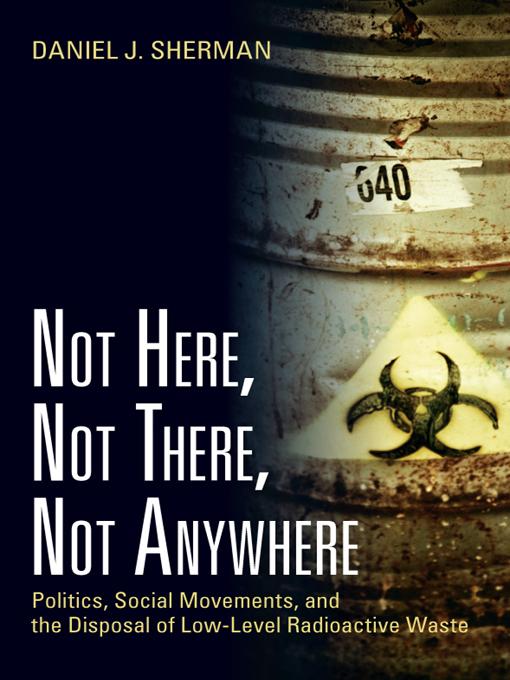
In 1979, provoked by the Three Mile Island nuclear accident, governors of states hosting disposal facilities for low-level radioactive waste (LLRW) refused to accept additional shipments. The resulting shortage of disposal sites for wastes spurred Congress to devolve responsibility for establishing new, geographically diffuse LLRW disposal sites to states and regional compacts, with siting authorities often employing socio-economic and political data to target communities that would give little resistance to their plans.
The communities, however, were far from compliant, organizing nearly 1000 opposition events that ended up blocking the implementation of any new disposal sites. Sherman provides comprehensive coverage of this opposition, testing hypotheses regarding movement mobilization and opposition strategy by analyzing the frequency and disruptive qualities of activism. In the process, he bridges applied policy questions about hazardous waste disposal with broader questions about the dynamics of social movements and the intergovernmental politics of policy implementation. The issues raised in this book are sure to be renewed as interest grows in nuclear power and the disposal of the resulting waste remains uncertain.
Paga facilmente con carta, Klarna, Apple Pay o Google Pay. Non sei soddisfatto? Hai sempre 14 giorni per il rimborso. Leggi di più nei nostri termini. Per qualsiasi domanda, scrivici a hello@memmo.org.
Memmo rende lo studio più facile, ovunque tu sia nel mondo. Qui trovi i tuoi libri di testo e strumenti di studio intelligenti, tutto in un unico posto: riassunti, quiz, podcast e flashcard. E poi c'è Ted, il tuo compagno di studio che risponde a ogni tua domanda. Oltre 50.000 studenti studiano già qui: è stato creato per aiutarti a imparare più velocemente e a stressarti meno.