
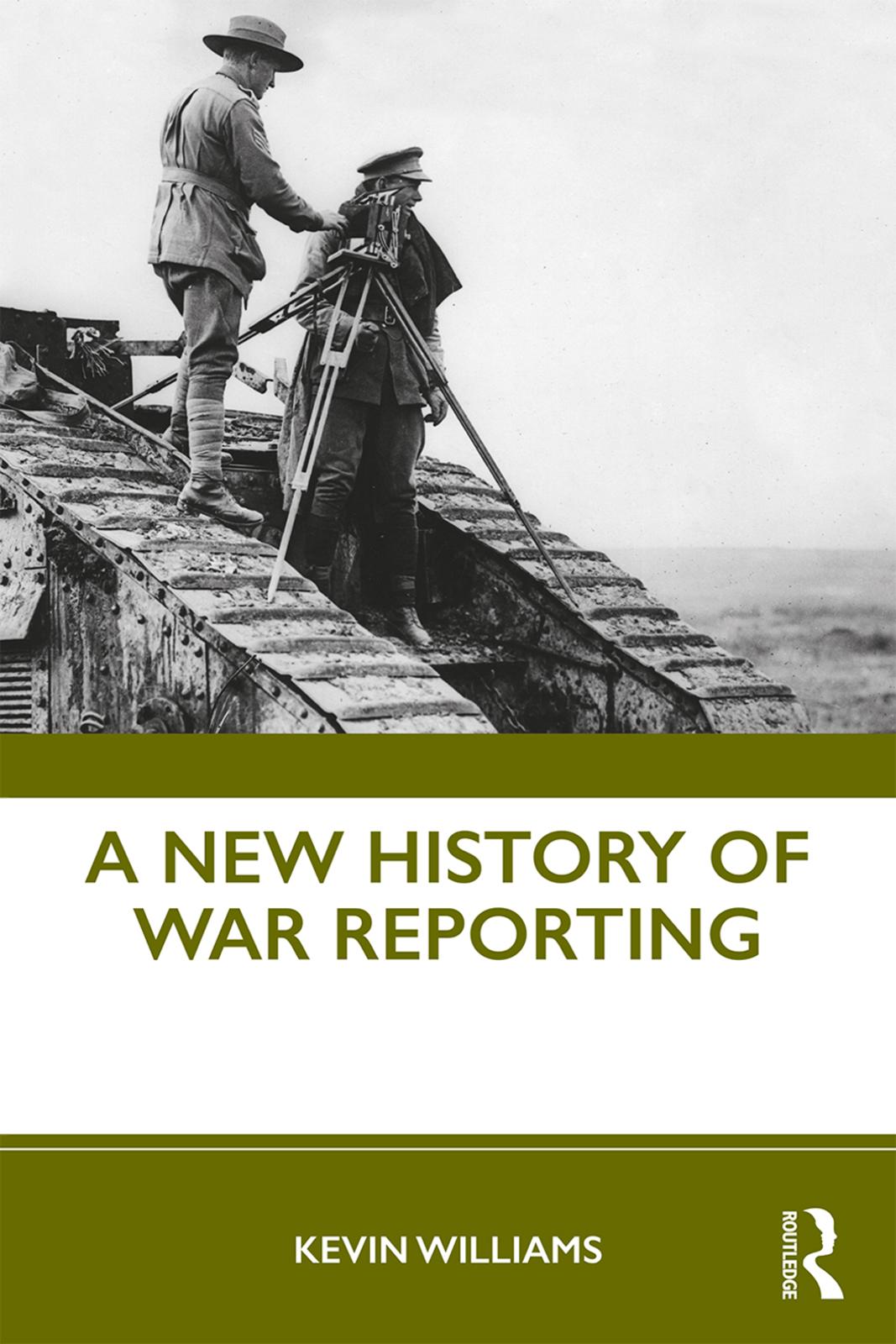
This book takes a fresh look at the history of war reporting to understand how new technology, new ways of waging war and new media conditions are changing the role and work of today’s war correspondent.
Focussing on the mechanics of war reporting and the logistical and institutional pressures on correspondents, the book further examines the role of war propaganda, accreditation and news management in shaping the evolution of the specialism. Previously neglected conflicts and correspondents are reclaimed and wars considered as key moments in the history of war reporting such as the Crimean War (1854-56) and the Great War (1914-18) are re-evaluated.
The use of objectivity as the yardstick by which to assess the performance of war correspondents is questioned. The emphasis is instead placed on war as a messy business which confronts reporters and photographers with conditions that challenge the norms of professional practice. References to the ‘demise of the war correspondent’ have accompanied the growth of the specialism since the days of William Howard Russell, the so-called father of war reporting. This highlights the fragile nature of this sub-genre of journalism and emphasises that continuity as much as change characterises the work of the war correspondent.
A thematically organised, historically rich introduction, this book is ideal for students of journalism, media and communication.
Paga facilmente con carta, Klarna, Apple Pay o Google Pay. Non sei soddisfatto? Hai sempre 14 giorni per il rimborso. Leggi di più nei nostri termini. Per qualsiasi domanda, scrivici a hello@memmo.org.
Memmo rende lo studio più facile, ovunque tu sia nel mondo. Qui trovi i tuoi libri di testo e strumenti di studio intelligenti, tutto in un unico posto: riassunti, quiz, podcast e flashcard. E poi c'è Ted, il tuo compagno di studio che risponde a ogni tua domanda. Oltre 50.000 studenti studiano già qui: è stato creato per aiutarti a imparare più velocemente e a stressarti meno.