
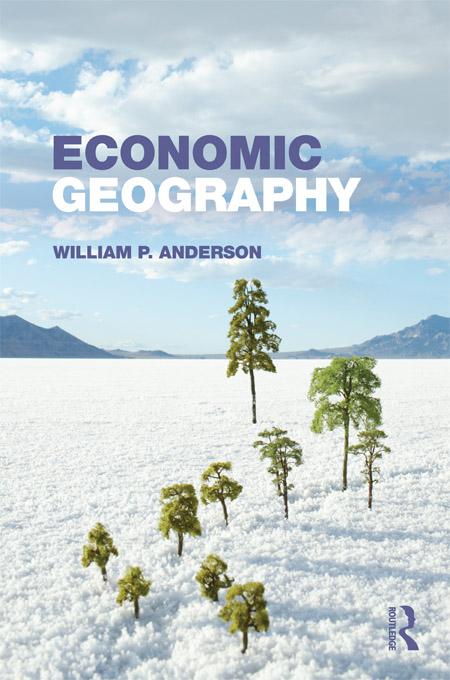
Economic geographers study and attempt to explain the spatial configuration of economic activities, including the production of goods and services, their transfer from one economic agent to another and their transformation into utility by consumers. The spatial configuration, which includes both the pattern of activities on the map and the relationships between activities occurring in different places, is the outcome of a vast number of distinct but interrelated decisions made by firms, households, governments and a variety of other private and public institutions. The goal of this book is to provide the student with a rigorous introduction to a diverse but logically consistent set of analytical models of the spatial decisions and interactions that drive the evolution of the economic landscape.
It begins by explaining fundamental concepts that are critical to all topics in economic geography: the friction of distance, agglomeration, spatial interaction, market mechanisms, natural resources and production technologies. Sections follow to cover major areas of inquiry including multiregional economies, location theory, markets for space and systems of cities. The final section synthesizes and builds on these topics to address two trends that provide particular challenges to economic geographers today: globalization and the emergence of the knowledge economy.
Paga facilmente con carta, Klarna, Apple Pay o Google Pay. Non sei soddisfatto? Hai sempre 14 giorni per il rimborso. Leggi di più nei nostri termini. Per qualsiasi domanda, scrivici a hello@memmo.org.
Memmo rende lo studio più facile, ovunque tu sia nel mondo. Qui trovi i tuoi libri di testo e strumenti di studio intelligenti, tutto in un unico posto: riassunti, quiz, podcast e flashcard. E poi c'è Ted, il tuo compagno di studio che risponde a ogni tua domanda. Oltre 50.000 studenti studiano già qui: è stato creato per aiutarti a imparare più velocemente e a stressarti meno.