
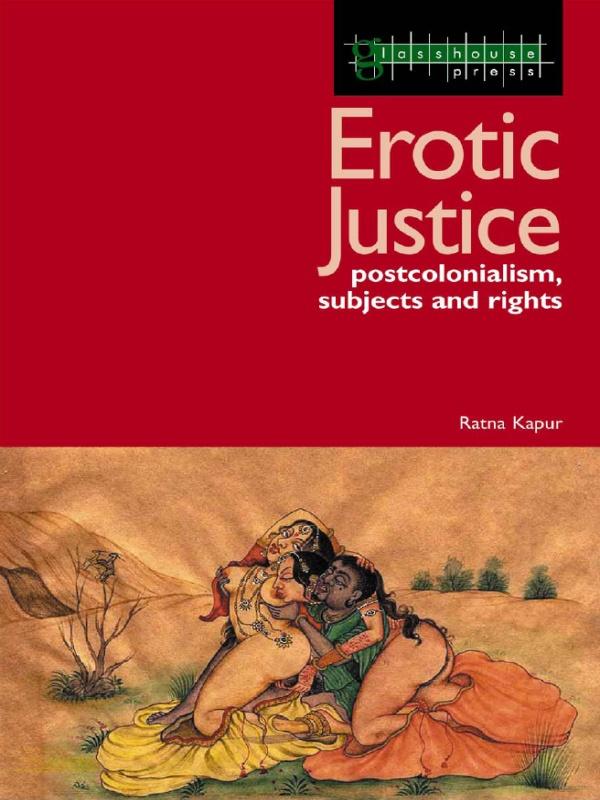
The essays in Erotic Justice address the ways in which law has been implicated in contemporary debates dealing with sexuality, culture and `different' subjects - including women, sexual minorities, Muslims and the transnational migrant. Law is analyzed as a discursive terrain, where these different subjects are excluded or included in the postcolonial present on terms that are reminiscent of the colonial encounter and its treatment of difference.
Bringing a postcolonial feminist legal analysis to her discussion, Kapur is relentless in her critiques on how colonial discourses, cultural essentialism, and victim rhetoric are reproduced in universal, liberal projects such as human rights and international law, as well as in the legal regulation of sexuality and culture in a postcolonial context. Drawing her examples from postcolonial India, Ratna Kapur demonstrates the theoretical and disruptive possibilities that the postcolonial subject brings to international law, human rights, and domestic law. In the process, challenges are offered to the political and theoretical constructions of the nation, sexuality, cultural authenticity, and women's subjectivity.
Paga facilmente con carta, Klarna, Apple Pay o Google Pay. Non sei soddisfatto? Hai sempre 14 giorni per il rimborso. Leggi di più nei nostri termini. Per qualsiasi domanda, scrivici a hello@memmo.org.
Memmo rende lo studio più facile, ovunque tu sia nel mondo. Qui trovi i tuoi libri di testo e strumenti di studio intelligenti, tutto in un unico posto: riassunti, quiz, podcast e flashcard. E poi c'è Ted, il tuo compagno di studio che risponde a ogni tua domanda. Oltre 50.000 studenti studiano già qui: è stato creato per aiutarti a imparare più velocemente e a stressarti meno.