
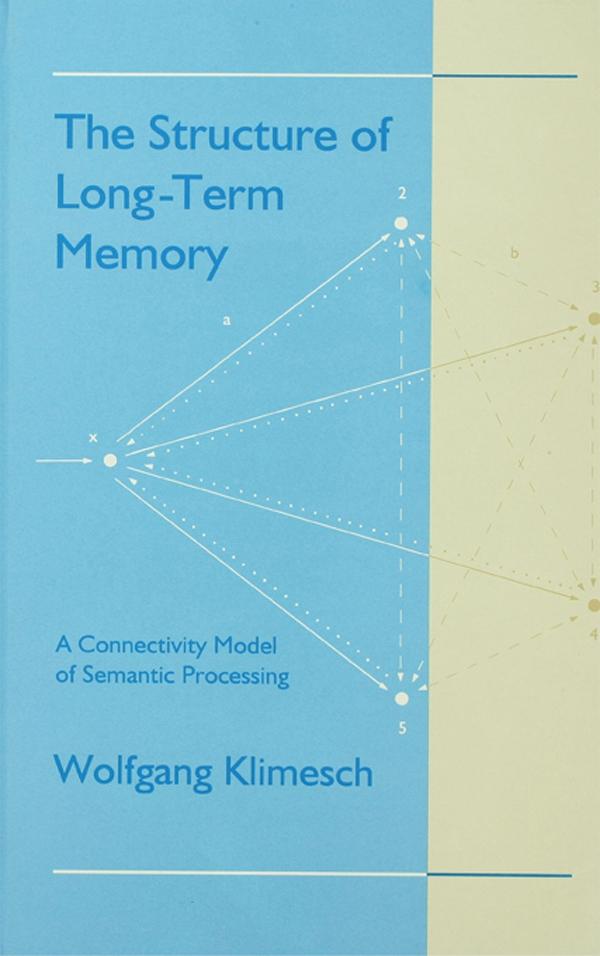
How is information stored and retrieved from long-term memory? It is argued that any systematic attempt to answer this question should be based on a particular set of specific representational assumptions that have led to the development of a new memory theory -- the connectivity model. One of the crucial predictions of this model is that, in sharp contrast to traditional theories, the speed of processing information increases as the amount and complexity of integrated knowledge increases. In this volume, the predictions of the model are examined by analyzing the results of a variety of different experiments and by studying the outcome of the simulation program CONN1, which illustrates the representation of complex semantic structures. In the final chapter, the representational assumptions of the connectivity model are evaluated on the basis of neuroanatomical and physiological evidence -- suggesting that neuroscience provides valuable knowledge which should guide the development of memory theories.
Paga facilmente con carta, Klarna, Apple Pay o Google Pay. Non sei soddisfatto? Hai sempre 14 giorni per il rimborso. Leggi di più nei nostri termini. Per qualsiasi domanda, scrivici a hello@memmo.org.
Memmo rende lo studio più facile, ovunque tu sia nel mondo. Qui trovi i tuoi libri di testo e strumenti di studio intelligenti, tutto in un unico posto: riassunti, quiz, podcast e flashcard. E poi c'è Ted, il tuo compagno di studio che risponde a ogni tua domanda. Oltre 50.000 studenti studiano già qui: è stato creato per aiutarti a imparare più velocemente e a stressarti meno.
Potrebbe interessarti anche
Acquista il libro0