
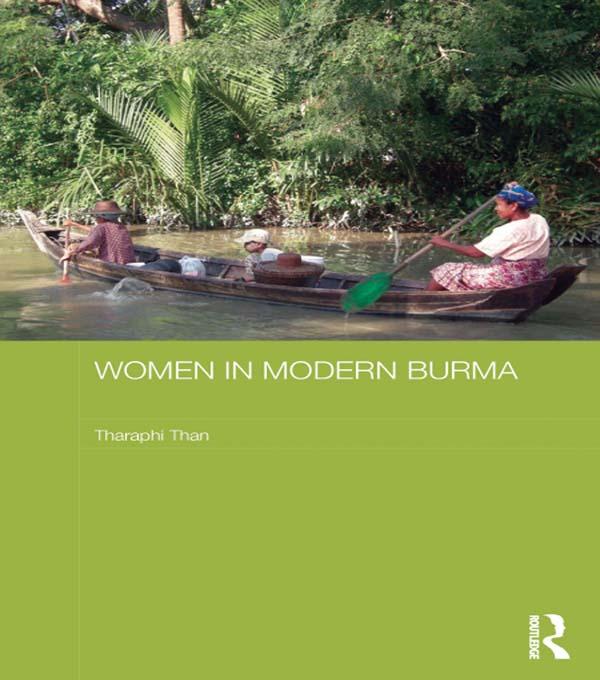
This book challenges the popular notion that Burmese women are powerful and are granted equal rights as men by society. Throughout history Burmese women have been represented as powerful and as having equal status to men by western travellers and scholars alike. National history about women also follows this conjecture. This book explains why actually very few powerful Burmese women exist, and how these few women help construct the notion of the high status of Burmese women, thereby inevitably silencing the majority of ‘unequal’ and disempowered women. One of the underlying questions throughout this book is why a few powerful women feel compelled to defend the notion that women hold privileged positions in Burmese society. Combining historical archives with statistical data published by UN agencies, this book highlights the reality of women’s status in modern Burma. Case studies include why the first Burmese women’s army was disbanded a few months after its establishment; how women writers assessed the conditions of Burmese women and represented their contemporaries in their works; the current state of prostitution; how modern-day sex-workers are trying to find their voice; and how women fared vis-à-vis men in education.
Paga facilmente con carta, Klarna, Apple Pay o Google Pay. Non sei soddisfatto? Hai sempre 14 giorni per il rimborso. Leggi di più nei nostri termini. Per qualsiasi domanda, scrivici a hello@memmo.org.
Memmo rende lo studio più facile, ovunque tu sia nel mondo. Qui trovi i tuoi libri di testo e strumenti di studio intelligenti, tutto in un unico posto: riassunti, quiz, podcast e flashcard. E poi c'è Ted, il tuo compagno di studio che risponde a ogni tua domanda. Oltre 50.000 studenti studiano già qui: è stato creato per aiutarti a imparare più velocemente e a stressarti meno.