
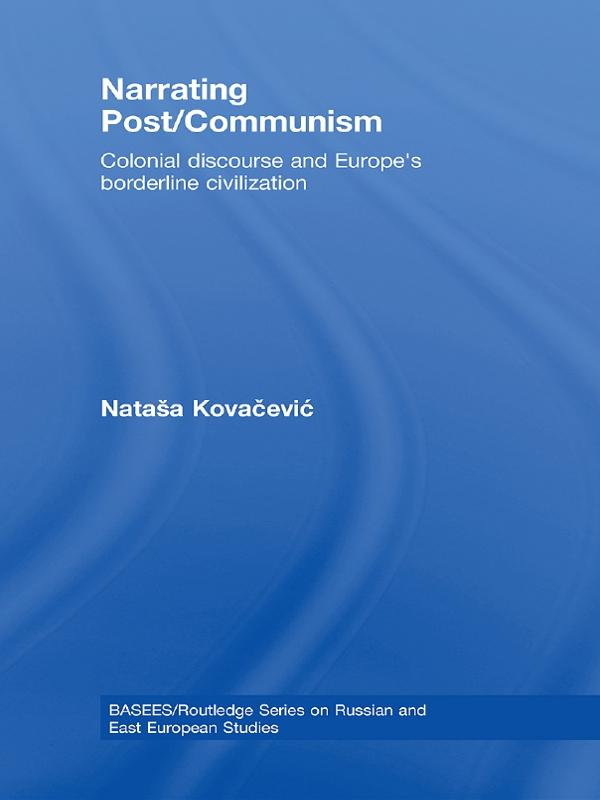
The transition of communist Eastern Europe to capitalist democracy post-1989 and in the aftermath of the Yugoslav wars has focused much scholarly attention - in history, political science and literature - on the fostering of new identities across Eastern European countries in the absence of the old communist social and ideological frameworks. This book examines an important, but hitherto largely neglected, part of this story: the ways in which the West has defined its own identity and ideals via the demonization of communist regimes and Eastern European cultures as a totalitarian, barbarian and Orientalist "other". It describes how old Orientalist prejudices resurfaced during the Cold War period, and argues that the establishment of this discourse helped to justify transitions of Eastern European societies to market capitalism and liberal democracy, suppressing Eastern Europe’s communist histories and legacies, whilst perpetuating its dependence on the West as a source of its own sense of identity. It argues that this process of Orientalization was reinforced by the literary narratives of Eastern European and Russian anti-communist dissidents and exiles, including Vladimir Nabokov, Czeslaw Milosz and Milan Kundera, in their attempts to present themselves as native, Eastern European experts and also emancipate themselves – and their homelands – as civilized, enlightened and Westernized. It goes on to suggest that the greatest potential for recognizing and overcoming this self-Orientalization lies in post-communist literary and visual narratives, with their themes of disappointment in the social, economic, or political changes brought on by the transitions, challenge of the unequal discursive power in East-West dialogues where the East is positioned as a disciple or a mimic of the West, and the various guises of nostalgia for communism.
Paga facilmente con carta, Klarna, Apple Pay o Google Pay. Non sei soddisfatto? Hai sempre 14 giorni per il rimborso. Leggi di più nei nostri termini. Per qualsiasi domanda, scrivici a hello@memmo.org.
Memmo rende lo studio più facile, ovunque tu sia nel mondo. Qui trovi i tuoi libri di testo e strumenti di studio intelligenti, tutto in un unico posto: riassunti, quiz, podcast e flashcard. E poi c'è Ted, il tuo compagno di studio che risponde a ogni tua domanda. Oltre 50.000 studenti studiano già qui: è stato creato per aiutarti a imparare più velocemente e a stressarti meno.