
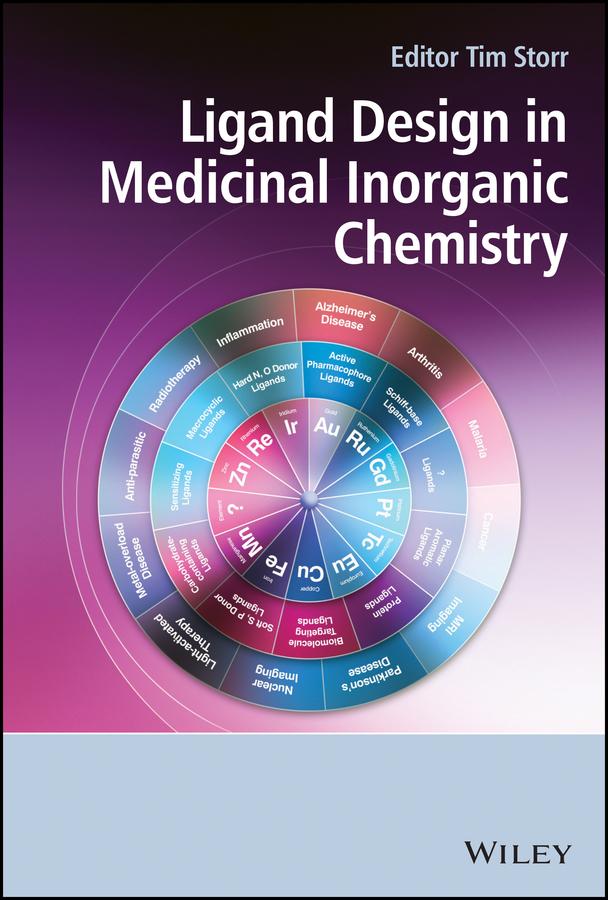
Increasing the potency of therapeutic compounds, while limiting side-effects, is a common goal in medicinal chemistry. Ligands that effectively bind metal ions and also include specific features to enhance targeting, reporting, and overall efficacy are driving innovation in areas of disease diagnosis and therapy.
Ligand Design in Medicinal Inorganic Chemistry presents the state-of-the-art in ligand design for medicinal inorganic chemistry applications. Each individual chapter describes and explores the application of compounds that either target a disease site, or are activated by a disease-specific biological process.
Ligand design is discussed in the following areas:
- Platinum, Ruthenium, and Gold-containing anticancer agents
- Emissive metal-based optical probes
- Metal-based antimalarial agents
- Metal overload disorders
- Modulation of metal-protein interactions in neurodegenerative diseases
- Photoactivatable metal complexes and their use in biology and medicine
- Radiodiagnostic agents and Magnetic Resonance Imaging (MRI) agents
- Carbohydrate-containing ligands and Schiff-base ligands in Medicinal Inorganic Chemistry
- Metalloprotein inhibitors
Ligand Design in Medicinal Inorganic Chemistry provides graduate students, industrial chemists and academic researchers with a launching pad for new research in medicinal chemistry.
Paga facilmente con carta, Klarna, Apple Pay o Google Pay. Non sei soddisfatto? Hai sempre 14 giorni per il rimborso. Leggi di più nei nostri termini. Per qualsiasi domanda, scrivici a hello@memmo.org.
Memmo rende lo studio più facile, ovunque tu sia nel mondo. Qui trovi i tuoi libri di testo e strumenti di studio intelligenti, tutto in un unico posto: riassunti, quiz, podcast e flashcard. E poi c'è Ted, il tuo compagno di studio che risponde a ogni tua domanda. Oltre 50.000 studenti studiano già qui: è stato creato per aiutarti a imparare più velocemente e a stressarti meno.