
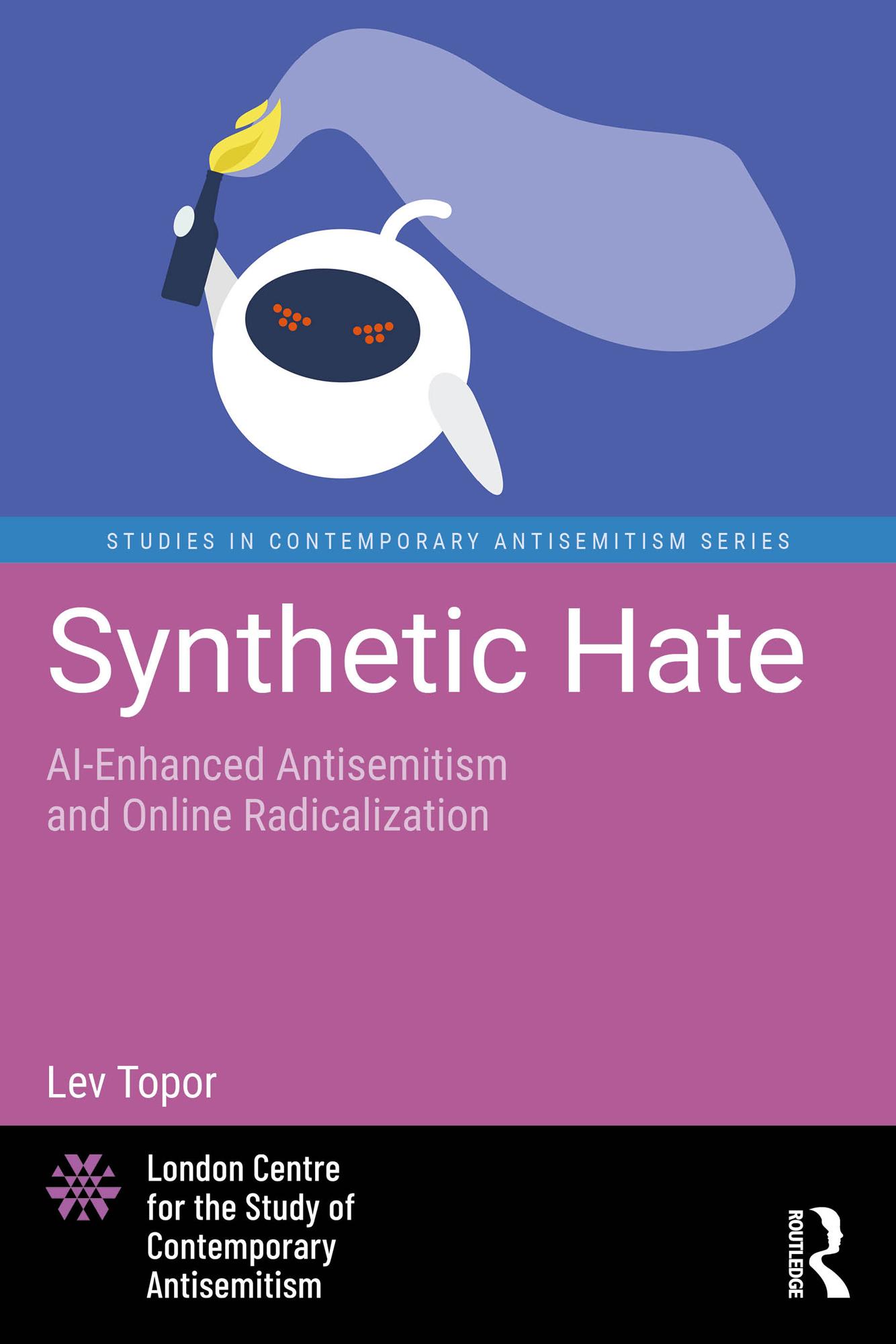
Synthetic Hate investigates how extremists exploit artificial intelligence (AI) to modernize the world’s oldest hatred. Antisemitism – rooted in religious discrimination, medieval blood libels, Nazi propaganda, and contemporary Islamist and far-right conspiracies – has found new life through generative tools that can produce persuasive text, images, audio, and video at scale.
Drawing on documented cases and controlled demonstrations, the book shows how large language models (LLMs), deepfakes, bots, and recommendation systems enable cheap, rapid, and adaptive propaganda – memes that evade moderation, fabricated “evidence,” synthetic voices, and narrative laundering that spreads across platforms and into mainstream feeds. The result is not “new” hate, but hate that is faster, more convincing, and harder to police.
Crucially, Synthetic Hate goes beyond diagnosis, and it lays out a practical counterstrategy of technical safeguards, platform accountability and regulation, and education and resilience, so policymakers, researchers, and practitioners can blunt AI-amplified antisemitism and hate without sacrificing democratic values.
Paga facilmente con carta, Klarna, Apple Pay o Google Pay. Non sei soddisfatto? Hai sempre 14 giorni per il rimborso. Leggi di più nei nostri termini. Per qualsiasi domanda, scrivici a hello@memmo.org.
Memmo rende lo studio più facile, ovunque tu sia nel mondo. Qui trovi i tuoi libri di testo e strumenti di studio intelligenti, tutto in un unico posto: riassunti, quiz, podcast e flashcard. E poi c'è Ted, il tuo compagno di studio che risponde a ogni tua domanda. Oltre 50.000 studenti studiano già qui: è stato creato per aiutarti a imparare più velocemente e a stressarti meno.