
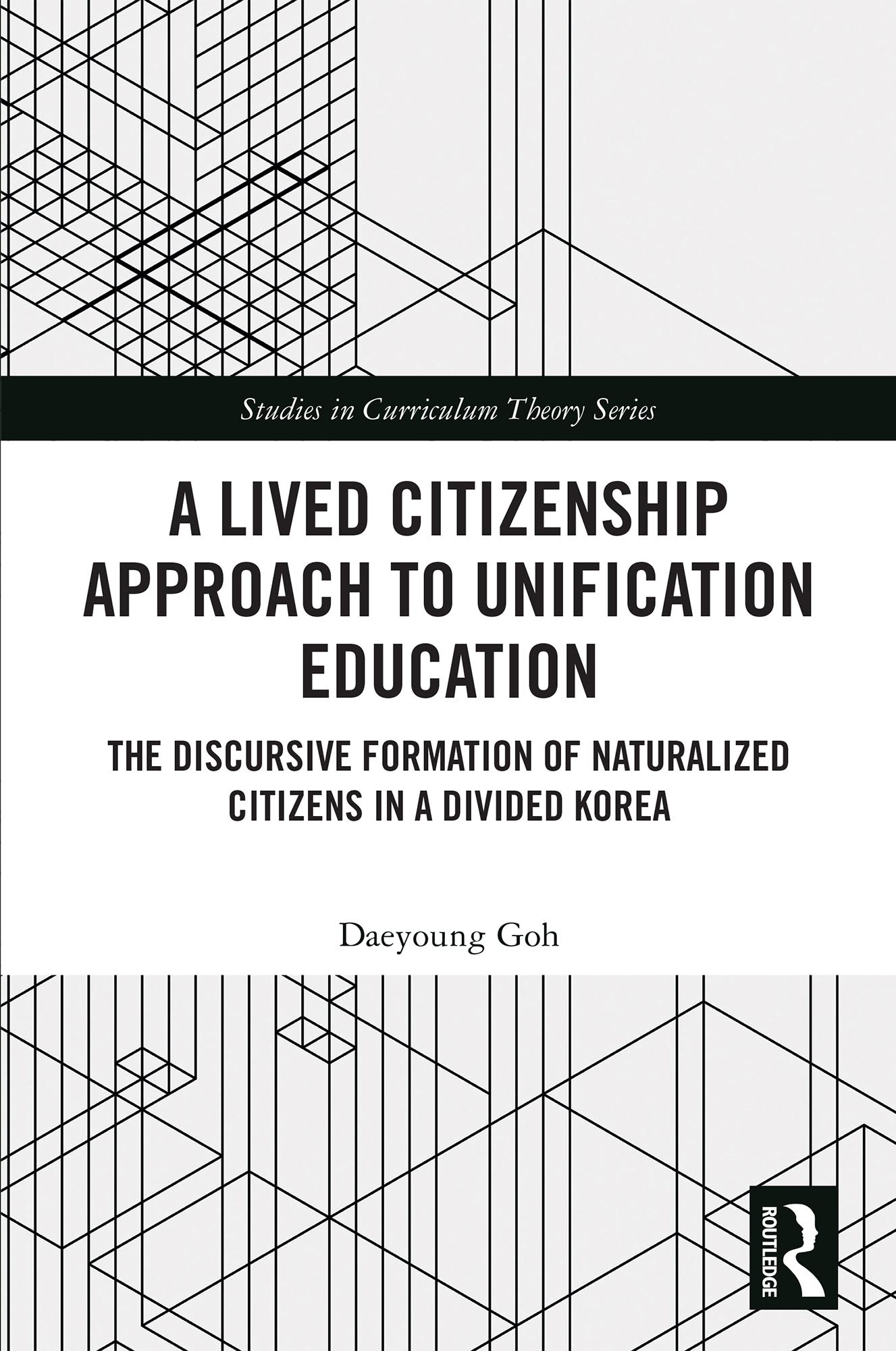
In South Korea, unification education (UE) aims to help students develop values and attitudes for Korean unification, anchored in democratic principles, national community consciousness, and national security awareness. Yet within this framework, the experiences of international immigrants remain largely absent from UE discourses.
Drawing on in-depth interviews, this book highlights the experiences and thoughts of naturalized citizens to reimagine the concept of citizenship in UE. It examines how citizenship is conceptualized in national UE policies, reference materials, and textbooks; explores how naturalized Koreans understand their own citizenship and the prospects of unification; and proposes what an alternative, more inclusive UE curriculum might look like. This book reveals naturalized citizens’ unrecognized, democratic, and in-between citizenship, through which they navigate the contested, expanding, and spatial- affective dimensions of Korean citizenship. Moving beyond critique, the book closes with a proposal for a transformative nonviolent approach to UE curriculum, grounded in principles of openness, loose solidarity, and inter-living.
Essential reading for researchers in citizenship education, Korean studies, migration studies, curriculum theory, and comparative education.
Paga facilmente con carta, Klarna, Apple Pay o Google Pay. Non sei soddisfatto? Hai sempre 14 giorni per il rimborso. Leggi di più nei nostri termini. Per qualsiasi domanda, scrivici a hello@memmo.org.
Memmo rende lo studio più facile, ovunque tu sia nel mondo. Qui trovi i tuoi libri di testo e strumenti di studio intelligenti, tutto in un unico posto: riassunti, quiz, podcast e flashcard. E poi c'è Ted, il tuo compagno di studio che risponde a ogni tua domanda. Oltre 50.000 studenti studiano già qui: è stato creato per aiutarti a imparare più velocemente e a stressarti meno.