
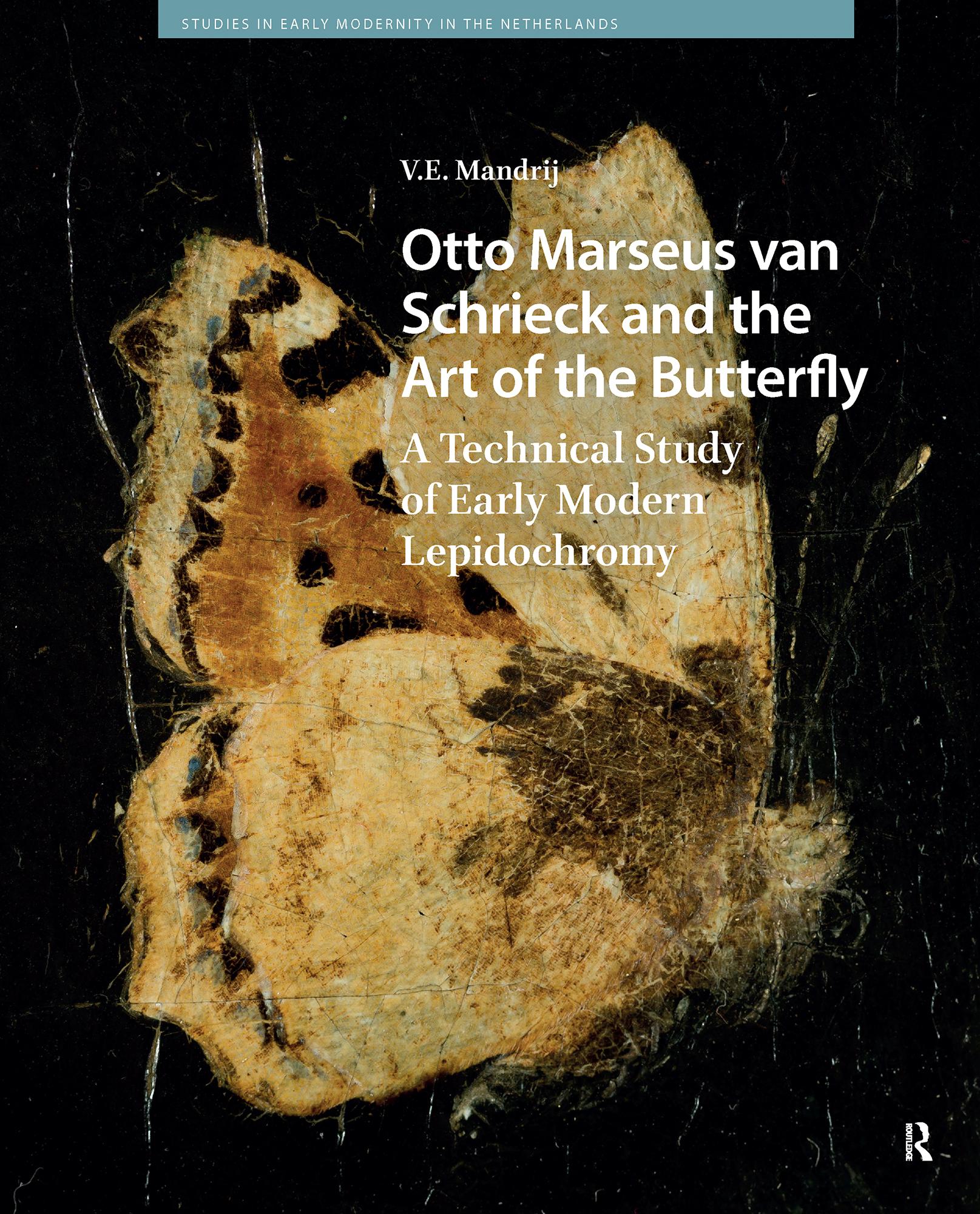
The Dutch painter and naturalist Otto Marseus van Schrieck (c. 1619/20–1678) became famous for an unusual iconography that mixed characteristics of landscape, animal painting, natural history illustration, and still life: the sottobosco paintings. These artworks, which he developed during his voyage to Italy around 1650, represent reptiles, amphibians, and insects in dark forests. To increase the realistic representations of butterflies and moths, he pressed the wings of dead specimens onto the paintings to transfer their original colours. The technique of printing butterfly wings, named lepidochromy in this book, was already being used in the sixteenth century and has been documented as a means of conserving and classifying lepidopterans from the eighteenth through twentieth century.
With a strong focus on the techniques and materials involved in making butterfly imprints, this book introduces readers for the first time to the development, uses, and meanings of lepidochromy in the oeuvre of Otto Marseus van Schrieck at the crossroads of art and natural history.
Paga facilmente con carta, Klarna, Apple Pay o Google Pay. Non sei soddisfatto? Hai sempre 14 giorni per il rimborso. Leggi di più nei nostri termini. Per qualsiasi domanda, scrivici a hello@memmo.org.
Memmo rende lo studio più facile, ovunque tu sia nel mondo. Qui trovi i tuoi libri di testo e strumenti di studio intelligenti, tutto in un unico posto: riassunti, quiz, podcast e flashcard. E poi c'è Ted, il tuo compagno di studio che risponde a ogni tua domanda. Oltre 50.000 studenti studiano già qui: è stato creato per aiutarti a imparare più velocemente e a stressarti meno.