
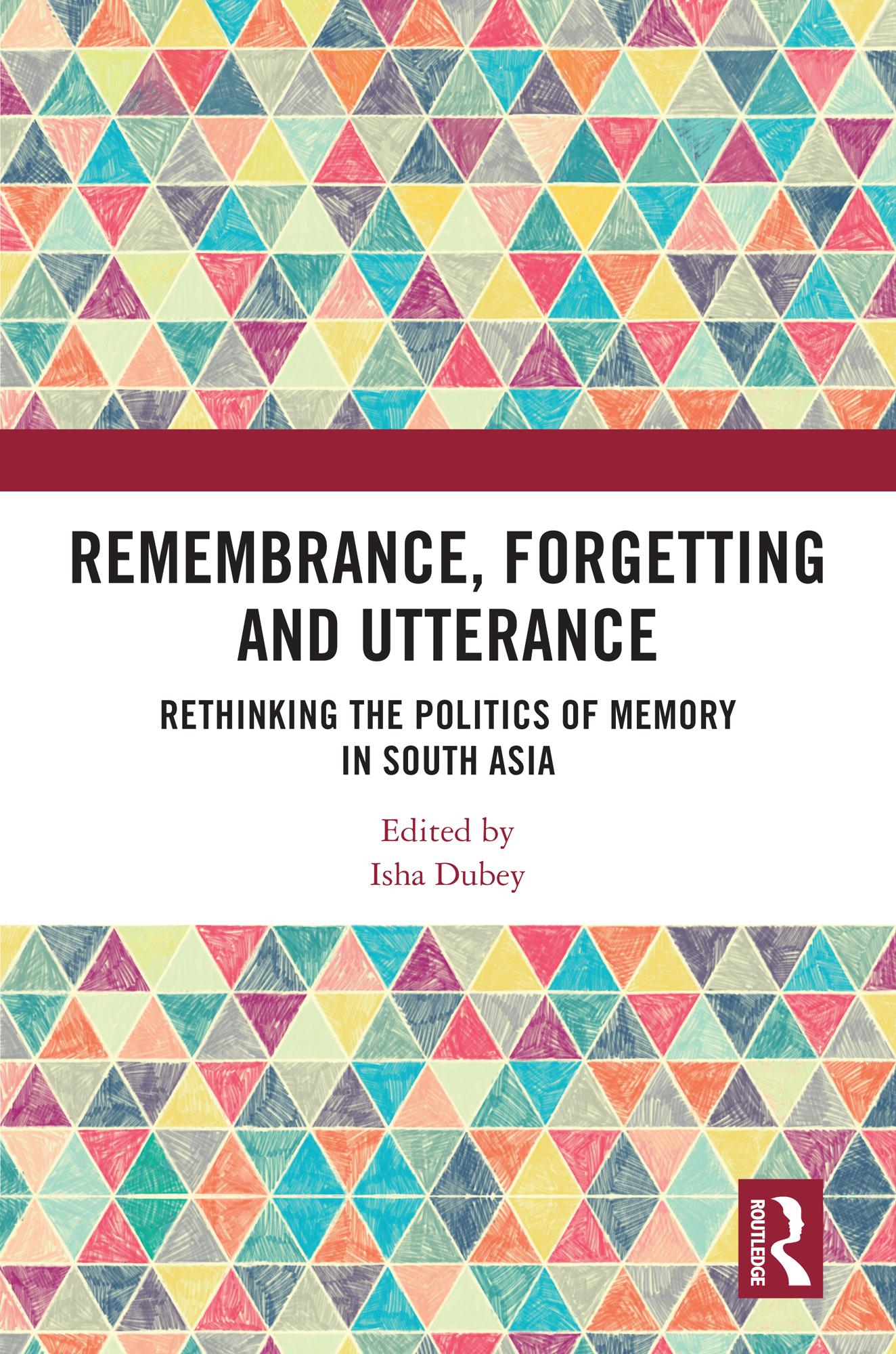
This volume explores new avenues in the field of memory studies. Going beyond Western frames of reference, it shows how religion, region, caste, and class and their intersectionality and the fraught legacy of colonialism shape acts of both collective remembrance and forgetting in South Asia. The chapters in the volume call for a substantive rethinking of the conceptual and methodological frameworks in the field by posing critical questions such as, how do these layers play into and inform the processes of crafting and curating national histories and memories in South Asia? What are the silences that exist within it and how are they contested? What are the alternative modes of remembering, marking and accounting for “difficult pasts” beyond the confines of state-regulated memorial projects? And what “events” constitute dominant and rightful entry points for engaging with these themes and which remain ignored? In doing so they steer discussions on the politics of memory in the region in directions that offer opportunities for not only re-visiting the Partition of 1947 from previously unexplored perspectives but also for going beyond it as the central analytical lens for approaching questions of remembrance, forgetting and utterance in South Asia. A radical new intervention, the volume will be indispensable to scholars and researchers of history, sociology and social anthropology, politics, and South Asian studies.
Paga facilmente con carta, Klarna, Apple Pay o Google Pay. Non sei soddisfatto? Hai sempre 14 giorni per il rimborso. Leggi di più nei nostri termini. Per qualsiasi domanda, scrivici a hello@memmo.org.
Memmo rende lo studio più facile, ovunque tu sia nel mondo. Qui trovi i tuoi libri di testo e strumenti di studio intelligenti, tutto in un unico posto: riassunti, quiz, podcast e flashcard. E poi c'è Ted, il tuo compagno di studio che risponde a ogni tua domanda. Oltre 50.000 studenti studiano già qui: è stato creato per aiutarti a imparare più velocemente e a stressarti meno.