
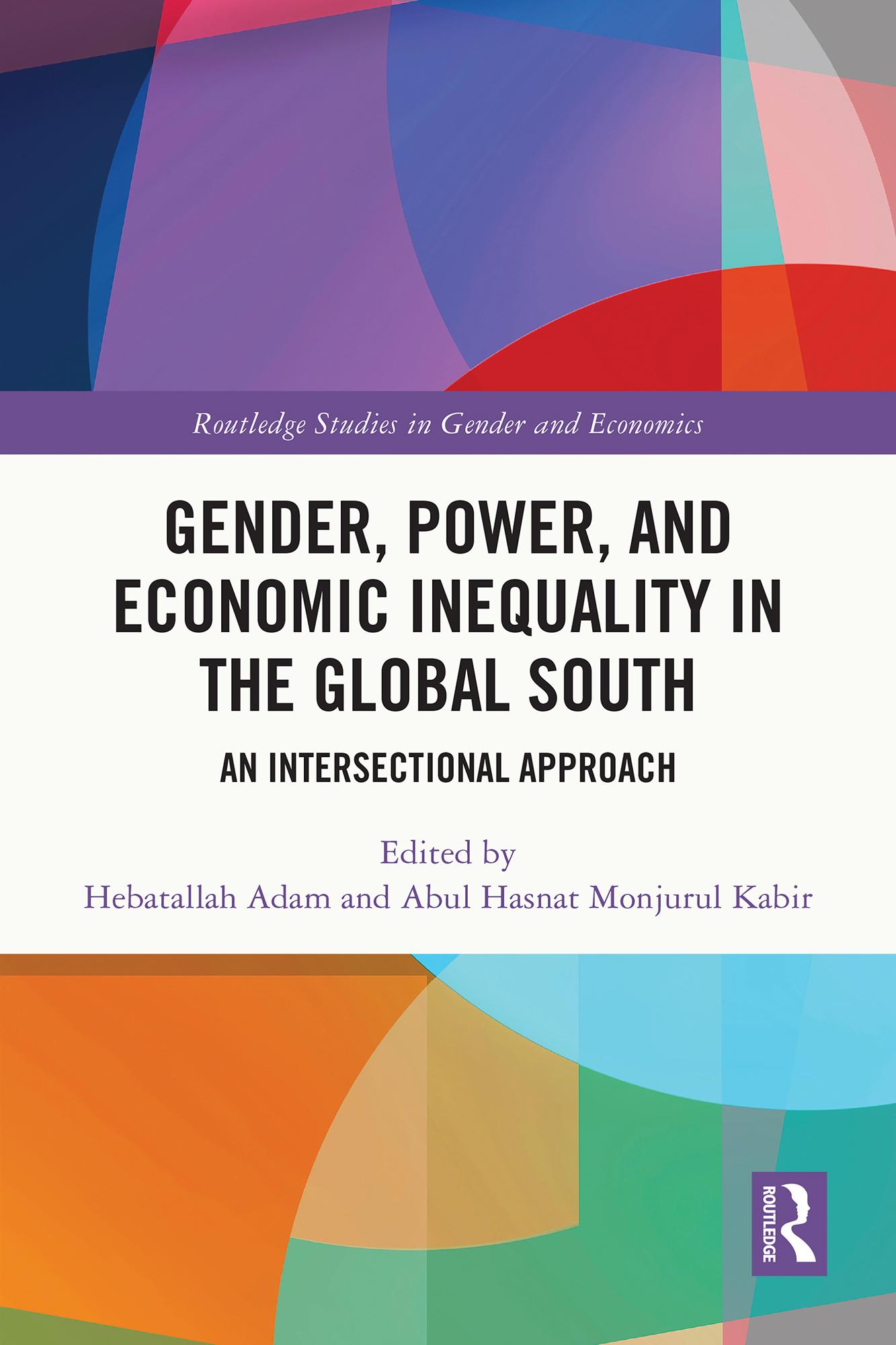
This book delves into the interrelationship among gender, power, and economic disparity in the Global South through an intersectional lens. It analyses the interplay of diverse forms of oppression, such as class, caste, race, ethnicity, and geography, and their impacts on individual lives and prospects for success. This analysis employs diverse case studies to examine how historical legacies, social and political institutions, and economic mechanisms generate and perpetuate inequality across various domains.
Gender, Power, and Economic Inequality in the Global South illustrates how women, particularly from Dalit, black, indigenous, and other marginalized groups, wield power and resist exclusion while challenging patriarchal norms and advocating for equity in politics, the economy, the environment, and the digital realm. It distinctly focusses on the Global South and critically examines global development narratives, prioritizing local knowledge, action, and feminist futures in its endeavours. Further, the book examines the dynamics of power within institutions, informal economy, housing, technology, peacebuilding, and international cooperation. Encompassing a broad spectrum of disciplines, including economics, political science, sociology, law, and environmental studies, the book also examines how global trends, such as the green transition and digital innovation, influence gendered realities.
This edited text serves as an invaluable resource for scholars, researchers, practitioners, and advanced students in gender studies, development studies, international relations, and related fields due to its pertinent information and policy recommendations. It urges readers to critically examine conventional notions and consider gender and power in the Global South with greater openness and equity.
Paga facilmente con carta, Klarna, Apple Pay o Google Pay. Non sei soddisfatto? Hai sempre 14 giorni per il rimborso. Leggi di più nei nostri termini. Per qualsiasi domanda, scrivici a hello@memmo.org.
Memmo rende lo studio più facile, ovunque tu sia nel mondo. Qui trovi i tuoi libri di testo e strumenti di studio intelligenti, tutto in un unico posto: riassunti, quiz, podcast e flashcard. E poi c'è Ted, il tuo compagno di studio che risponde a ogni tua domanda. Oltre 50.000 studenti studiano già qui: è stato creato per aiutarti a imparare più velocemente e a stressarti meno.