
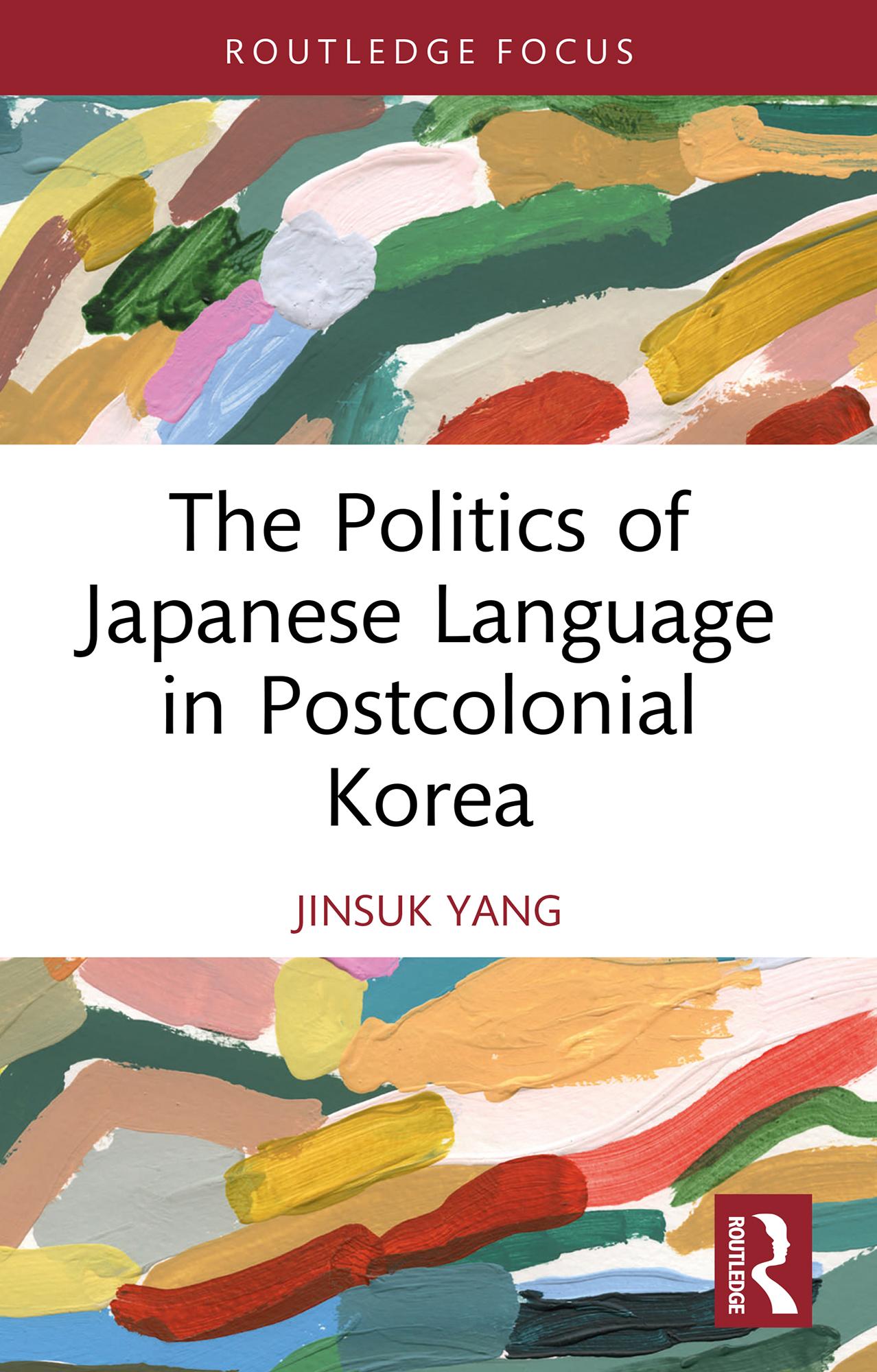
This book examines the politics of Japanese language learning in postcolonial Korea from 1945 through the 1970s, revealing the ways in which language functioned as a site of negotiations over identity, social mobility, and historical memory.
By tracing how Japanese continued to circulate in specific social fields, shaping and being shaped by gendered and classed subject positions, this book counters the linear narrative of national linguistic history that assumes the immediate and complete erasure of the Japanese language in the public sphere. Featuring analysis from contemporary articles from major Japanese and Korean newspapers it provides a comprehensive view of the discourses around Japanese language learning in postcolonial Korea. Through the application of a critical discourse analysis (CDA) as a primary methodological framework it highlights how meanings are constructed, whose perspectives are legitimized or silenced, and what kinds of social roles and hierarchies are reinforced or challenged.
Revealing how the Korean language became symbol to overcome its colonial history, reclaim the language-territory bond, and ultimately, transform Korea into a modern nation-state this will appeal to students and scholars of Korean history, culture and language
Paga facilmente con carta, Klarna, Apple Pay o Google Pay. Non sei soddisfatto? Hai sempre 14 giorni per il rimborso. Leggi di più nei nostri termini. Per qualsiasi domanda, scrivici a hello@memmo.org.
Memmo rende lo studio più facile, ovunque tu sia nel mondo. Qui trovi i tuoi libri di testo e strumenti di studio intelligenti, tutto in un unico posto: riassunti, quiz, podcast e flashcard. E poi c'è Ted, il tuo compagno di studio che risponde a ogni tua domanda. Oltre 50.000 studenti studiano già qui: è stato creato per aiutarti a imparare più velocemente e a stressarti meno.