
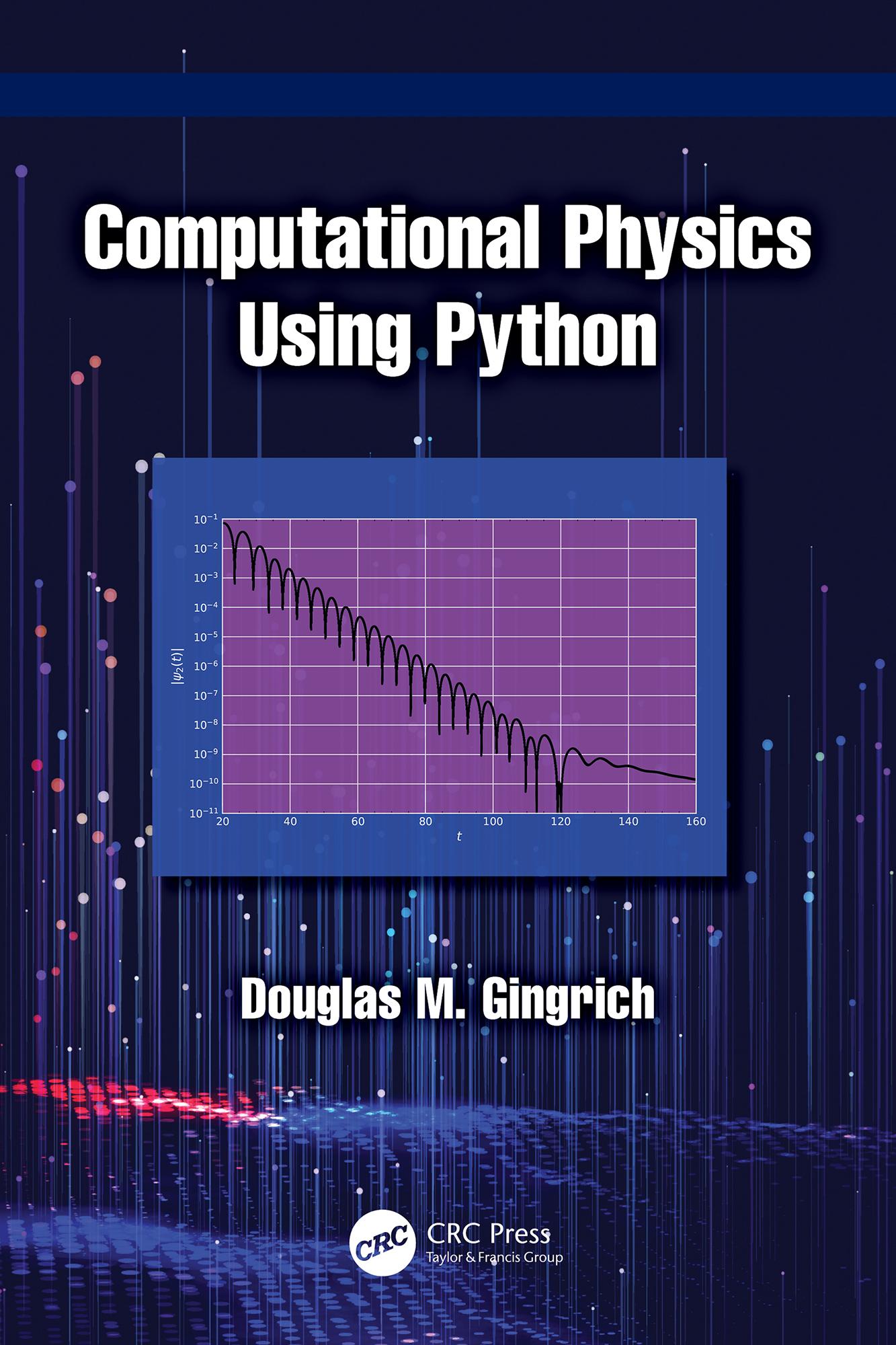
This book provides a practical introduction to using computational (or numerical) methods to solve physics problems using the Python programming language, including differential equations, Fourier transforms, Monte Carlo methods, and data analysis.
It is designed with a two-level approach: topics are introduced at the lowest level, and readers encounter the simplest examples of coding the algorithm themselves before a second level introduced by the problems allows the reader to use library models and take their understanding to a higher level.
The book does not teach Python programming as students traditionally have already learnt those skills before studying computational methods, but it instead teaches readers to apply their knowledge to solve realistic physics problems.
The book is aimed at advanced undergraduate or beginning graduate students in physics or engineering. A junior-level university (or college) physics and mathematics background is assumed. But readers will not be prevented from understanding or applying numerical methods because of a lack of knowledge in a specific physics area.
Key features:
- Explores a wide spectrum of topics, from classical numerical methods to solving ordinary and partial differential equations of physics, plus spectral methods, data analysis, and Monte Carlo methods.
- Includes a chapter on data analysis and statistics, not traditionally covered in related titles on computational methods for scientists.
- Chapters are accompanied by problems and worked solutions (discussions, example code and output). Readers can access the full set of solutions under the support materials tab at: http://www.routledge.com/9781041116288.
Paga facilmente con carta, Klarna, Apple Pay o Google Pay. Non sei soddisfatto? Hai sempre 14 giorni per il rimborso. Leggi di più nei nostri termini. Per qualsiasi domanda, scrivici a hello@memmo.org.
Memmo rende lo studio più facile, ovunque tu sia nel mondo. Qui trovi i tuoi libri di testo e strumenti di studio intelligenti, tutto in un unico posto: riassunti, quiz, podcast e flashcard. E poi c'è Ted, il tuo compagno di studio che risponde a ogni tua domanda. Oltre 50.000 studenti studiano già qui: è stato creato per aiutarti a imparare più velocemente e a stressarti meno.