
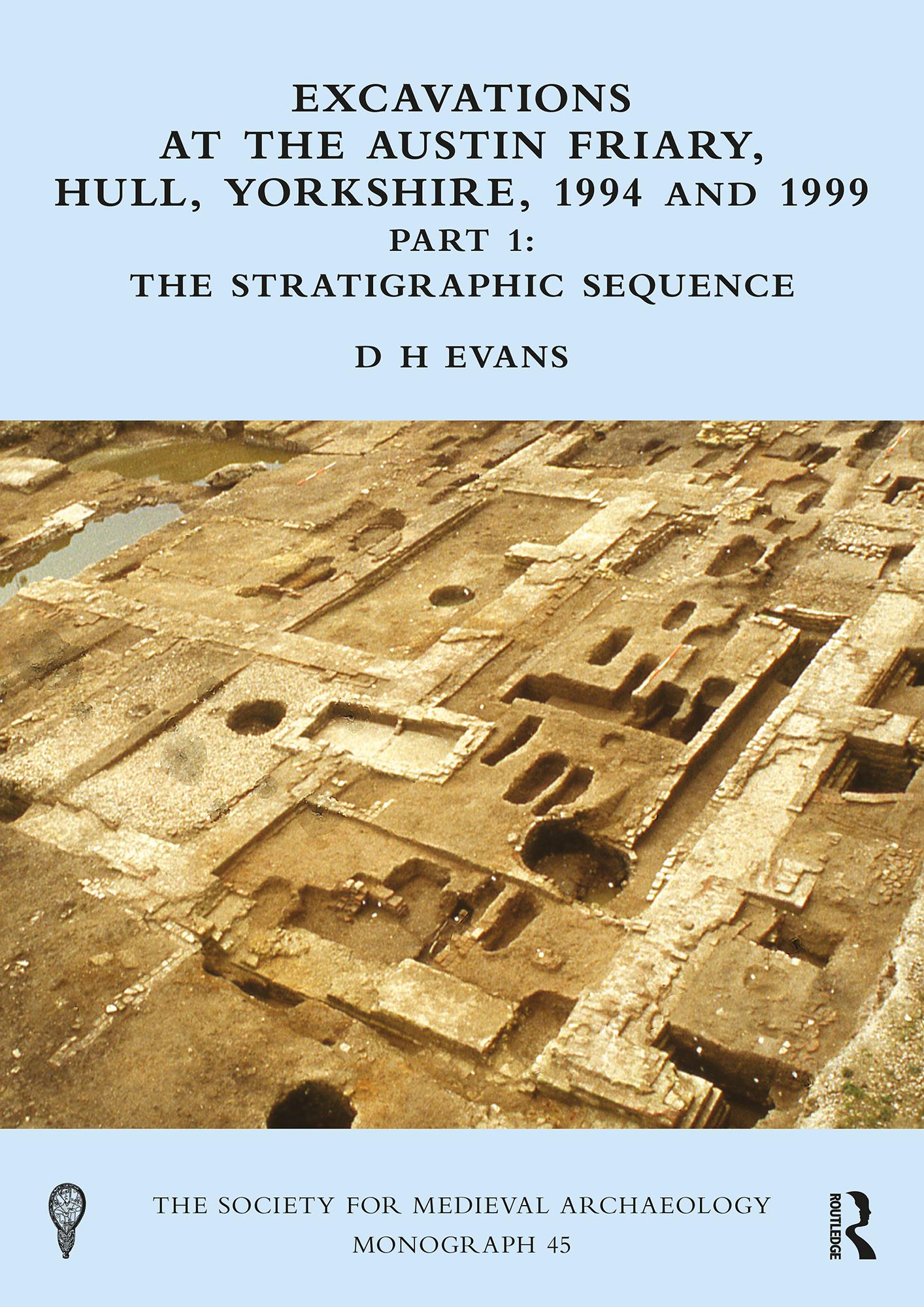
The Austin Friary at Hull was founded in 1316/17 as a daughter-house of the York friary. It would be the very last of the Order to surrender to the Crown, on 10 March 1539. This monastic house was located in the heart of the medieval Old Town, next to its market place. It was excavated in 1994 and 1999 prior to re-development of the site. The results are being published in three parts, this being the first one. The excavations recovered substantial elements of the built friary and the layout of over 70% of the entire precinct can now be reconstructed.
Anaerobic waterlogged conditions favoured the survival of organic remains and structures. Some 260 articulated burials were recovered, associated with important sepulchral remains, including 44 oak coffins, a significant assemblage of textile remains and a wealth of dress-accessories. Almost all the coffins, which can be closely dated, were made of imported Baltic oak, making this the largest assemblage of medieval Baltic oak to have been found in England.
At the Dissolution, the friary seems to have escaped major damage to its fabric, and within a year much of it had been converted into a large secular holding. Some of its buildings would still be standing to their full height as late as the 1790s, albeit with substantial modifications and changes of use. Later activity on this site includes the development and use of three public houses, the construction of a Georgian Butchers’ Shambles and a Victorian Market Hall. In 1941 the whole area was extensively bombed and largely razed to the ground during the Hull Blitz.
Paga facilmente con carta, Klarna, Apple Pay o Google Pay. Non sei soddisfatto? Hai sempre 14 giorni per il rimborso. Leggi di più nei nostri termini. Per qualsiasi domanda, scrivici a hello@memmo.org.
Memmo rende lo studio più facile, ovunque tu sia nel mondo. Qui trovi i tuoi libri di testo e strumenti di studio intelligenti, tutto in un unico posto: riassunti, quiz, podcast e flashcard. E poi c'è Ted, il tuo compagno di studio che risponde a ogni tua domanda. Oltre 50.000 studenti studiano già qui: è stato creato per aiutarti a imparare più velocemente e a stressarti meno.