
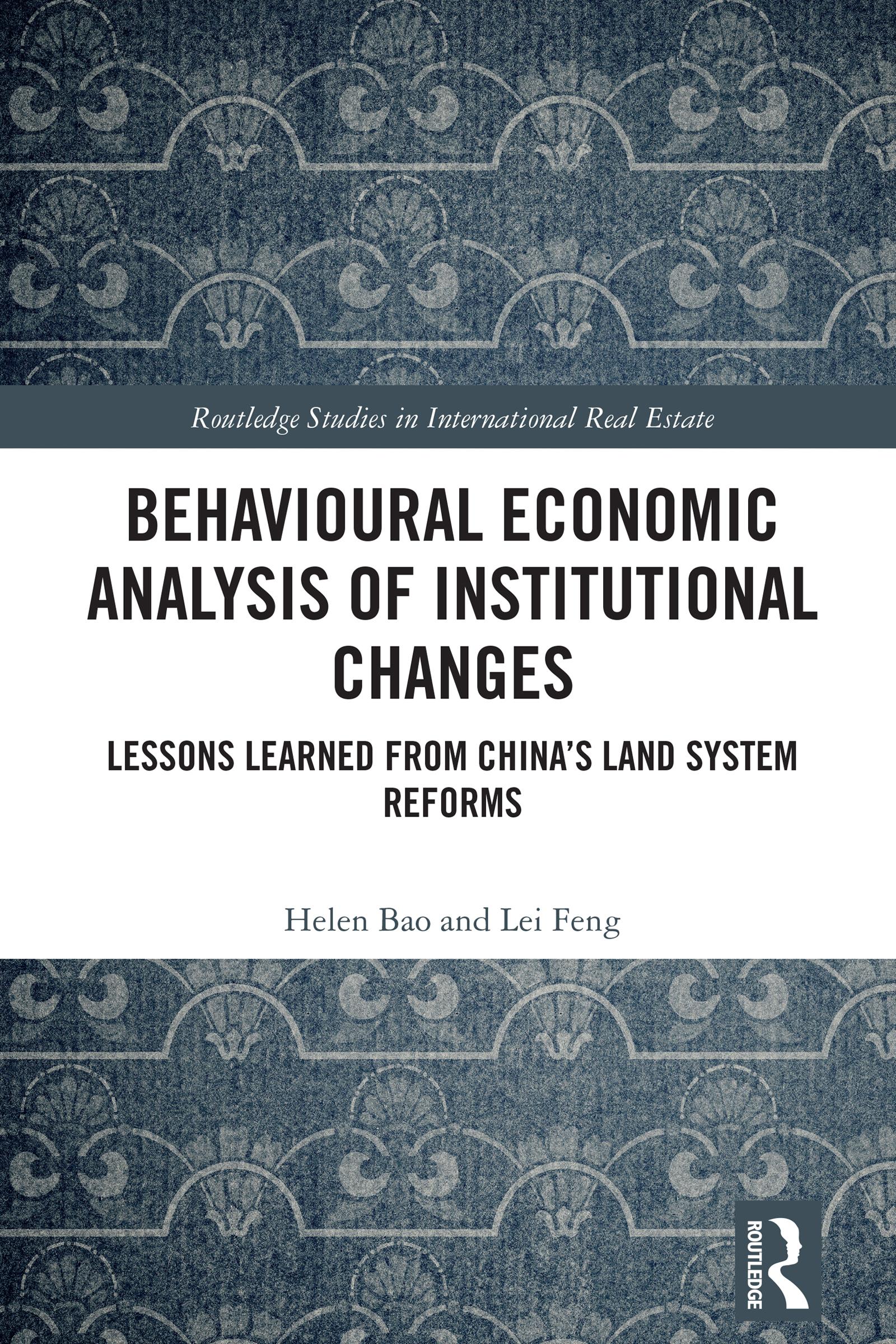
This book examines the evolution of China’s rural land system through an integrated lens of institutional and behavioural economics. It traces seventy years of reform, from collective farming to market-oriented land transfers, to explain how central policy, local implementation and farmers’ responses interact to shape institutional change. Moving beyond standard accounts focused on property rights and transaction costs, the book introduces a dynamic framework based on Prospect Theory, incorporating cognitive biases, social norms and bounded rationality. Drawing on two large-scale rural household surveys, the book combines empirical analysis with historical case studies to explore how reforms were received, adapted and resisted.
This book will benefit researchers, policymakers and graduate students interested in institutional change, land policy or Chinese rural development. It offers new tools to understand policy implementation in environments marked by uncertainty, decentralisation and informal constraints. By highlighting how behavioural factors mediate formal rules, the book provides insights that extend beyond China, informing the design of effective land and property rights reforms globally.
Paga facilmente con carta, Klarna, Apple Pay o Google Pay. Non sei soddisfatto? Hai sempre 14 giorni per il rimborso. Leggi di più nei nostri termini. Per qualsiasi domanda, scrivici a hello@memmo.org.
Memmo rende lo studio più facile, ovunque tu sia nel mondo. Qui trovi i tuoi libri di testo e strumenti di studio intelligenti, tutto in un unico posto: riassunti, quiz, podcast e flashcard. E poi c'è Ted, il tuo compagno di studio che risponde a ogni tua domanda. Oltre 50.000 studenti studiano già qui: è stato creato per aiutarti a imparare più velocemente e a stressarti meno.