
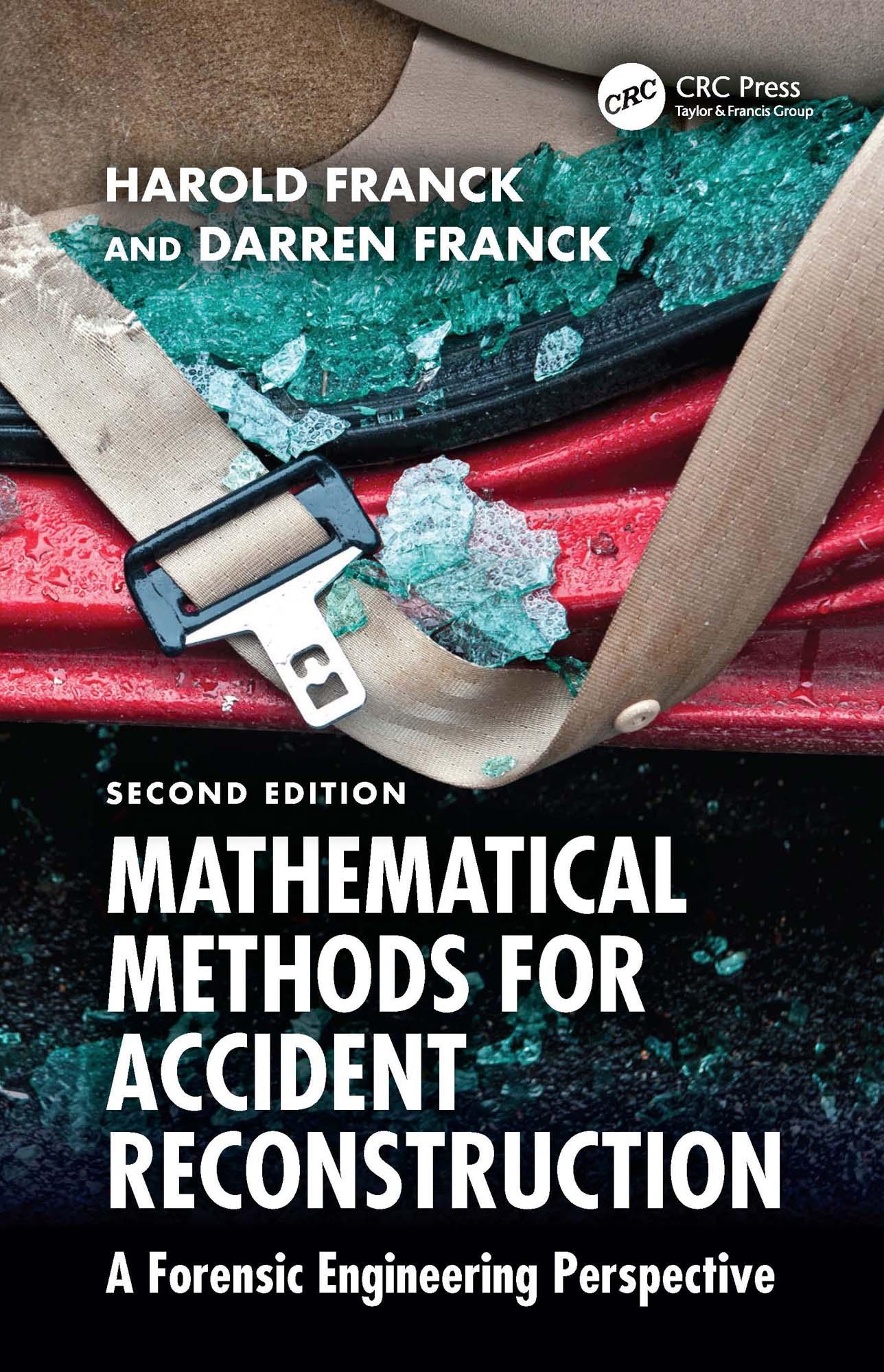
This book demonstrates the application of mathematics to modeling accident reconstructions involving a range of moving vehicles, including automobiles, small and large trucks, bicycles, motorcycles, all‑terrain vehicles, and construction equipment, such as hoists and cranes.
The book is anchored on the basic principles of physics that may be applied to any of the above‑named vehicles or equipment. Topics covered include the foundations of measurement, the various energy methods used in reconstruction, momentum methods, vehicle specifications, failure analysis, geometrical characteristics of highways, and softer scientific issues, such as visibility, perception, and reaction. The authors examine the fundamental characteristics of different vehicles, discuss the retrieval of data from crash data recorders, and review low‑speed impacts with an analysis of staged collisions. Finally, it details established standards and protocols for accident reconstruction for use in both investigations and in the courtroom. In addition, this new edition covers nonvehicle‑related topics like slip and fall analysis, fall protection, and engine and mechanical failure, as well as federal rules and laws that have been established for the work environment. Many reconstructions of incidents require extensive analysis that may require a variety of methods in order to properly model the incident.
Exploring a broad range of accident scenarios, the breadth and depth of this book’s coverage makes Mathematical Methods for Accident Reconstruction, Second Edition, a critical reference for engineers and scientists who perform vehicular accident reconstructions.
Paga facilmente con carta, Klarna, Apple Pay o Google Pay. Non sei soddisfatto? Hai sempre 14 giorni per il rimborso. Leggi di più nei nostri termini. Per qualsiasi domanda, scrivici a hello@memmo.org.
Memmo rende lo studio più facile, ovunque tu sia nel mondo. Qui trovi i tuoi libri di testo e strumenti di studio intelligenti, tutto in un unico posto: riassunti, quiz, podcast e flashcard. E poi c'è Ted, il tuo compagno di studio che risponde a ogni tua domanda. Oltre 50.000 studenti studiano già qui: è stato creato per aiutarti a imparare più velocemente e a stressarti meno.