
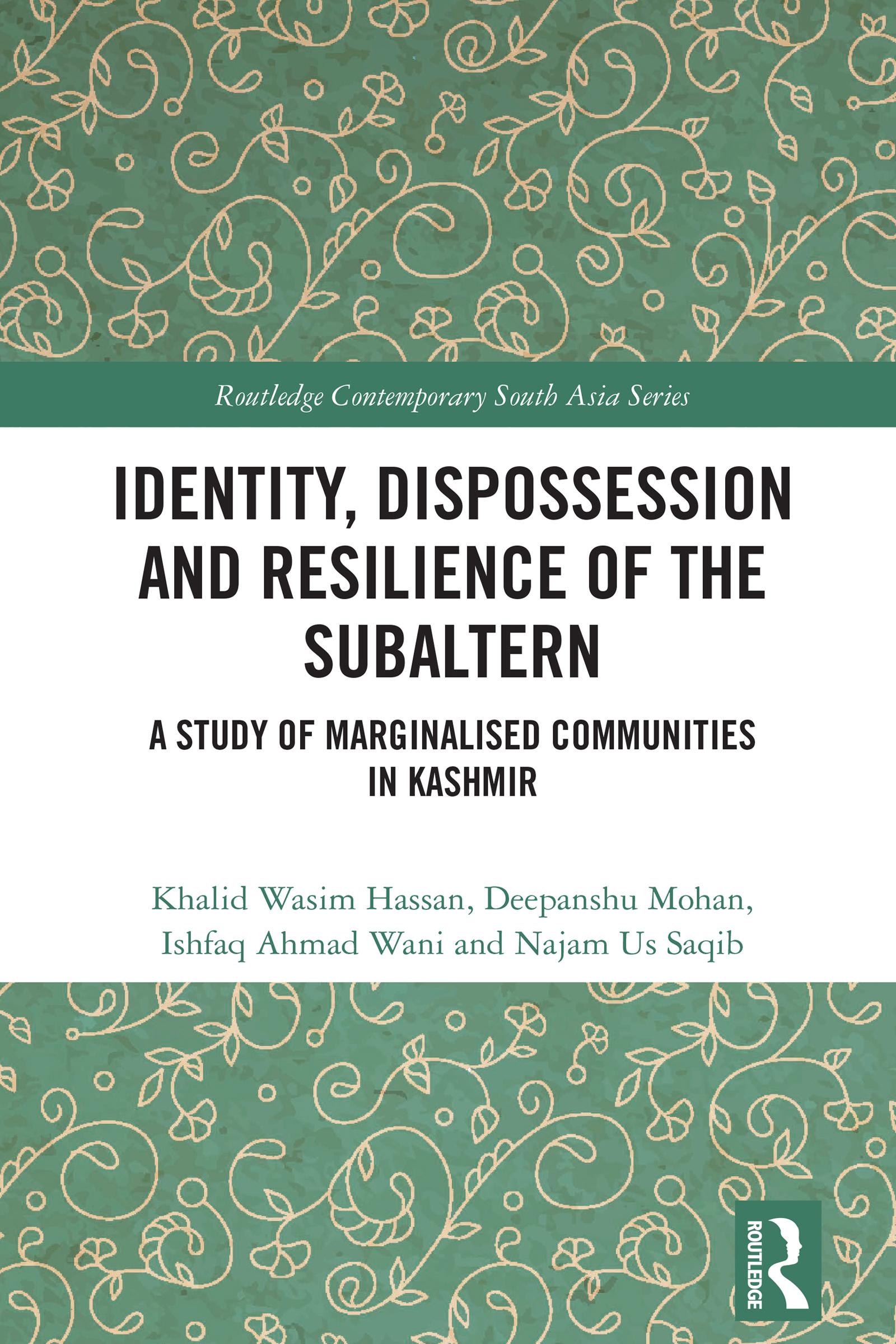
Khalid Wasim Hassan, Deepanshu Mohan, Ishfaq Ahmad Wani and Najam Us Saqib examine the processes of marginality and ‘othering’ which the subaltern groups in Kashmir face due to their attribution to a particular social caste, ethnicity, language or status of their citizenship. They further explore the sense of belonging and identity formation of the Pashtun community in the Kashmir Valley, India.
The book provides a balanced discussion on theoretical debates and empirical cases, with the introductory chapter providing an overview of the theoretical framework on identity and dispossession and its relationship to the processes of marginalisation. The other chapters discuss specific empirical cases that provide the theoretical underpinnings on relevant notions, such as caste, ethnicity, nationalism and identity politics. Through the empirical cases of the Sheikh community and Hanji community, the book sheds light on the prevailing caste system and caste-induced discrimination among Muslims. It also further explores the different forms of resilience as exercised by the subaltern groups in Kashmir, where many social groups and communities experience marginalisation and how some communities such as Tibetan Kashmiri Muslim, which lacked the state-defined citizenship status till recently, had led to the exclusion of this community from various socio-economic and political rights.
This is a comprehensive volume that will appeal to academics, scholars and policymakers in South Asian studies, social sciences and humanities, especially those interested in the study of caste, ethnicity, nationalism and identity politics for the marginalised communities in Kashmir.
Paga facilmente con carta, Klarna, Apple Pay o Google Pay. Non sei soddisfatto? Hai sempre 14 giorni per il rimborso. Leggi di più nei nostri termini. Per qualsiasi domanda, scrivici a hello@memmo.org.
Memmo rende lo studio più facile, ovunque tu sia nel mondo. Qui trovi i tuoi libri di testo e strumenti di studio intelligenti, tutto in un unico posto: riassunti, quiz, podcast e flashcard. E poi c'è Ted, il tuo compagno di studio che risponde a ogni tua domanda. Oltre 50.000 studenti studiano già qui: è stato creato per aiutarti a imparare più velocemente e a stressarti meno.