
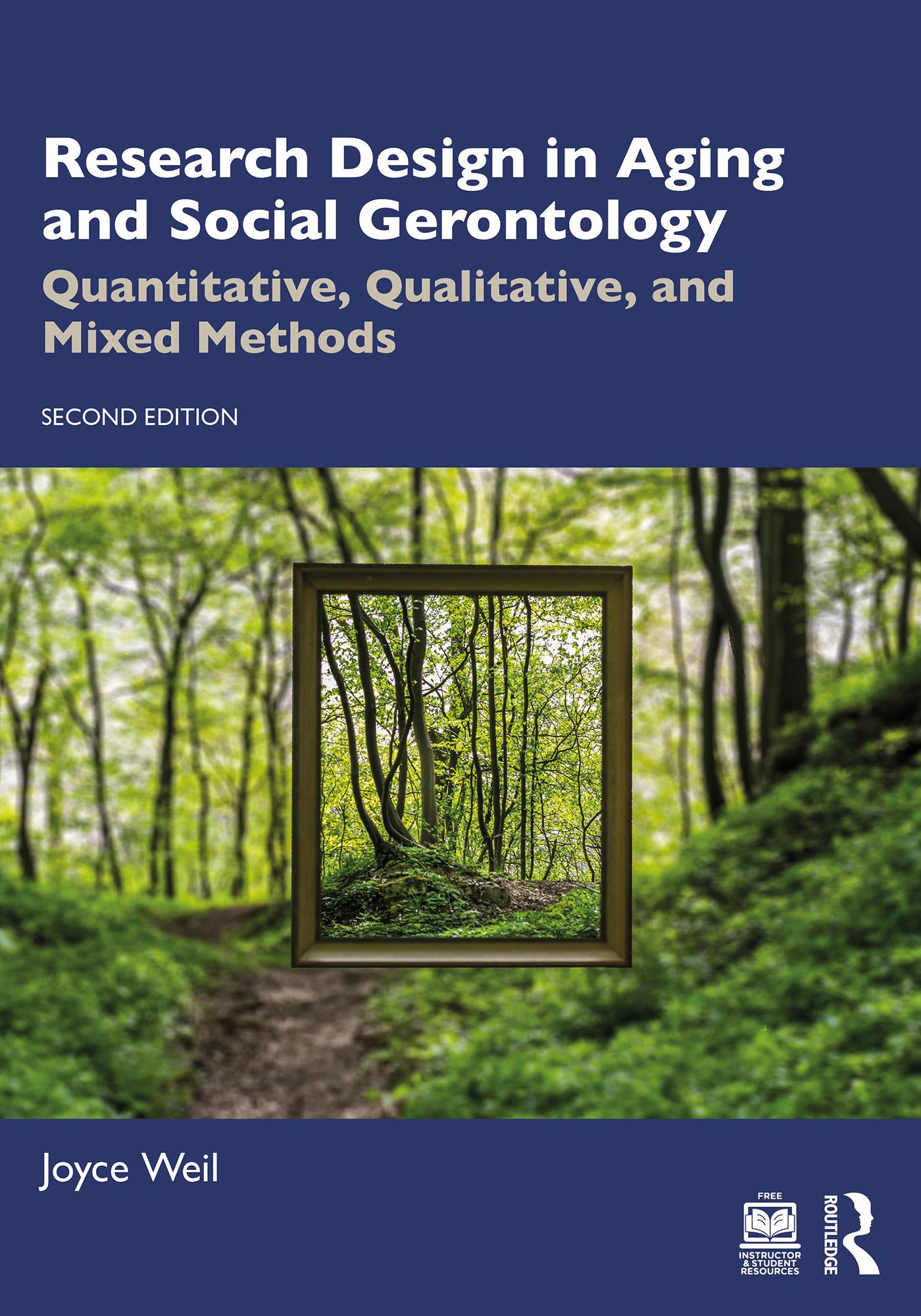
This comprehensive book provides a review across methodological approaches and data-collection methods commonly used with older adults in real-life settings. It addresses the role of normative age-related sensory, cognitive, and functional changes, as well as the influence of generational cohort (age-period-cohort).
Fully updated, this second edition reflects recent changes in gerontology and includes more information about equity, diversity and inclusion; the impact of the COVID-19 pandemic; the use of virtual research methods; discussion about the researcher’s reflexivity; the role of theory in research; qualitative research developments; an expansion of secondary analysis of data;and the use of artificial intelligence in research.
Features include:
- Descriptions, evaluations, and applications of a wide range of methodological approaches and methods used to collect data about older persons (quantitative, qualitative, mixed, and emergent methods: photovoice, virtual environments, etc.)
- Ways to match research questions to selection of method without a preconceived methodological preference or dominance
- Real-world and applied examples along with cases from the gerontological literature
- "How to" sections about reading output/software reports and qualitative-analysis screenshots (from NVivo) and quantitative (SPSS) output and interpretation
- Pedagogical tools in every chapter such as text boxes, case studies, definitions of key terms, discussion questions, and references for further reading on chapter topics
- Glossary of key terms, complete sample research report, and an overview of past methodological research design work in gerontology
This text is intended for upper-level undergraduates and masters students in aging and gerontology as well as students in human development, applied anthropology, psychology, public health, sociology, and social work settings. Healthcare professionals, social workers, and care managers who work with older adults will also find this text a valuable resource.
At www.routledge.com/cw/weil instructors will find PowerPoint presentations, additional discussion questions, suggestions for in-class activities and assessments and a sample syllabus; and students will find flashcards based on glossary terms, a downloadable copy of the sample research report in the text, links to data sets, related websites, online videos and podcasts, further reading, select gerontological journals and multiple choice and true or false questions.
Paga facilmente con carta, Klarna, Apple Pay o Google Pay. Non sei soddisfatto? Hai sempre 14 giorni per il rimborso. Leggi di più nei nostri termini. Per qualsiasi domanda, scrivici a hello@memmo.org.
Memmo rende lo studio più facile, ovunque tu sia nel mondo. Qui trovi i tuoi libri di testo e strumenti di studio intelligenti, tutto in un unico posto: riassunti, quiz, podcast e flashcard. E poi c'è Ted, il tuo compagno di studio che risponde a ogni tua domanda. Oltre 50.000 studenti studiano già qui: è stato creato per aiutarti a imparare più velocemente e a stressarti meno.