
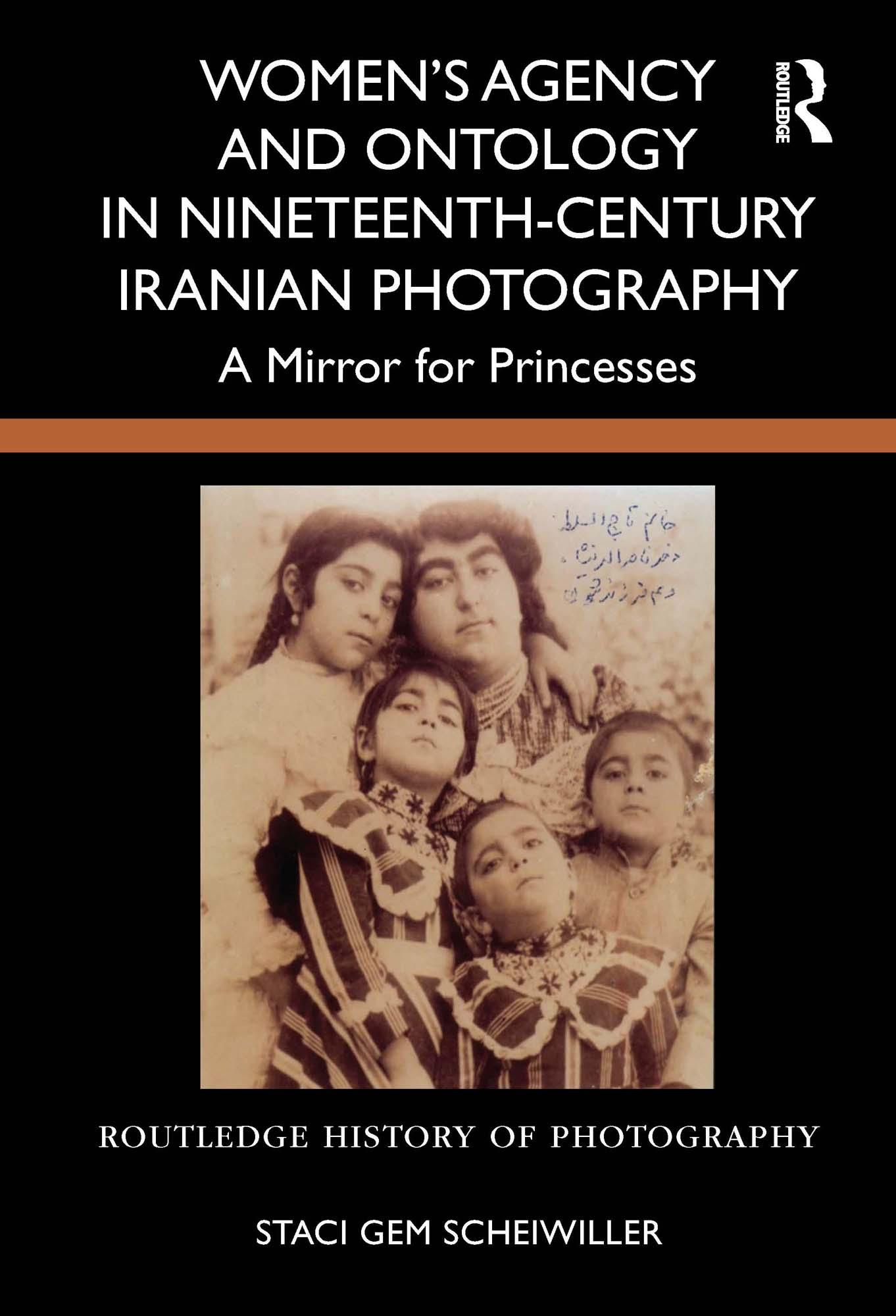
This study argues that photographs from Qajar Iran (1785–1925) of harem women, royal women, and public women, such as sex workers, musicians, singers, and dancers, make profound statements on the institution of the harem in a time of flux and modernization.
Depictions of the harem in photographs shifted the scopic regime of power and made visible an Iranian “Sultanate of Women,” which produced a short succession of formidable, driven women. These photographs became instrumental as a “mirror for princesses,” in which women consolidated their political control by fashioning their images, constructing pictures of female rule, leaving a legacy and blueprint for future heads of harem, and bolstering their positions within the harem, the court, the state, and the global arena. Thus, photography played a major role as an ontic condition that would further reformulate perceptions of harem women’s ontological Being in the world, resulting in photographic evidence of their perceived agency. By the late nineteenth century, however, the institution of the harem began to wane, and women’s search for political influence had to shift to photographs that were marked distinctly and visibly as “anti-harem.”
This book will be of interest to scholars working in art history, history of photography, gender studies, and Iranian studies.
Paga facilmente con carta, Klarna, Apple Pay o Google Pay. Non sei soddisfatto? Hai sempre 14 giorni per il rimborso. Leggi di più nei nostri termini. Per qualsiasi domanda, scrivici a hello@memmo.org.
Memmo rende lo studio più facile, ovunque tu sia nel mondo. Qui trovi i tuoi libri di testo e strumenti di studio intelligenti, tutto in un unico posto: riassunti, quiz, podcast e flashcard. E poi c'è Ted, il tuo compagno di studio che risponde a ogni tua domanda. Oltre 50.000 studenti studiano già qui: è stato creato per aiutarti a imparare più velocemente e a stressarti meno.