
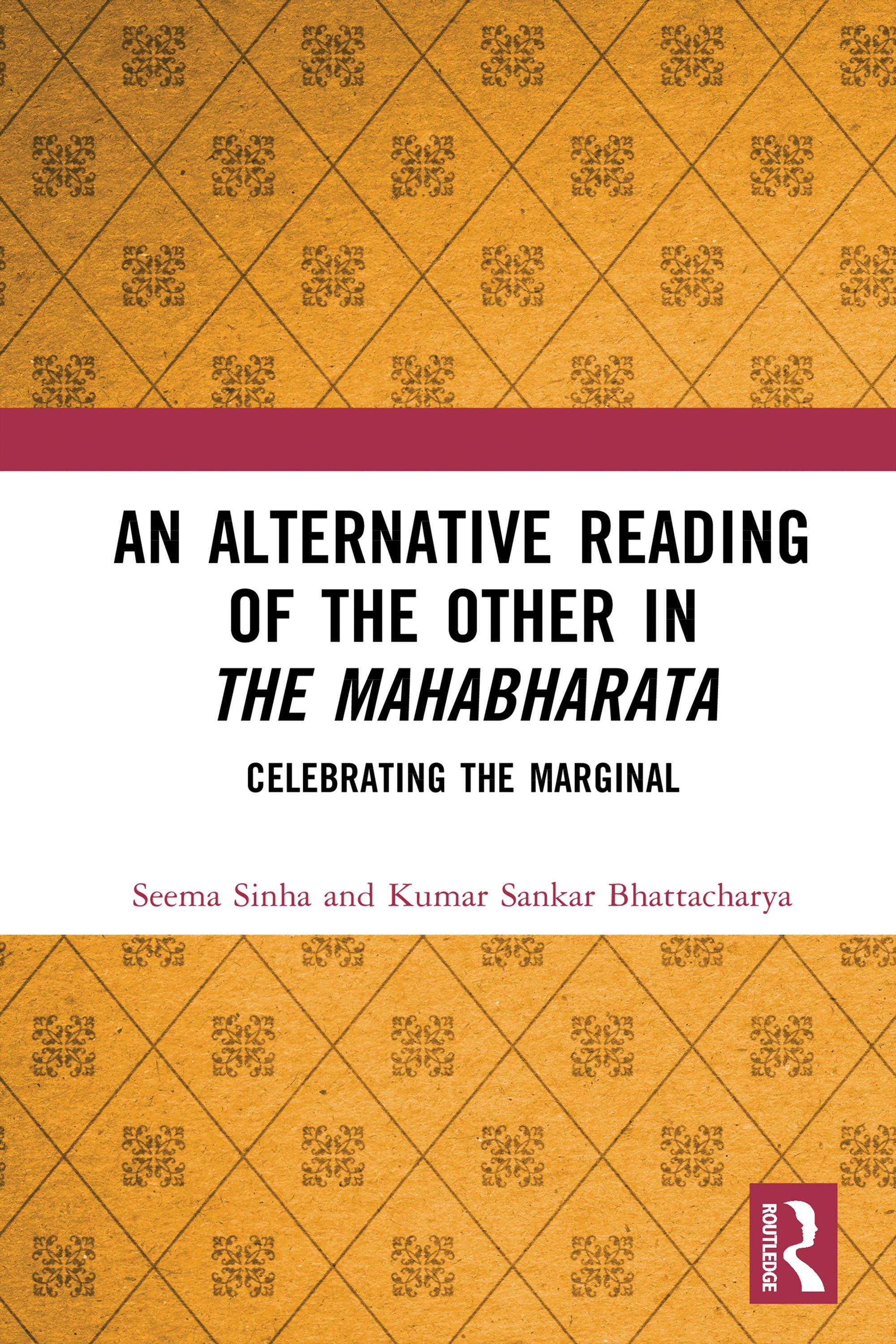
This book studies gender, sexuality, and representation in The Mahabharata. Drawing on Feminist theory, Queer theory and Deconstructivist theory, it revisits the epic as a saga of agency, empowerment, and subversion, and examines how it gives the gendered marginal — the women and the queer — a voice.
The authors argue that in a fluid text like The Mahabharata, there is ample scope for contradiction and conformation, as well as conflict and resolution, which gives the marginal an opportunity to document resistance. They analyse the stories of Draupadi, Kunti, Renuka, Ulupi, and Hidimba within an anti-patriarchal, non-normative, post-modern theoretical framework. They also examine liminal figures like Shikhandi, Yuvanashwa, Sudyumna and Bhangashwan, who are uniquely placed in conversation involving queer space, marginalization, and resistance.
An important addition to the study of Indian epics, this book will be indispensable for scholars and researchers of cultural studies, subaltern studies, Indian literature, English literature, gender studies, sexuality studies, queer studies, women’s studies, exclusion studies, and postcolonial studies.
Paga facilmente con carta, Klarna, Apple Pay o Google Pay. Non sei soddisfatto? Hai sempre 14 giorni per il rimborso. Leggi di più nei nostri termini. Per qualsiasi domanda, scrivici a hello@memmo.org.
Memmo rende lo studio più facile, ovunque tu sia nel mondo. Qui trovi i tuoi libri di testo e strumenti di studio intelligenti, tutto in un unico posto: riassunti, quiz, podcast e flashcard. E poi c'è Ted, il tuo compagno di studio che risponde a ogni tua domanda. Oltre 50.000 studenti studiano già qui: è stato creato per aiutarti a imparare più velocemente e a stressarti meno.