
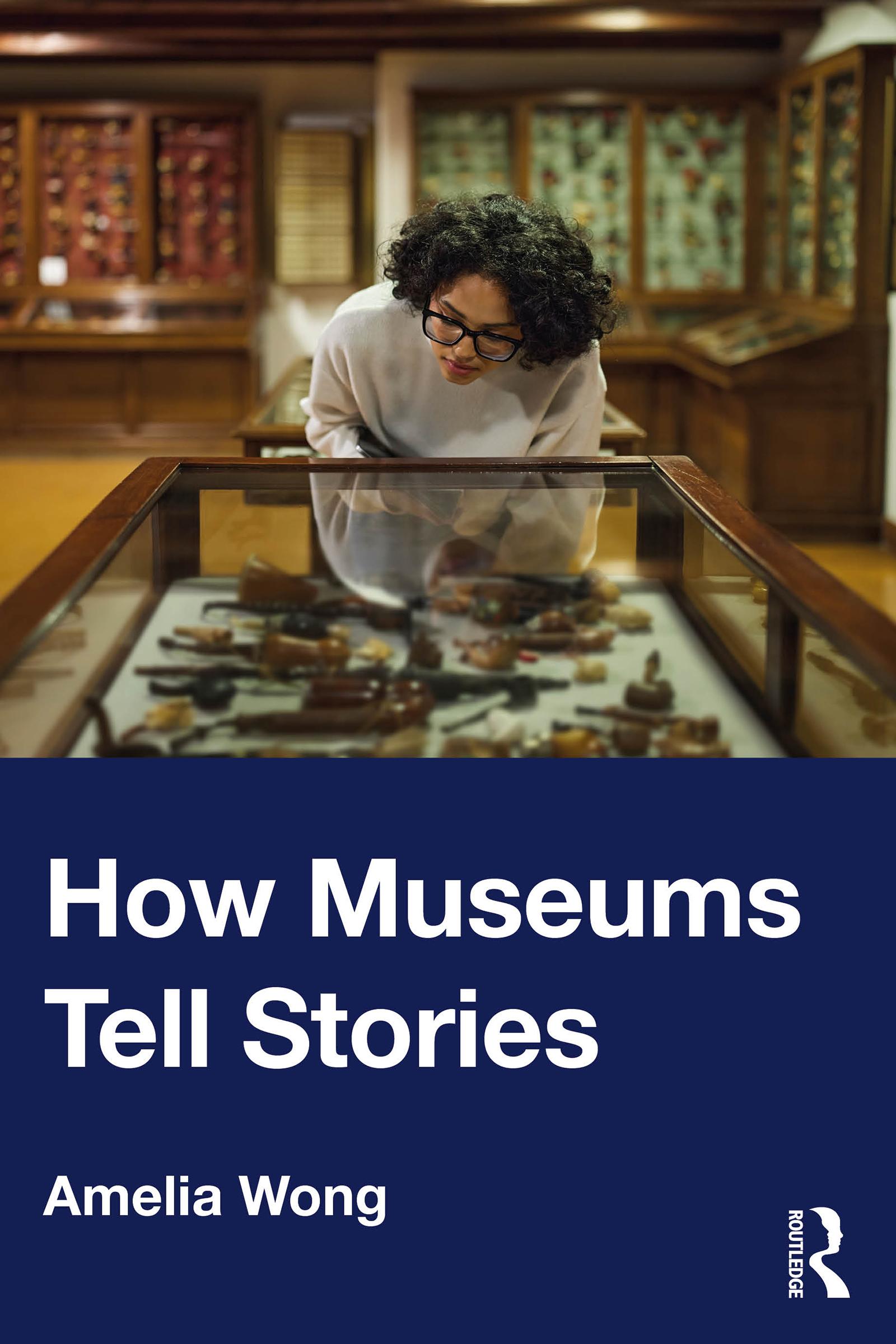
How Museums Tell Stories explains how museums “work” as a form of media that narrates stories intentionally and unintentionally.
Story—in life and in museums—is a phenomenon that emerges as people perceive, represent, and interpret the qualities of tellability and narrativity in relation to stimuli. Tellability is noteworthiness: it attracts our attention. Narrativity is a set of elements that enables us to perceive a story is being or could be told. The book discusses how and why these qualities are so present in museums, and how they enable physical institutions to tell stories in many forms, at many scales, in many styles of representation, and to varying degrees. Drawing on conceptions of narrative from literary theory, film, psychology, and cognitive science, Wong offers a shared vocabulary for understanding and analyzing how story manifests in museums at the level of objects, collections, exhibitions, and space.
How Museums Tell Stories will be essential reading for researchers and students interested in how and why museums engage audiences, as well as museum and cultural heritage practitioners seeking concepts and analytical tools for approaching and evaluating their work more critically and conscientiously.
Paga facilmente con carta, Klarna, Apple Pay o Google Pay. Non sei soddisfatto? Hai sempre 14 giorni per il rimborso. Leggi di più nei nostri termini. Per qualsiasi domanda, scrivici a hello@memmo.org.
Memmo rende lo studio più facile, ovunque tu sia nel mondo. Qui trovi i tuoi libri di testo e strumenti di studio intelligenti, tutto in un unico posto: riassunti, quiz, podcast e flashcard. E poi c'è Ted, il tuo compagno di studio che risponde a ogni tua domanda. Oltre 50.000 studenti studiano già qui: è stato creato per aiutarti a imparare più velocemente e a stressarti meno.