
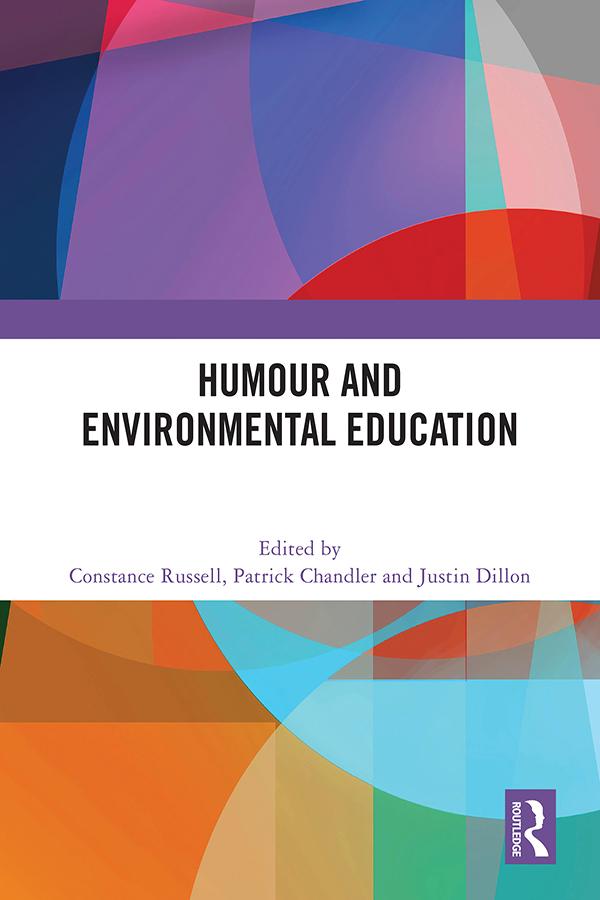
This book illustrates how humour can be a powerful tool for environmental education. Hailing from eight different countries, the authors’ inquiries are grounded in a range of sites of learning and focus on different comedic forms, offering a variety of perspectives on the ways humour features, or could feature, in environmental education.
The chapters adopt an array of methodological approaches and theoretical frames, drawing not only on environmental education research and humour studies, but also scholarship in affect theory, antiracist and Indigenous education, climate change communication, critical pedagogy, ecocriticism and language arts education, feminist theory, human– animal relations, media studies, new materialisms, philosophy, psychology, public pedagogy, science education, and social movement studies. Many of the topics discussed in this volume necessitated multi- or interdisciplinary inquiries and pedagogies.
Delving into humour led the authors to push beyond the boundaries of their own disciplines and, for some, to form creative collaborations that took them not only into new academic fields but also outside their professions to work with actors, cartoonists, comedians, and game developers. This book was originally published as a special issue of Environmental Education Research.
Paga facilmente con carta, Klarna, Apple Pay o Google Pay. Non sei soddisfatto? Hai sempre 14 giorni per il rimborso. Leggi di più nei nostri termini. Per qualsiasi domanda, scrivici a hello@memmo.org.
Memmo rende lo studio più facile, ovunque tu sia nel mondo. Qui trovi i tuoi libri di testo e strumenti di studio intelligenti, tutto in un unico posto: riassunti, quiz, podcast e flashcard. E poi c'è Ted, il tuo compagno di studio che risponde a ogni tua domanda. Oltre 50.000 studenti studiano già qui: è stato creato per aiutarti a imparare più velocemente e a stressarti meno.