
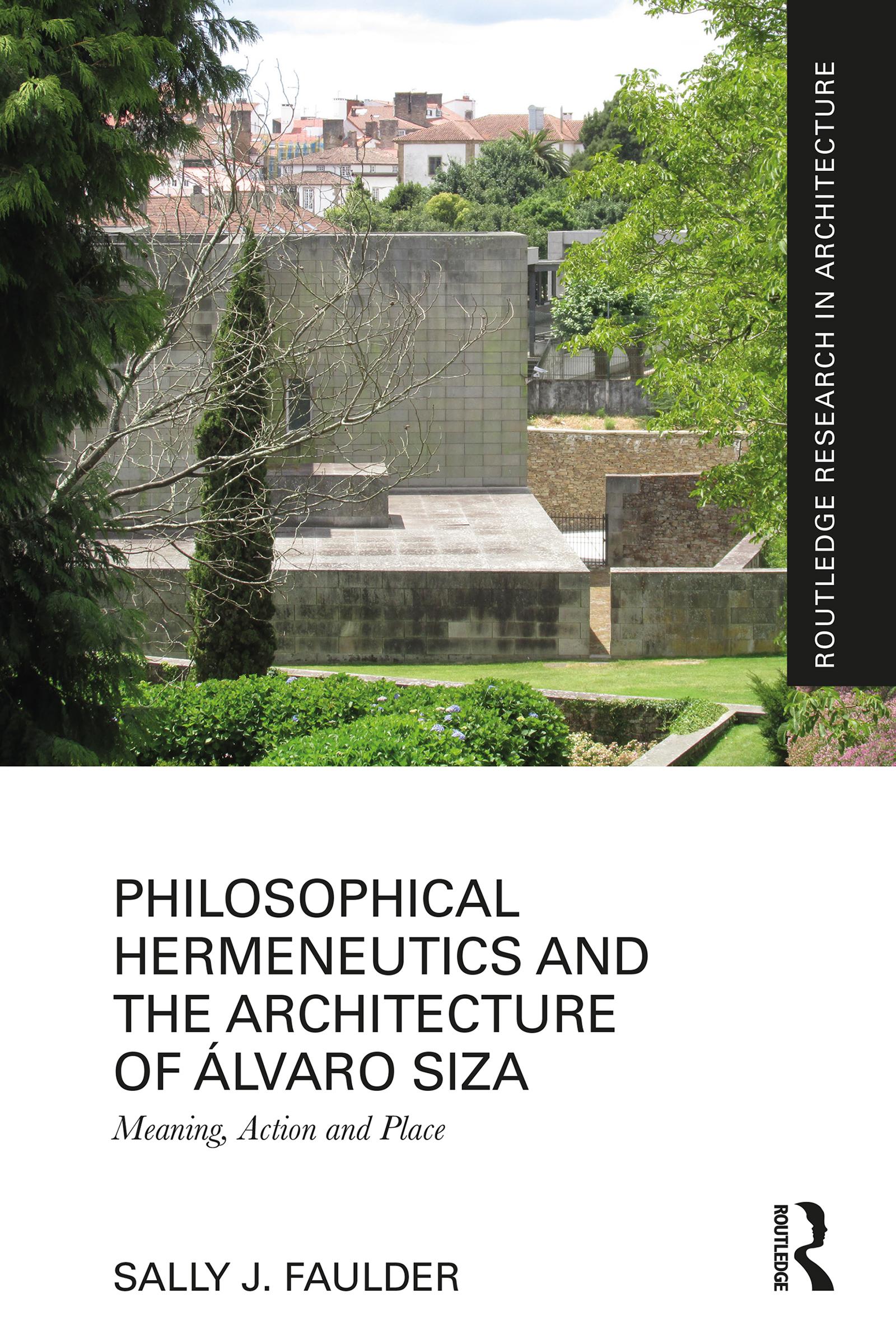
This book presents an original study of the work of Pritzker Prize-winning Portuguese architect Álvaro Siza from the perspective of architecture as an interpretation of human life. It combines philosophical hermeneutics, narrative textual description, and history and theory research to provide a rich account of Siza’s work.
The book gives a detailed analysis of three of Siza’s works from this perspective: the Tidal Pool (Piscina das Marés) in Leça da Palmeira, Portugal; the Galician Centre of Contemporary Art (Centro Galego de Arte Contemporánea) in Santiago de Compostela, Spain; and the Santa Maria Church in Marco de Canaveses, Portugal. This form of analysis provides insight into the unique temporal dimension of Siza’s work, both in the memory inscribed by the structure and in how what is inscribed is revealed by degrees to those who come into contact with it. Drawing on Hans-Georg Gadamer and Paul Ricoeur, this book defines both building and inhabiting as acts of interpretation. Through employing the technique of writing architecture as a mode of phenomenological description, the book uses one form of creative configuration – narrative – to draw out the meaning inscribed in another form of creative configuration – architecture.
The book contributes a unique perspective to scholarship on Siza and an in-depth study to the growing field of hermeneutics of architecture. It will be of interest to researchers and students of architecture and philosophy.
Paga facilmente con carta, Klarna, Apple Pay o Google Pay. Non sei soddisfatto? Hai sempre 14 giorni per il rimborso. Leggi di più nei nostri termini. Per qualsiasi domanda, scrivici a hello@memmo.org.
Memmo rende lo studio più facile, ovunque tu sia nel mondo. Qui trovi i tuoi libri di testo e strumenti di studio intelligenti, tutto in un unico posto: riassunti, quiz, podcast e flashcard. E poi c'è Ted, il tuo compagno di studio che risponde a ogni tua domanda. Oltre 50.000 studenti studiano già qui: è stato creato per aiutarti a imparare più velocemente e a stressarti meno.