
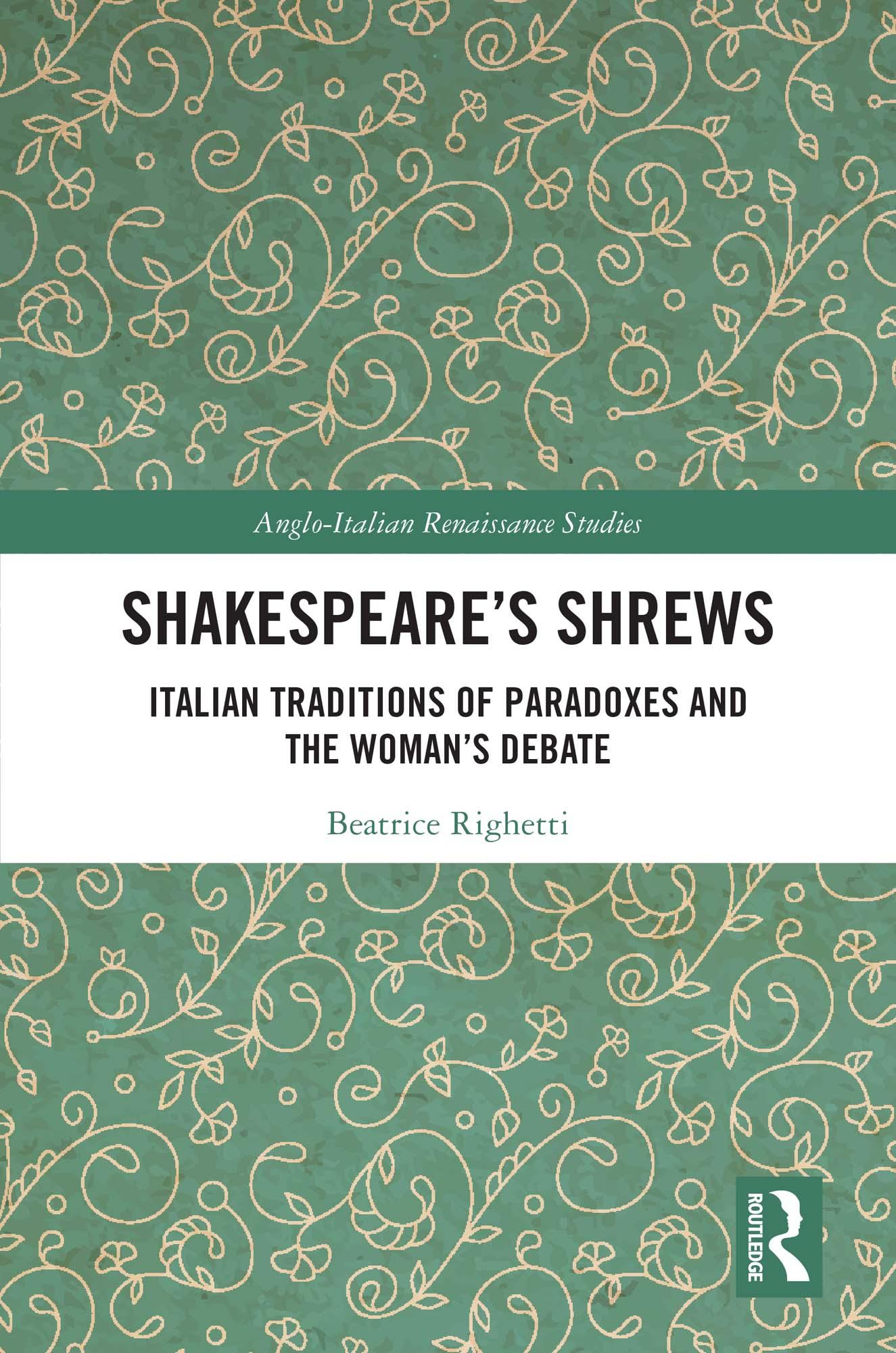
Shakespeare’s Shrews: Italian Traditions of Paradoxes and the Woman’s Debate investigates the echoes of two early modern discourses—paradoxical writing and the woman’s question or querelle des femmes—in the representation of the “Shakespearean shrew” in The Taming of the Shrew, Much Ado About Nothing, and Othello.
This comparative cross‑cultural study explores the English reception of these traditions through the circulation, translation, and adaptation of Italian works such as Ludovico Ariosto’s Orlando Furioso, Baldassare Castiglione’s Il libro del cortegiano, and Ercole and Torquato Tasso’s Dell’ammogliarsi. The enticing interplay of these two discourses is further complicated by their presence in the writing of early modern male and female authors. The examination of Shakespeare’s adaptation of these traditions in his “shrew” character highlights two key findings: the thematic fragmentation of the woman’s question and the evolving role of paradoxes, from figures of speech to “figures of thought”, both influenced by the gender of the speaker.
Paga facilmente con carta, Klarna, Apple Pay o Google Pay. Non sei soddisfatto? Hai sempre 14 giorni per il rimborso. Leggi di più nei nostri termini. Per qualsiasi domanda, scrivici a hello@memmo.org.
Memmo rende lo studio più facile, ovunque tu sia nel mondo. Qui trovi i tuoi libri di testo e strumenti di studio intelligenti, tutto in un unico posto: riassunti, quiz, podcast e flashcard. E poi c'è Ted, il tuo compagno di studio che risponde a ogni tua domanda. Oltre 50.000 studenti studiano già qui: è stato creato per aiutarti a imparare più velocemente e a stressarti meno.