
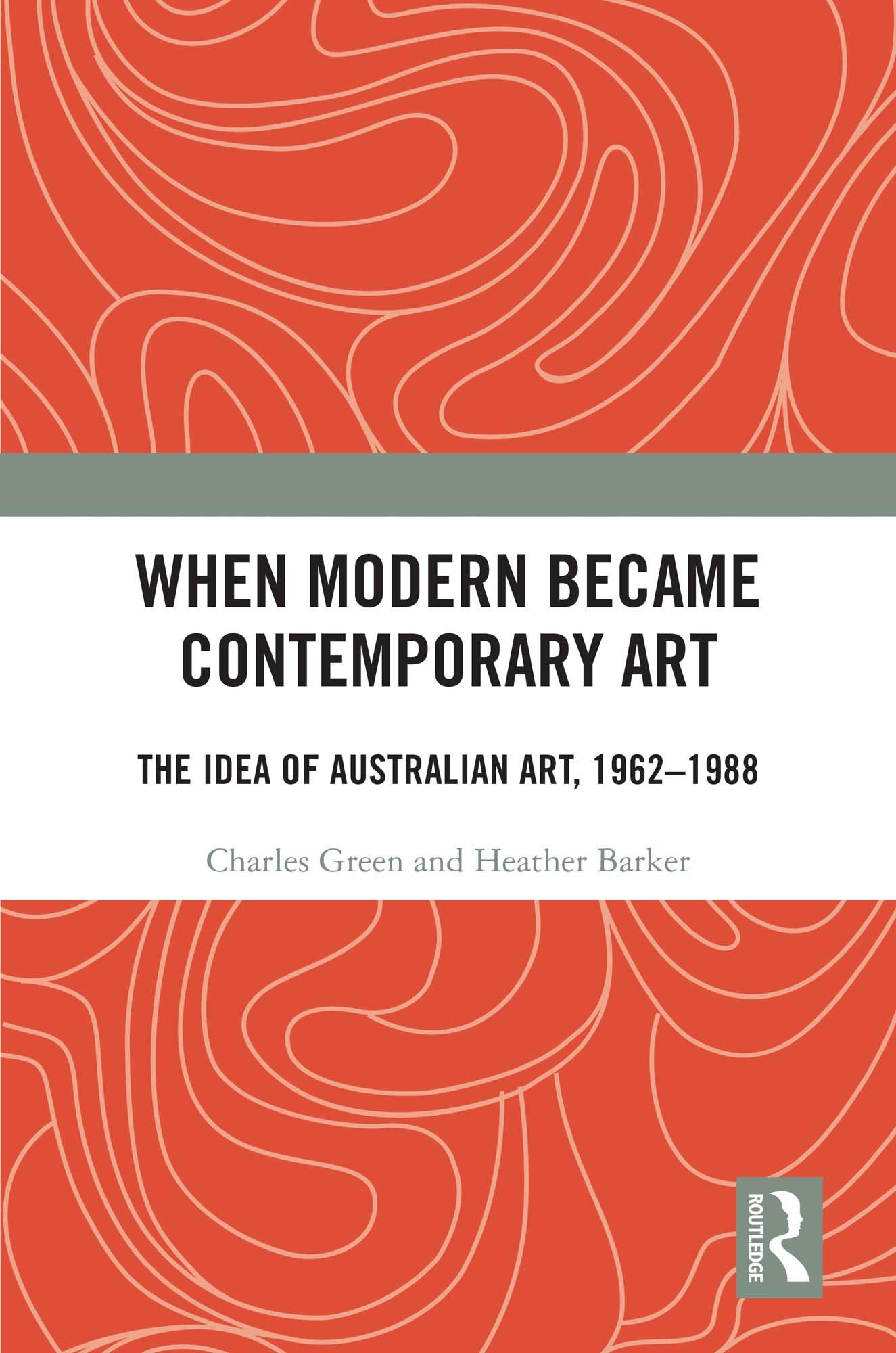
This book is a portrait of the period when modern art became contemporary art. It explores how and why writers and artists in Australia argued over the idea of a distinctively Australian modern and then postmodern art from 1962, the date of publication of a foundational book, Australian Painting 1788–1960, up to 1988, the year of the Australian Bicentennial.
Across nine chapters about art, exhibitions, curators and critics, this book describes the shift from modern art to contemporary art through the successive attempts to define a place in the world for Australian art. But by 1988, Australian art looked less and less like a viable tradition inside which to interpret ‘our’ art. Instead, vast gaps appeared, since mostly male and often older White writers had limited their horizons to White Australia alone. National stories by White men, like borders, had less and less explanatory value. Underneath this, a perplexing subject remained: the absence of Aboriginal art in understanding what Australian art was during the period that established the idea of a distinctive Australian modern and then contemporary art.
This book reflects on why the embrace of Aboriginal art was so late in art museums and histories of Australian art, arguing that this was because it was not part of a national story dominated by colonial, then neo-colonial dependency. It is important reading for all scholars of both global and Australian art, and for curators and artists.
Paga facilmente con carta, Klarna, Apple Pay o Google Pay. Non sei soddisfatto? Hai sempre 14 giorni per il rimborso. Leggi di più nei nostri termini. Per qualsiasi domanda, scrivici a hello@memmo.org.
Memmo rende lo studio più facile, ovunque tu sia nel mondo. Qui trovi i tuoi libri di testo e strumenti di studio intelligenti, tutto in un unico posto: riassunti, quiz, podcast e flashcard. E poi c'è Ted, il tuo compagno di studio che risponde a ogni tua domanda. Oltre 50.000 studenti studiano già qui: è stato creato per aiutarti a imparare più velocemente e a stressarti meno.