
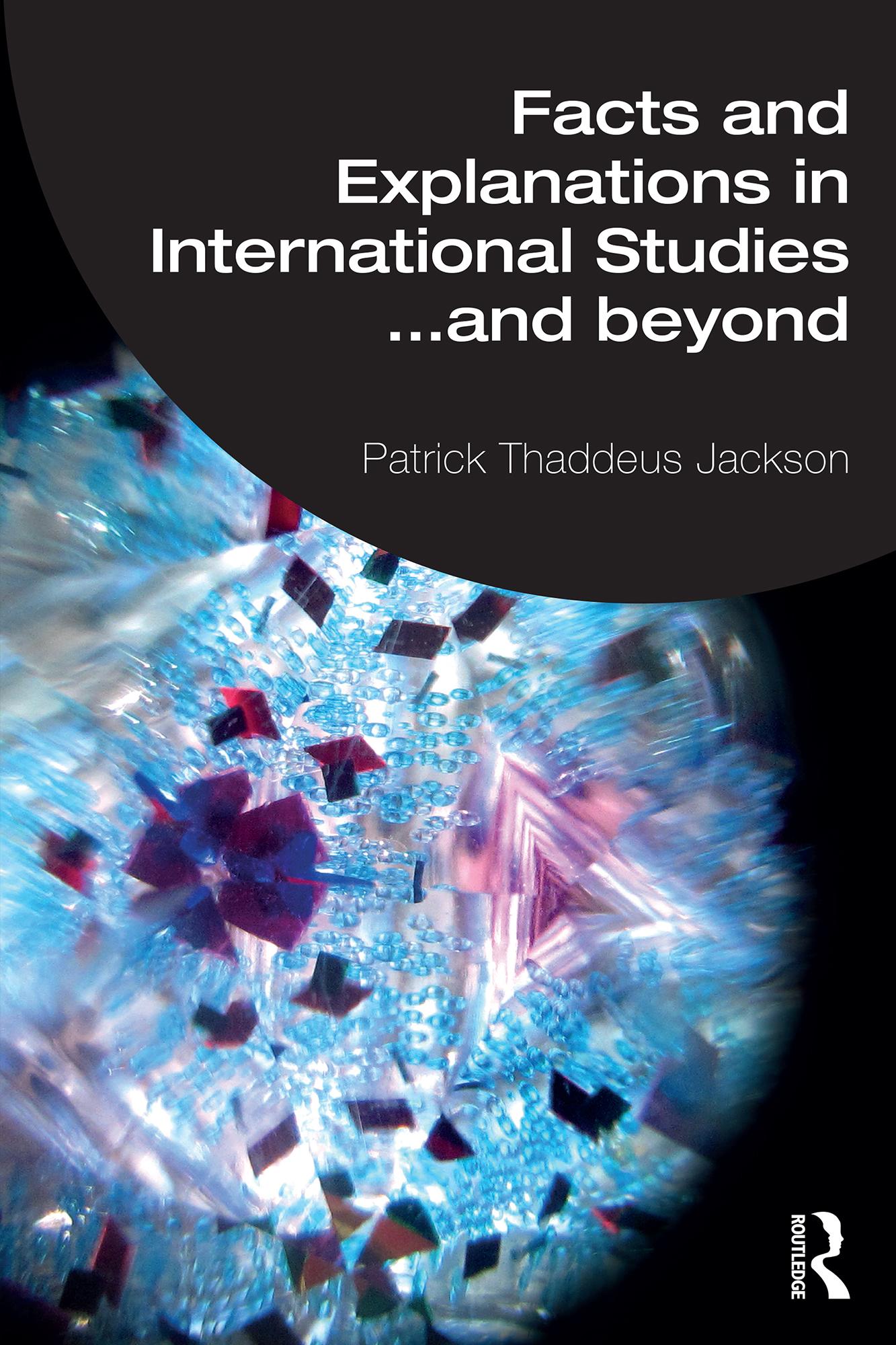
The politicizing of facts and factual claims has led some to abandon all talk of a meaningful distinction between a fact and a strongly held political commitment. This book argues that what we need, instead, are better accounts of facts and their relationship to explanation—ones that take seriously the dependence of facts on communities of practice and on consensus procedures of measurement, but do not abandon the epistemic distinctiveness of facts.
Bringing clarity and order to the discussion by disclosing both key commonalities and significant differences between the ways we talk about facts and explanations, Patrick Thaddeus Jackson argues that although intrinsically more contestable than facts, social-scientific explanations can nonetheless be related to them in ways that allow researchers to evaluate explanations based on whether and to what extent they accord with the relevant facts in each situation. Ardently defending a pragmatist account of knowledge that has no patience with either “alternative facts” or “anything goes” relativism, the author develops a set of concepts that enables tricky philosophical problems to be dissolved. After examining facts, causal explanations, and interpretive explanations, the book culminates in an account of the priority of interpretation in the evaluation of any explanation—and any seemingly factual claim.
Defining the terms of the debate and grounding better conversations about the issues, this book will appeal to all scholars interested in the philosophy and methodology of the social sciences, international studies, international relations, security studies, and anyone teaching or studying research methods.
Paga facilmente con carta, Klarna, Apple Pay o Google Pay. Non sei soddisfatto? Hai sempre 14 giorni per il rimborso. Leggi di più nei nostri termini. Per qualsiasi domanda, scrivici a hello@memmo.org.
Memmo rende lo studio più facile, ovunque tu sia nel mondo. Qui trovi i tuoi libri di testo e strumenti di studio intelligenti, tutto in un unico posto: riassunti, quiz, podcast e flashcard. E poi c'è Ted, il tuo compagno di studio che risponde a ogni tua domanda. Oltre 50.000 studenti studiano già qui: è stato creato per aiutarti a imparare più velocemente e a stressarti meno.