
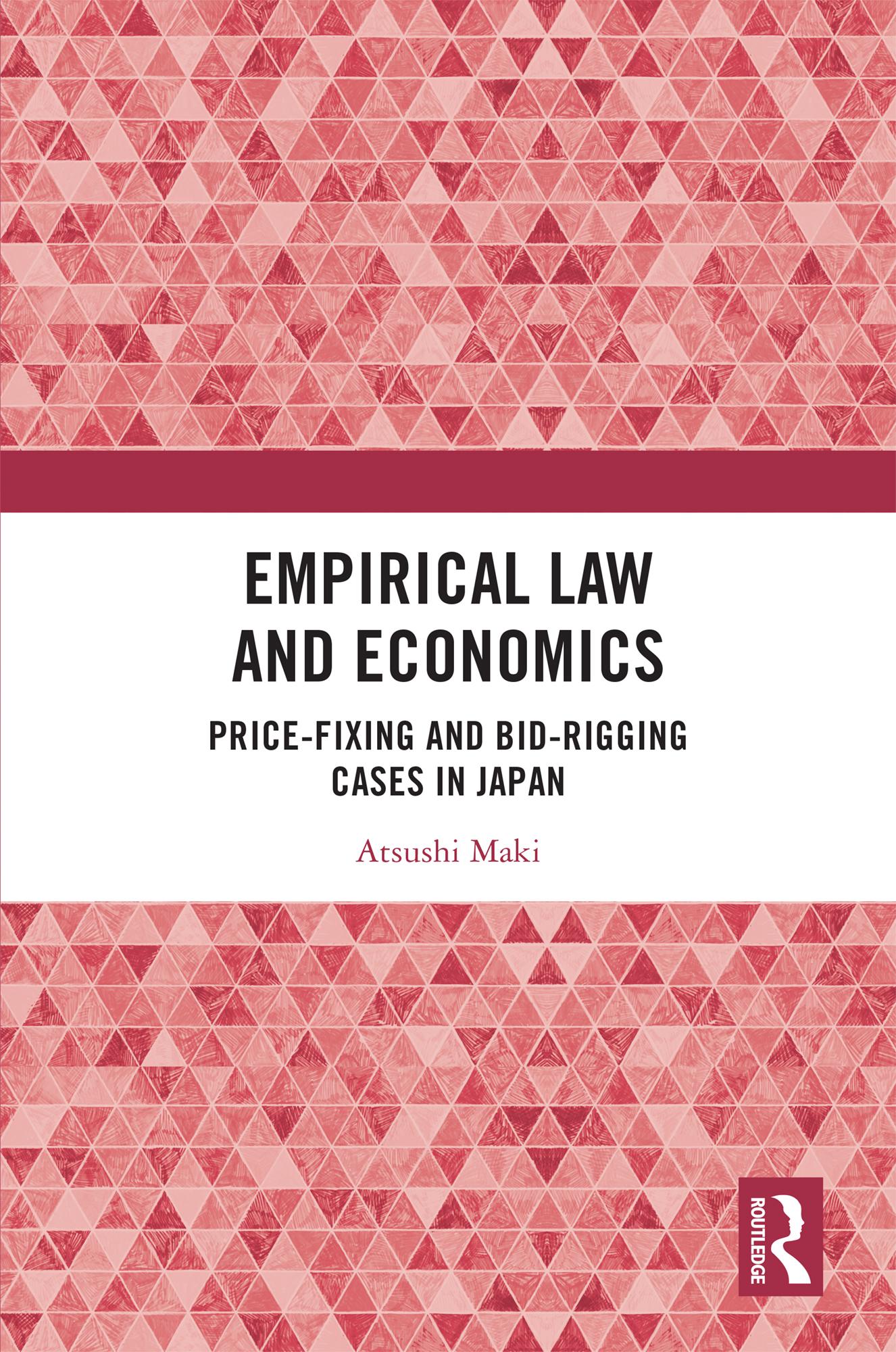
Maki provides an empirical analysis of law and economics by reevaluating Myrdal's value premises and Weber's separation of analysis and policy.
In modern civil society, individuals and businesses conduct economic activities through markets. The mainstream economic theory is the general equilibrium theory, which assumes a perfectly competitive market. The upshot is that transactions through competitive markets maximize the economic welfare of society, with policies such as deregulation and privatization being implemented with the backing of the law. However, in the real economy, legal transactions do not always take place, and this book analyzes price-fixing and bid-rigging cases. These cases show that there is a gap between competition philosophy and legislation. Using the real economy as data, this book conducts an empirical analysis of law and economics and illustrates issues related to the ideals of economics and the proper application of law. Accumulating empirical results will provide the means to form a healthy civil society.
A useful reference for graduate students and researchers in economics and legal research, and an interesting read for those who consider economics to be an empirical science.
Paga facilmente con carta, Klarna, Apple Pay o Google Pay. Non sei soddisfatto? Hai sempre 14 giorni per il rimborso. Leggi di più nei nostri termini. Per qualsiasi domanda, scrivici a hello@memmo.org.
Memmo rende lo studio più facile, ovunque tu sia nel mondo. Qui trovi i tuoi libri di testo e strumenti di studio intelligenti, tutto in un unico posto: riassunti, quiz, podcast e flashcard. E poi c'è Ted, il tuo compagno di studio che risponde a ogni tua domanda. Oltre 50.000 studenti studiano già qui: è stato creato per aiutarti a imparare più velocemente e a stressarti meno.