
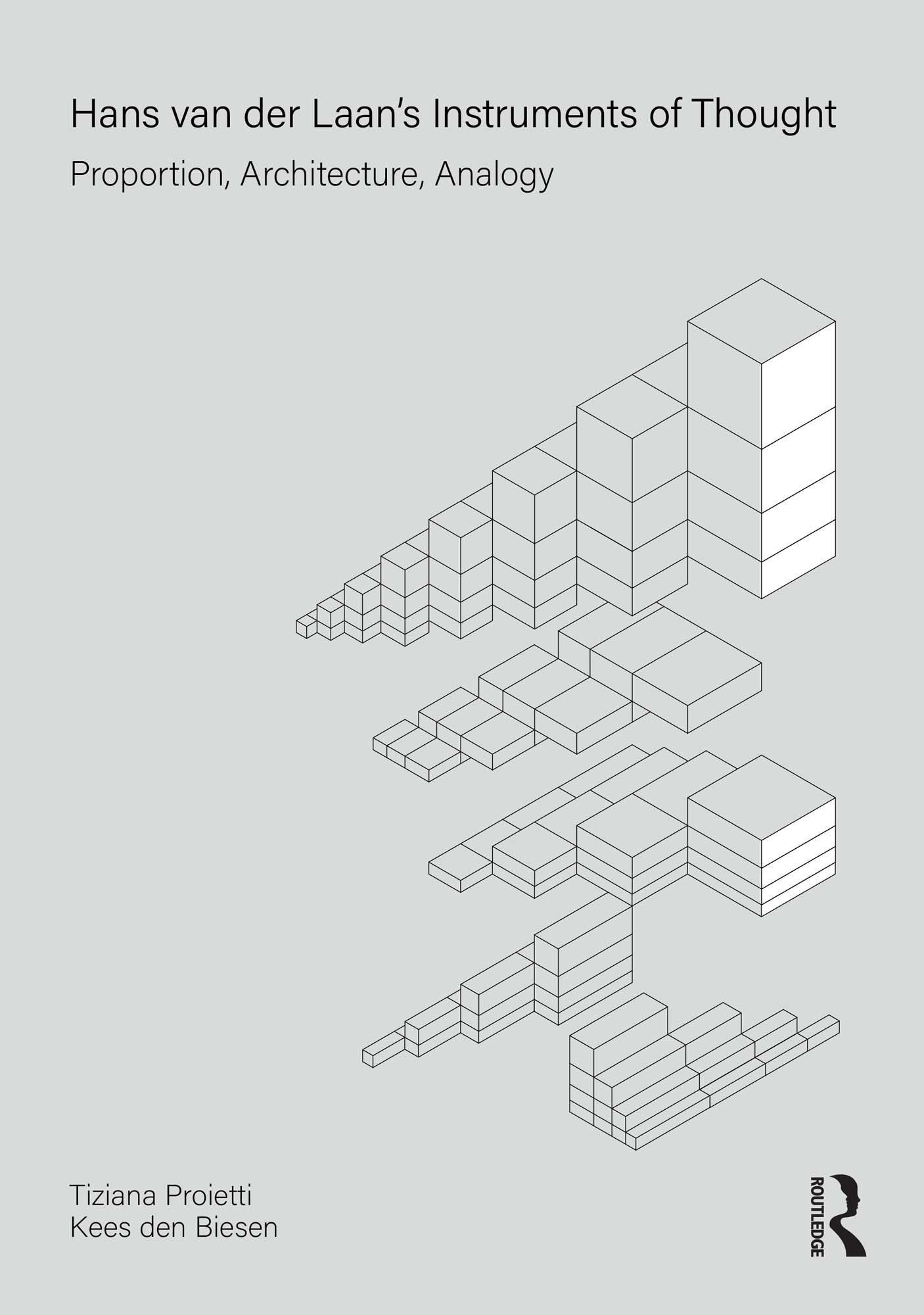
The work of the Dutch Benedictine monk and architect Hans van der Laan (1904–1991) offers important insights into the ways in which artifacts address the complexity of human physical, cognitive, and social needs. Van der Laan developed a number of powerful lines of thought, three of which are introduced here: the search for a theory of architecture; the establishment of a three-dimensional system of proportions named Plastic Number; and analogy as the mainspring of human thinking.
This triad of deeply interconnected intellectual strategies represents his most important ‘instruments of thought’ and is rooted in the careful observation of phenomena as they are presented to us rather than relying on conventional beliefs. Van der Laan's instruments of thought lead us to reconsider the origins of human creation, urging a deeper examination of our perceptual and cognitive response to the limitlessness of the surrounding environment. On this basis, Van der Laan develops a unique philosophy of culture and design that includes considerations on the relationship between nature, culture, and religious ritual.
Although this book is informative, its principal aim is to be formative. On the basis of Van der Laan’s instruments of thought, the authors develop a methodology to explore the Plastic Number theory and the many ways in which we perceive and interpret proportion. Reintroducing playful creativity and intellectual exploration into architectural pedagogy and design practice, this book is a gateway for a deeper understanding of the effects of the built environment on human behavior and the various ways in which the human mind perceives and decodes artifacts.
Paga facilmente con carta, Klarna, Apple Pay o Google Pay. Non sei soddisfatto? Hai sempre 14 giorni per il rimborso. Leggi di più nei nostri termini. Per qualsiasi domanda, scrivici a hello@memmo.org.
Memmo rende lo studio più facile, ovunque tu sia nel mondo. Qui trovi i tuoi libri di testo e strumenti di studio intelligenti, tutto in un unico posto: riassunti, quiz, podcast e flashcard. E poi c'è Ted, il tuo compagno di studio che risponde a ogni tua domanda. Oltre 50.000 studenti studiano già qui: è stato creato per aiutarti a imparare più velocemente e a stressarti meno.