
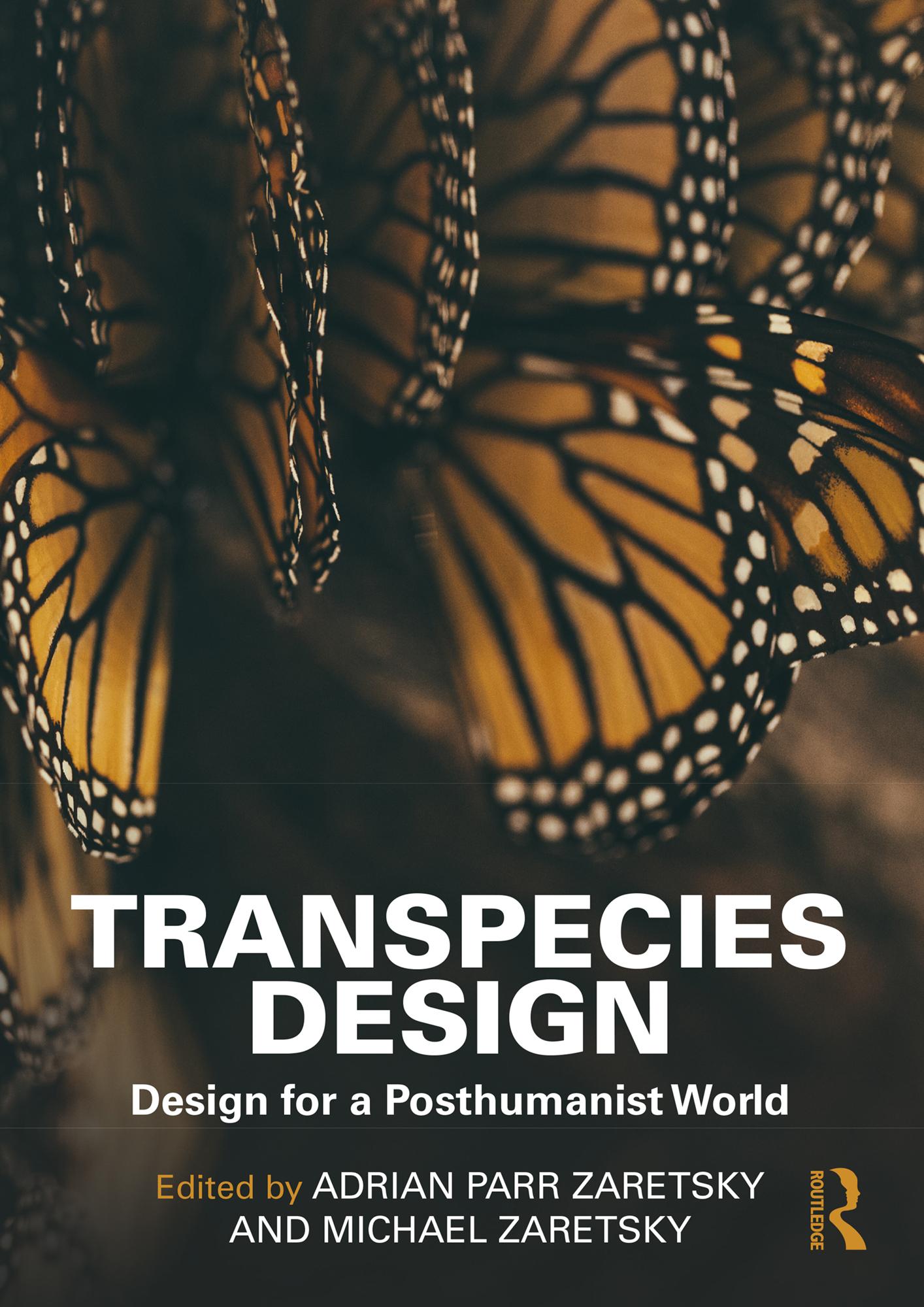
In May 2019, the United Nations released the Global Assessment Report on Biodiversity and Ecosystem Services which warned that human activities will drive nearly one million species to extinction in a few decades. The primary reasons for this are habitat loss and biodiversity demise caused by changing climate, pollution, introducing nonindigenous species, clearing land, over population, and consumption. Given this situation, humans must change course as both human wellbeing and the wellbeing of other-than-human species are imbricated in one another. One way humanity can accomplish the needed transformation is to move beyond an anthropocentric view of life by embracing a transpecies approach that is premised upon interconnected flourishing.
Transpecies design, as outlined in this book, offers a new approach to regenerating the natural environment while honoring biodiversity. Rather than presenting the human experience as the goal of design, transpecies design takes the inextricable linkages connecting living things as both its starting point and end goal. As such, it moves beyond human experience serving as the fundamental ingredient for making better design processes and decisions.
This book is essential reading for artists, designers, and architects, as well as students of architecture, landscape architecture, interior architecture, art, product design, urban design, planning, environmental philosophy, and cultural studies.
Paga facilmente con carta, Klarna, Apple Pay o Google Pay. Non sei soddisfatto? Hai sempre 14 giorni per il rimborso. Leggi di più nei nostri termini. Per qualsiasi domanda, scrivici a hello@memmo.org.
Memmo rende lo studio più facile, ovunque tu sia nel mondo. Qui trovi i tuoi libri di testo e strumenti di studio intelligenti, tutto in un unico posto: riassunti, quiz, podcast e flashcard. E poi c'è Ted, il tuo compagno di studio che risponde a ogni tua domanda. Oltre 50.000 studenti studiano già qui: è stato creato per aiutarti a imparare più velocemente e a stressarti meno.