
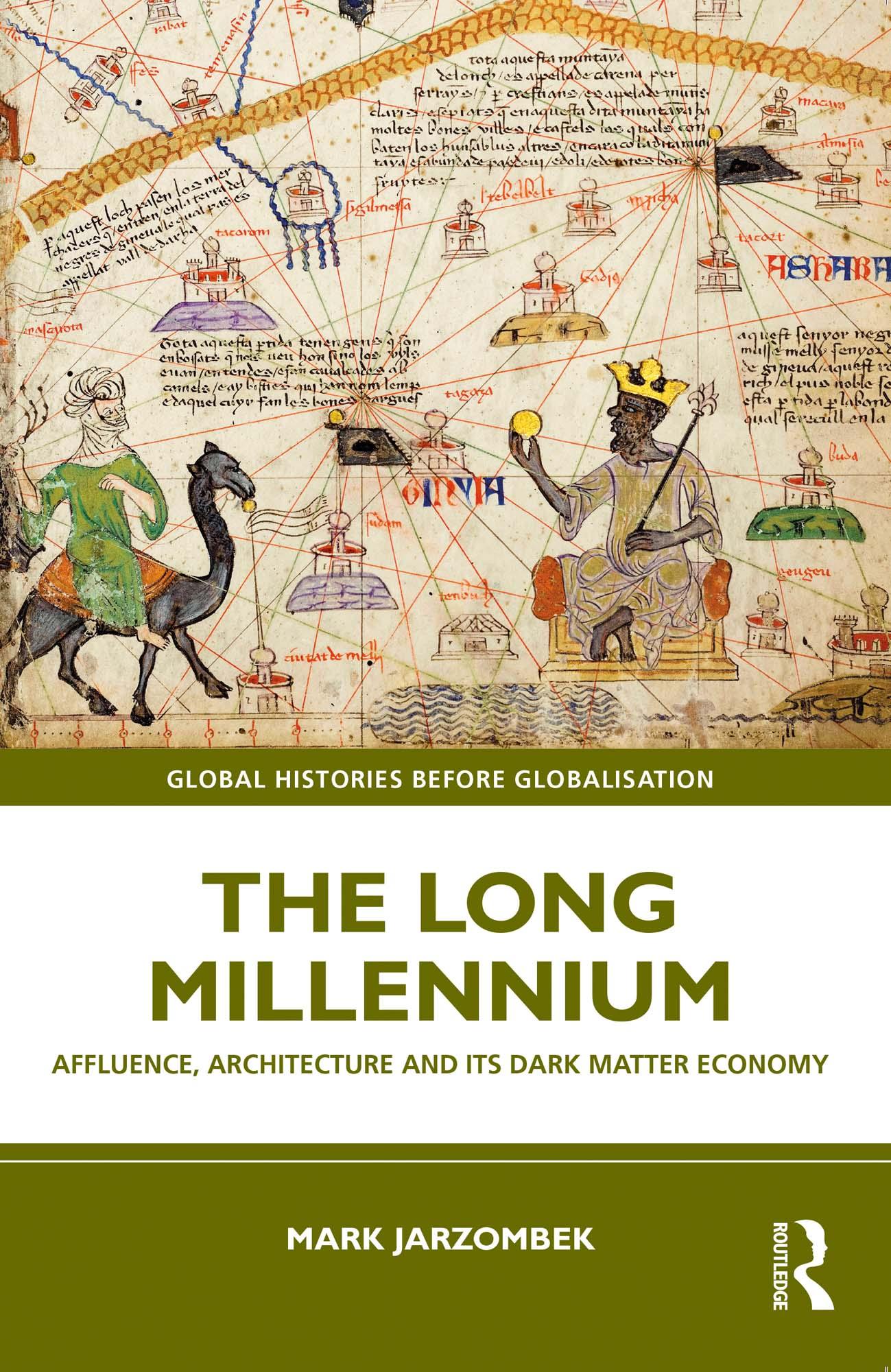
This book argues that long-distance trade in luxury items – such as diamonds, gold, cinnamon, scented woods, ivory and pearls, all of which require little overhead in their acquisition and were relatively easy to transport – played a foundational role in the creation of what we would call "global trade" in the first millennium CE. The book coins the term "dark matter economy" to better describe this complex – though mostly invisible – relationship to normative realities.
The first full integration of dark matter economy with the emerging global flows took place in South India and Sri Lanka at the beginning of the millennium. The book then moves to other places in the world – "sweet spots" – where a particular type of affluence was generated through the trade in luxury goods. This upstream affluence manifested itself in the creation of shrines, palaces, temples and engineering works that all thickened the landscape of memory, control and extraction and also served as a defense mechanism against intrusions from afar. The book also explains the collapse of dark matter economy as a result of the cumulative energies of colonialism, modernization and nationalism that make it hard for us today to come to terms with this history.
The Long Millennium will appeal to students and scholars alike studying the trade networks and economics of the early Middle Ages as well as anyone interested in the effect of trade on medieval society in the first millennium CE.
Paga facilmente con carta, Klarna, Apple Pay o Google Pay. Non sei soddisfatto? Hai sempre 14 giorni per il rimborso. Leggi di più nei nostri termini. Per qualsiasi domanda, scrivici a hello@memmo.org.
Memmo rende lo studio più facile, ovunque tu sia nel mondo. Qui trovi i tuoi libri di testo e strumenti di studio intelligenti, tutto in un unico posto: riassunti, quiz, podcast e flashcard. E poi c'è Ted, il tuo compagno di studio che risponde a ogni tua domanda. Oltre 50.000 studenti studiano già qui: è stato creato per aiutarti a imparare più velocemente e a stressarti meno.