
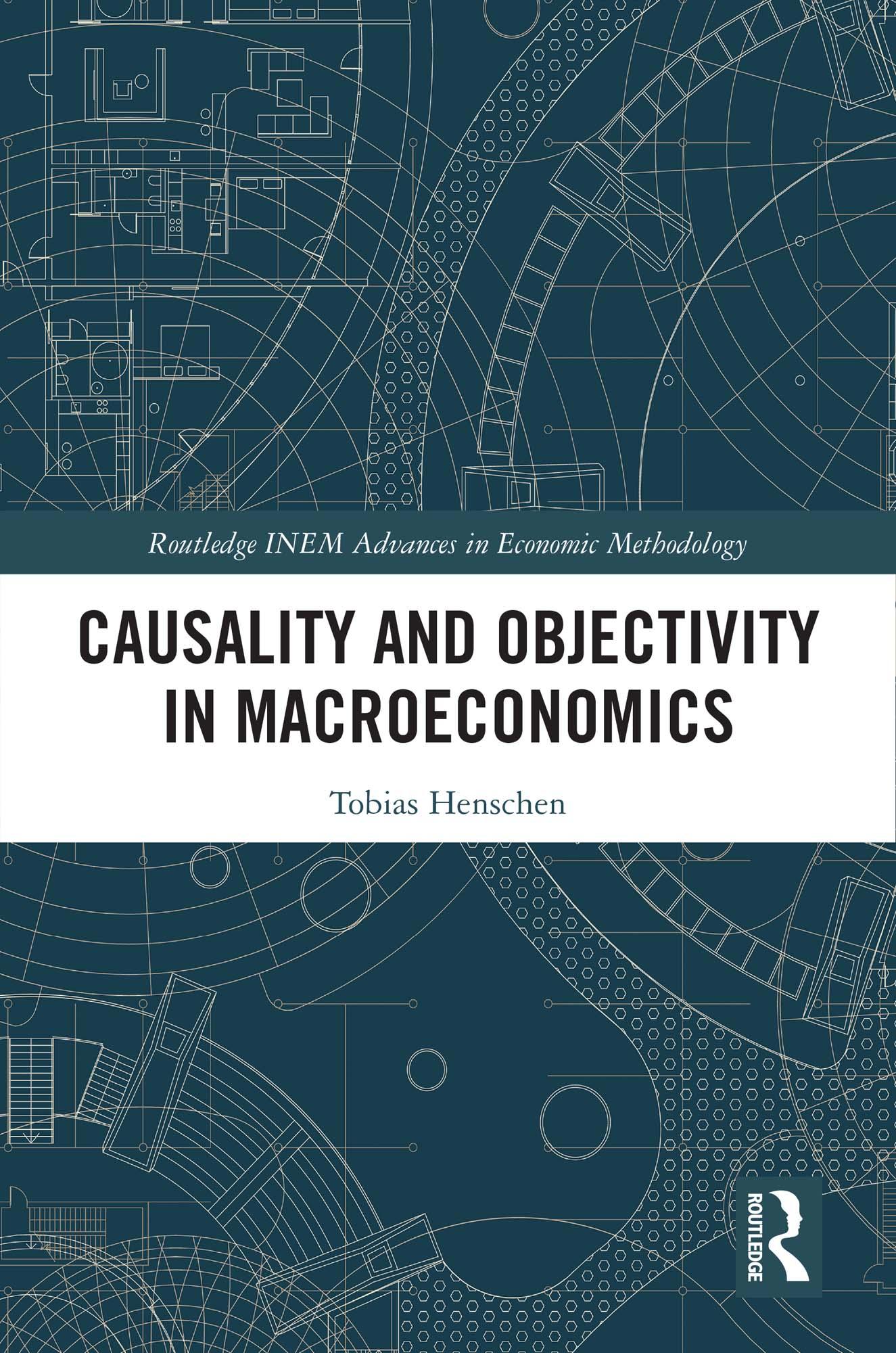
Central banks and other policymaking institutions use causal hypotheses to justify macroeconomic policy decisions to the public and public institutions. These hypotheses say that changes in one macroeconomic aggregate (e.g. aggregate demand) cause changes in other macroeconomic aggregates (e.g. in inflation). An important (perhaps the most important) goal of macroeconomists is to provide conclusive evidence in support of these hypotheses. If they cannot provide any conclusive evidence, then policymaking institutions will be unable to use causal hypotheses to justify policy decisions, and then the scientific objectivity of macroeconomic policy analysis will be questionable.
The book analyzes the accounts of causality that have been or can be proposed to capture the type of causality that underlies macroeconomic policy analysis, the empirical methods of causal inference that contemporary macroeconomists have at their disposal, and the conceptions of scientific objectivity that traditionally play a role in economics. The book argues that contemporary macroeconomists cannot provide any conclusive evidence in support of causal hypotheses, and that macroeconomic policy analysis doesn’t qualify as scientifically objective in any of the traditional meanings. The book also considers a number of steps that might have to be taken in order for macroeconomic policy analysis to become more objective.
The book addresses philosophers of science and economics as well as (macro-) economists, econometricians and statisticians who are interested in causality and macro-econometric methods of causal inference and their wider philosophical and social context.
Paga facilmente con carta, Klarna, Apple Pay o Google Pay. Non sei soddisfatto? Hai sempre 14 giorni per il rimborso. Leggi di più nei nostri termini. Per qualsiasi domanda, scrivici a hello@memmo.org.
Memmo rende lo studio più facile, ovunque tu sia nel mondo. Qui trovi i tuoi libri di testo e strumenti di studio intelligenti, tutto in un unico posto: riassunti, quiz, podcast e flashcard. E poi c'è Ted, il tuo compagno di studio che risponde a ogni tua domanda. Oltre 50.000 studenti studiano già qui: è stato creato per aiutarti a imparare più velocemente e a stressarti meno.