
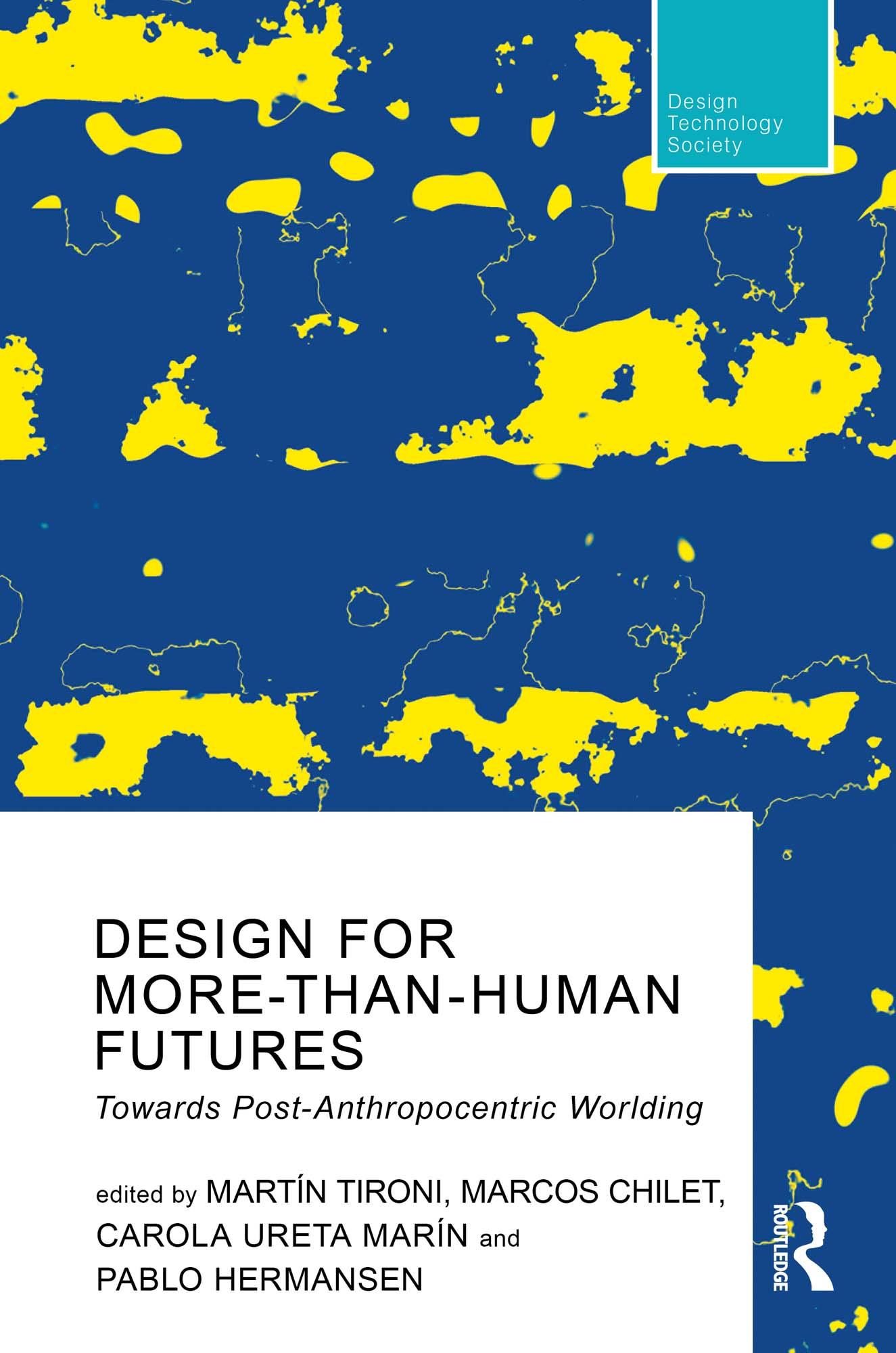
This book explores the work of important authors in the search for a transition towards more ethical design focused on more-than-human coexistence.
In a time of environmental crises in which the human species threatens its own survival and the highest level of exacerbation of the idea of a future and technological innovation, it is important to discard certain anthropocentric categories in order to situate design beyond the role that it traditionally held in the capitalist world, creating opportunities to create more just and sustainable worlds. This book is an invitation to travel new paths for design framed by ethics of more-than-human coexistence that breaks with the unsustainability installed in the designs that outfit our lives. Questioning the notion of human-centered design is central to this discussion. It is not only a theoretical and methodological concern, but an ethical need to critically rethink the modern, colonialist, and anthropocentric inheritance that resonates in design culture. The authors in this book explore the ideas oriented to form new relations with the more-than-human and with the planet, using design as a form of political enquiry.
This book will be of interest to academics and students from the world of design and particularly those involved in emerging branches of the field such as speculative design, critical design, non-anthropocentric design, and design for transition.
Paga facilmente con carta, Klarna, Apple Pay o Google Pay. Non sei soddisfatto? Hai sempre 14 giorni per il rimborso. Leggi di più nei nostri termini. Per qualsiasi domanda, scrivici a hello@memmo.org.
Memmo rende lo studio più facile, ovunque tu sia nel mondo. Qui trovi i tuoi libri di testo e strumenti di studio intelligenti, tutto in un unico posto: riassunti, quiz, podcast e flashcard. E poi c'è Ted, il tuo compagno di studio che risponde a ogni tua domanda. Oltre 50.000 studenti studiano già qui: è stato creato per aiutarti a imparare più velocemente e a stressarti meno.