
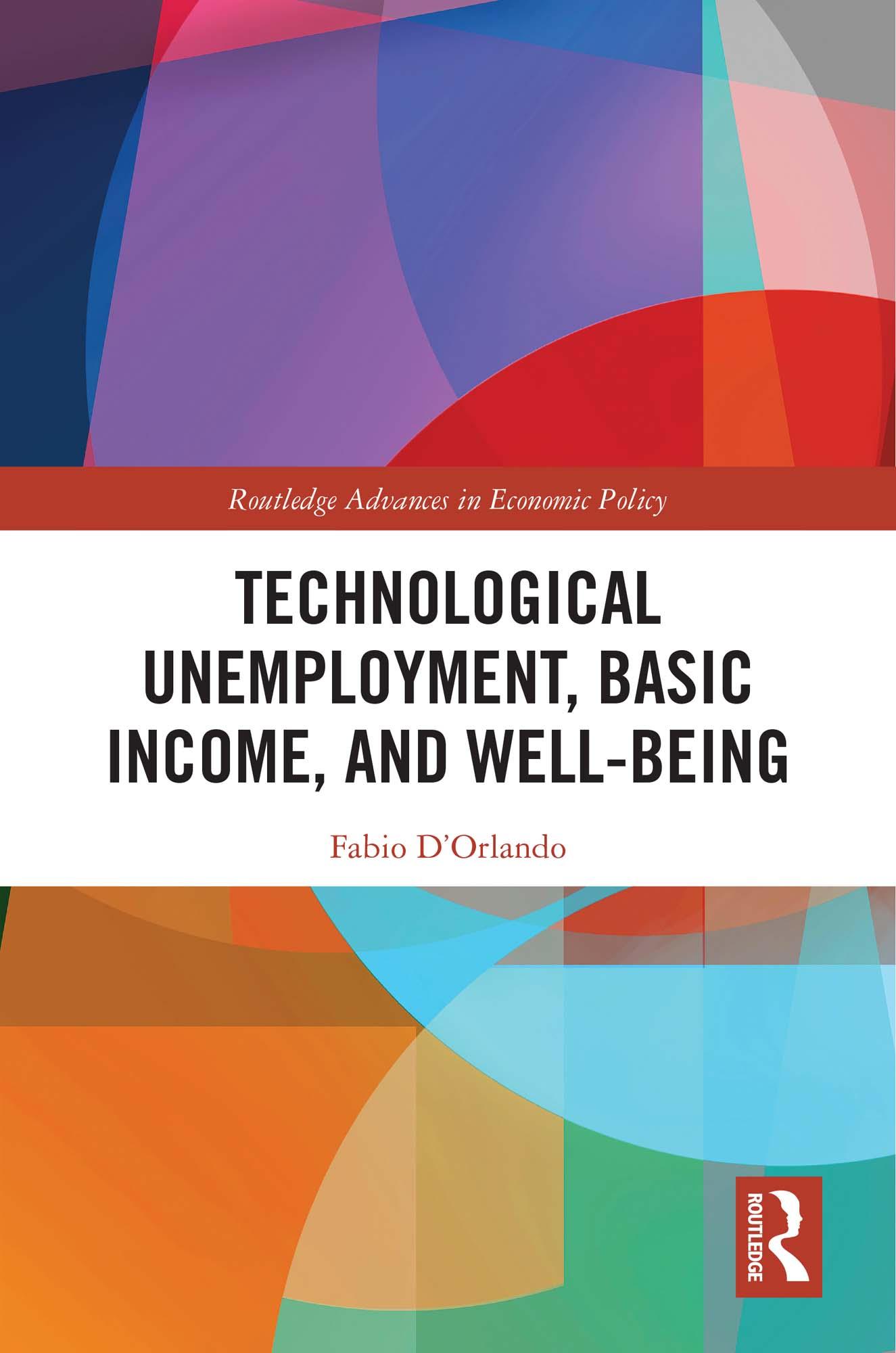
The main novelty of the Fourth Industrial Revolution is the entry of robots and Artificial Intelligence into the production process. This phenomenon could potentially generate high levels of unemployment, or even full unemployment, and therefore calls for innovative public policies.
This book adopts an agnostic position on the size of the future impact of technological progress on employment but proposes a thought experiment built on a full unemployment scenario, which focuses on the consequences that these policies might have for people’s well-being, with particular reference to the provision of a universal Basic Income (UBI). Relying on some of the principles and models of Behavioral and Happiness Economics, it is argued that implementing a UBI that does not change over time may increase well-being inequality. A policy mix that combines a rising basic income with other measures is therefore recommended.
This book marks a significant contribution to the literature on economic policy, labor economics, the economics of well-being and happiness, and behavioral economics.
Paga facilmente con carta, Klarna, Apple Pay o Google Pay. Non sei soddisfatto? Hai sempre 14 giorni per il rimborso. Leggi di più nei nostri termini. Per qualsiasi domanda, scrivici a hello@memmo.org.
Memmo rende lo studio più facile, ovunque tu sia nel mondo. Qui trovi i tuoi libri di testo e strumenti di studio intelligenti, tutto in un unico posto: riassunti, quiz, podcast e flashcard. E poi c'è Ted, il tuo compagno di studio che risponde a ogni tua domanda. Oltre 50.000 studenti studiano già qui: è stato creato per aiutarti a imparare più velocemente e a stressarti meno.