
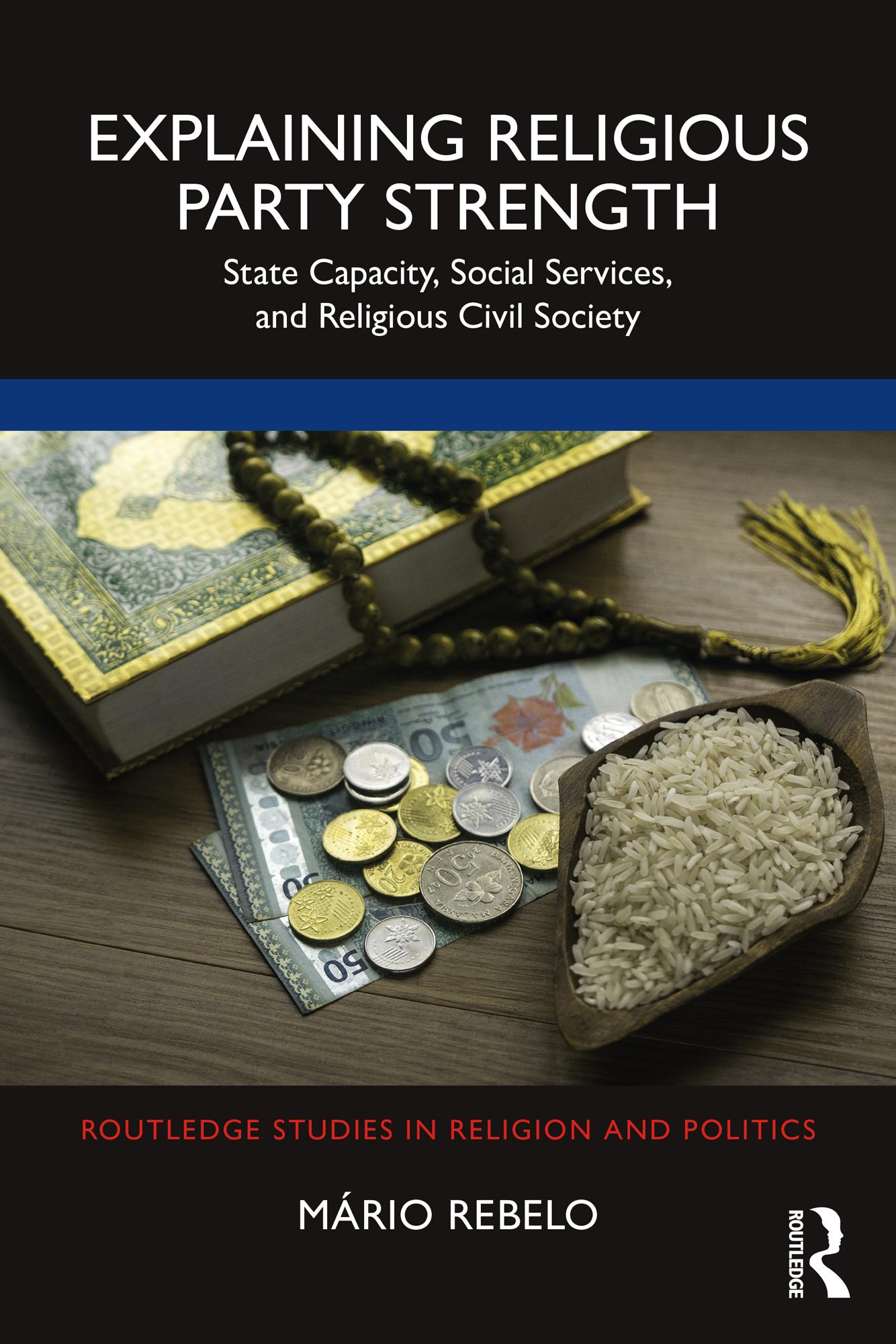
Explaining Religious Party Strength explores why religious political parties are electorally successful in some countries but not in others.
Drawing on insights from political science and sociology, this book argues that religious parties are typically formed for defensive reasons, reacting against state-builders’ attempts to secularize public services such as education, welfare, and healthcare. Building on these findings, the author argues that the strength of religious parties is determined by the infrastructural power of the state. Weak states that fail to provide adequate public services open up space for religious communities to build a dense network of private schools, hospitals, and charities, which translates into votes for religious political parties. By contrast, strong states that provide efficient public services squeeze out private welfare providers, undermining the electoral strength of religious political parties. The author tests this theory through statistical analysis, using a new dataset on all religious parties which have participated in national parliamentary elections between 1800 and 2015. He includes comparative historical analyses of Roman Catholic political parties in France and Italy and Sunni Islamic political parties in Egypt, Turkey, and Albania.
This book will interest students and scholars of religion and politics, specifically those interested in party formation, voting, and political activism, as well as policymakers.
Paga facilmente con carta, Klarna, Apple Pay o Google Pay. Non sei soddisfatto? Hai sempre 14 giorni per il rimborso. Leggi di più nei nostri termini. Per qualsiasi domanda, scrivici a hello@memmo.org.
Memmo rende lo studio più facile, ovunque tu sia nel mondo. Qui trovi i tuoi libri di testo e strumenti di studio intelligenti, tutto in un unico posto: riassunti, quiz, podcast e flashcard. E poi c'è Ted, il tuo compagno di studio che risponde a ogni tua domanda. Oltre 50.000 studenti studiano già qui: è stato creato per aiutarti a imparare più velocemente e a stressarti meno.