
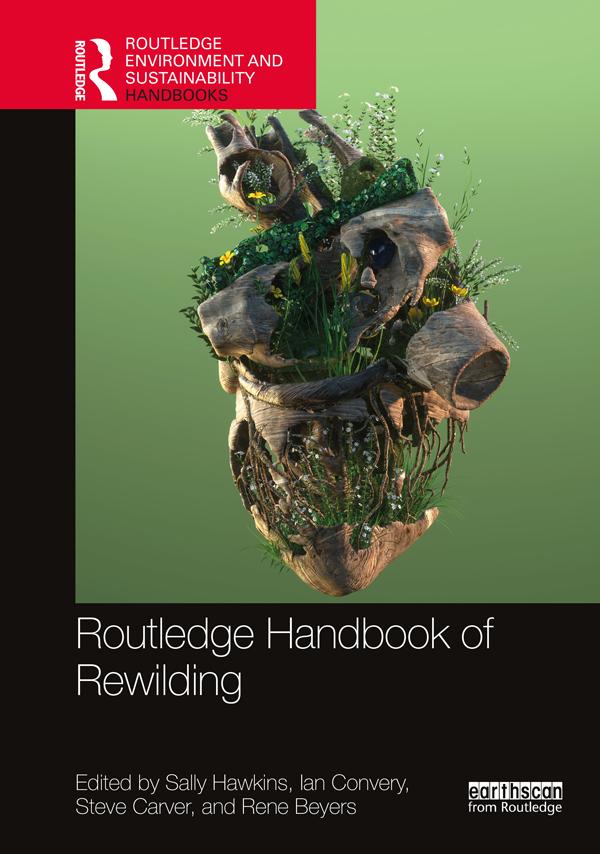
This handbook provides a comprehensive overview of the history, theory, and current practices of rewilding.
Rewilding offers a transformational paradigm shift in conservation thinking, and as such is increasingly of interest to academics, policymakers, and practitioners. However, as a rapidly emerging area of conservation, the term has often been defined and used in a variety of different ways (both temporally and spatially). There is, therefore, the need for a comprehensive assessment of this field, and the Routledge Handbook of Rewilding fills this lacuna. The handbook is organised into four sections to reflect key areas of rewilding theory, practice, and debate: the evolution of rewilding, theoretical and practical underpinnings, applications and impacts, and the ethics and philosophy of rewilding. Drawing on a range of international case studies the handbook addresses many of the key issues, including land acquisition and longer-term planning, transitioning from restoration (human-led, nature enabled) to rewilding (nature-led, human enabled), and the role of political and social transformational change.
Led by an editorial team who have extensive experience researching and practising rewilding, this handbook is essential reading for students, academics and practitioners interested in rewilding, ecological restoration, natural resource management and conservation.
Paga facilmente con carta, Klarna, Apple Pay o Google Pay. Non sei soddisfatto? Hai sempre 14 giorni per il rimborso. Leggi di più nei nostri termini. Per qualsiasi domanda, scrivici a hello@memmo.org.
Memmo rende lo studio più facile, ovunque tu sia nel mondo. Qui trovi i tuoi libri di testo e strumenti di studio intelligenti, tutto in un unico posto: riassunti, quiz, podcast e flashcard. E poi c'è Ted, il tuo compagno di studio che risponde a ogni tua domanda. Oltre 50.000 studenti studiano già qui: è stato creato per aiutarti a imparare più velocemente e a stressarti meno.