
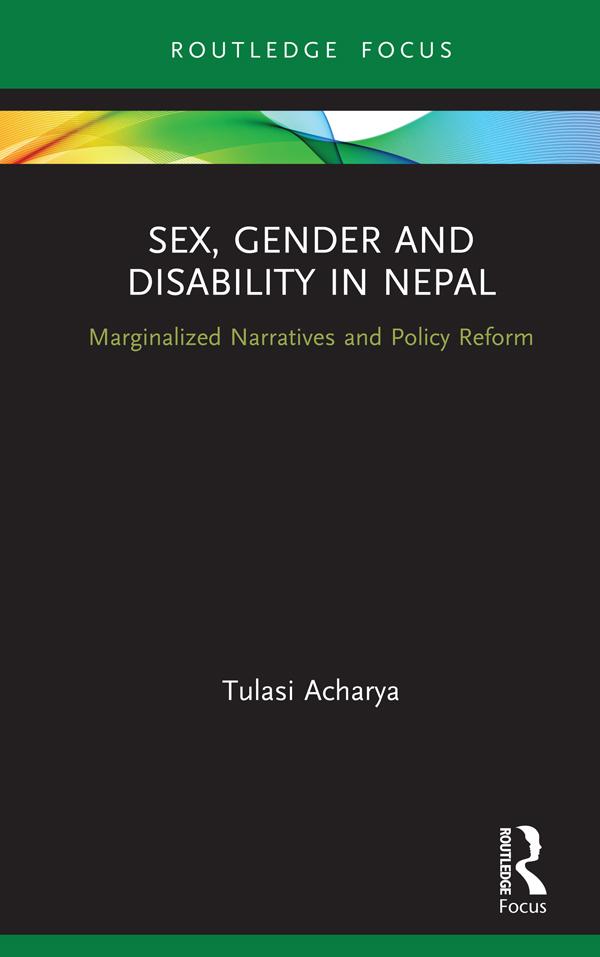
This book explores the sex lives of women with disabilities in Nepal, showing that many women suffer more than men despite prevailing disability policies that emphasize nondiscrimination against people with disabilities. It also argues that far from general perceptions of women as asexual, women with disabilities are capable of leading highly creative and fulfilling sexual lives.
Using critical sexual theory and postcolonial studies as critical frameworks, the book investigates the narratives of authors with disabilities, exploring policy gaps and the need for supportive gender and sexual policies through the words of those affected. In particular, the book analyzes five female Nepali authors with disabilities: Radhika Dahal, Jhamak Ghimire, Sabitri Karki, Parijaat, and Mira Sahi, demonstrating the need for supportive gender policies to address the emotional and psychological needs of women with disabilities. Overall, the book argues that disciplinary discourses in practice often consider sex or sexuality as taboo, barely recognizing women in the context of marriage and family, and therefore creating gaps between policies and marginalized narratives.
This book provides important insights into sex and disability within the context of the Global South, and as such will be of interest not only to researchers working on Nepal but also to scholars across gender studies, disability studies, international development, and postcolonialism.
Paga facilmente con carta, Klarna, Apple Pay o Google Pay. Non sei soddisfatto? Hai sempre 14 giorni per il rimborso. Leggi di più nei nostri termini. Per qualsiasi domanda, scrivici a hello@memmo.org.
Memmo rende lo studio più facile, ovunque tu sia nel mondo. Qui trovi i tuoi libri di testo e strumenti di studio intelligenti, tutto in un unico posto: riassunti, quiz, podcast e flashcard. E poi c'è Ted, il tuo compagno di studio che risponde a ogni tua domanda. Oltre 50.000 studenti studiano già qui: è stato creato per aiutarti a imparare più velocemente e a stressarti meno.