
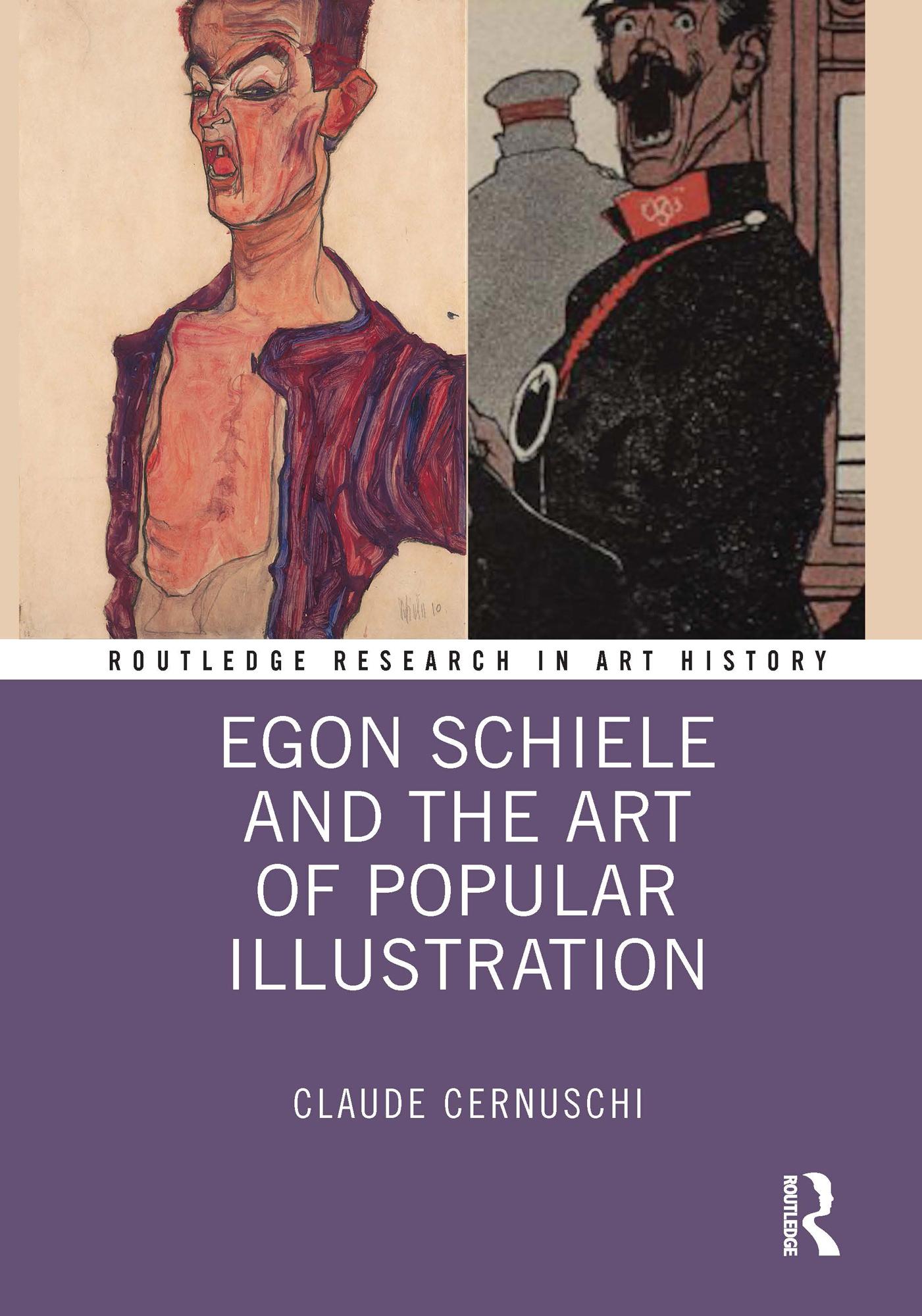
Presenting a radically different picture of Egon Schiele’s work, this study documents (in one-to-one comparisons) the extent of the artist’s visual borrowings from the Viennese humoristic journal, Die Muskete.
Claude Cernuschi analyzes each comparison on a case-by-case basis, primarily because the interpretation of cartoons and caricatures is highly contingent on their specific historical and cultural context. Although this connection has gone unnoticed in the literature, in retrospect, this correlation makes perfect sense. Not only was Schiele’s artistic production frequently compared to caricature (and derided for being “grotesque”), but Expressionism and caricature are natural allies. One may belong to “high” art and the other to “popular” culture, yet both presuppose similar assumptions and deploy a similar rhetorical position: namely, that the exaggeration of human physiognomy allows deeper psychological “truths” to emerge.
The book will be of interest to scholars working in art history, visual culture, popular culture, and politics.
Paga facilmente con carta, Klarna, Apple Pay o Google Pay. Non sei soddisfatto? Hai sempre 14 giorni per il rimborso. Leggi di più nei nostri termini. Per qualsiasi domanda, scrivici a hello@memmo.org.
Memmo rende lo studio più facile, ovunque tu sia nel mondo. Qui trovi i tuoi libri di testo e strumenti di studio intelligenti, tutto in un unico posto: riassunti, quiz, podcast e flashcard. E poi c'è Ted, il tuo compagno di studio che risponde a ogni tua domanda. Oltre 50.000 studenti studiano già qui: è stato creato per aiutarti a imparare più velocemente e a stressarti meno.