
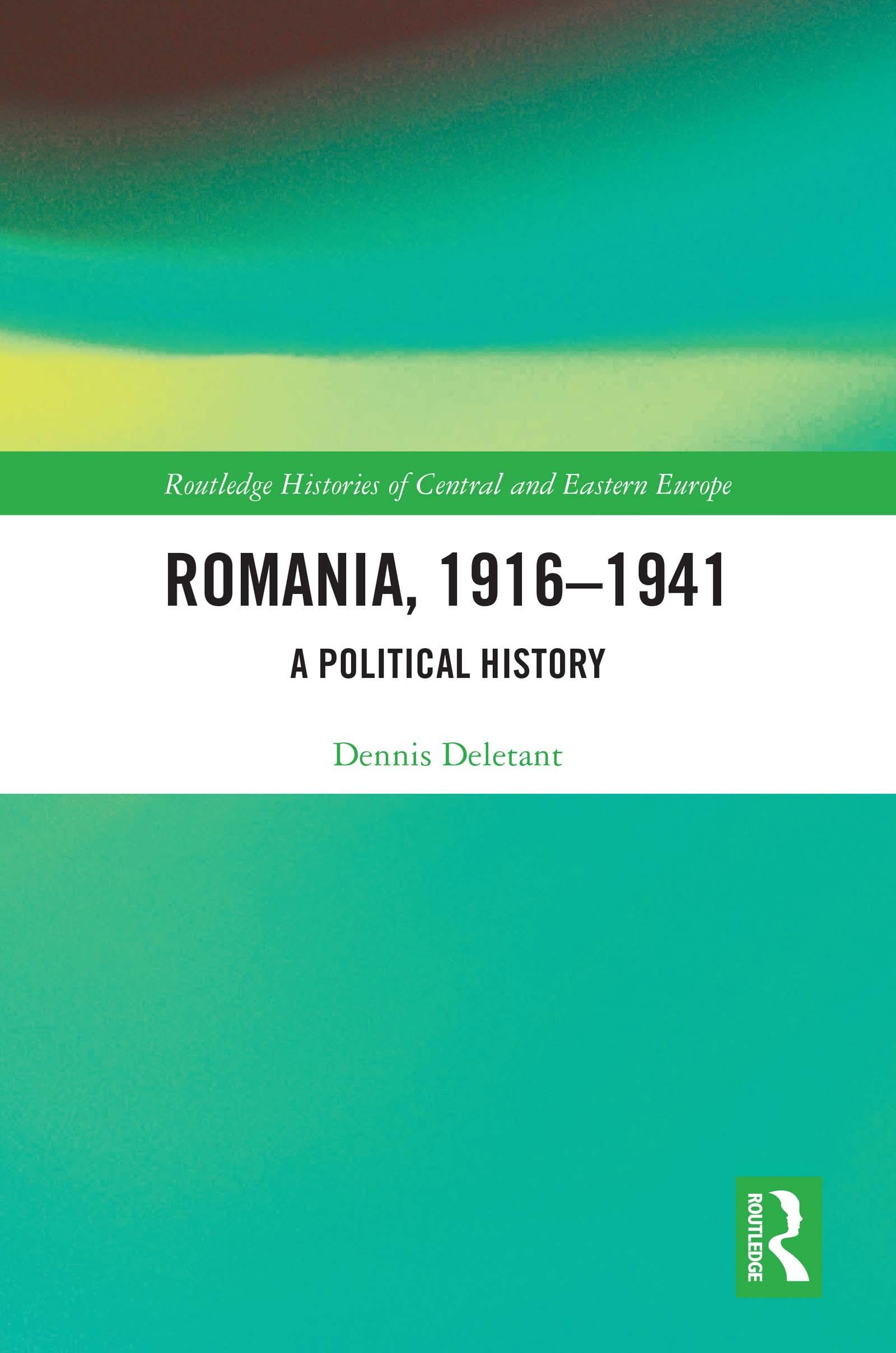
This study challenges the rose-tinted view of the interwar period in Romanian history, which is often judged against the darkness of almost five decades of Communist rule.
Romania, like several of the states of Eastern Europe, emerged from the First World War as it had entered it, as a predominantly agricultural country, and one of its major problems was the condition of the peasantry. This volume’s focus is the drive to improve that condition, on the collapse of democracy, and the search by Romania’s leaders for strategies to secure the state, to assert the country’s independence, and to maintain its territorial integrity in the face of the threat to the European order posed by two totalitarian systems, represented by Nazi Germany and the Soviet Union. By examining recent scholarship, this volume provides the most up-to-date account of Romania’s predicament in the interwar years.
Romania, 1916–1941 is a useful resource for upper-level undergraduates, postgraduates and scholars interested in foreign policy, politics, society, internationalization and late development in interwar Central and Eastern Europe.
Paga facilmente con carta, Klarna, Apple Pay o Google Pay. Non sei soddisfatto? Hai sempre 14 giorni per il rimborso. Leggi di più nei nostri termini. Per qualsiasi domanda, scrivici a hello@memmo.org.
Memmo rende lo studio più facile, ovunque tu sia nel mondo. Qui trovi i tuoi libri di testo e strumenti di studio intelligenti, tutto in un unico posto: riassunti, quiz, podcast e flashcard. E poi c'è Ted, il tuo compagno di studio che risponde a ogni tua domanda. Oltre 50.000 studenti studiano già qui: è stato creato per aiutarti a imparare più velocemente e a stressarti meno.