
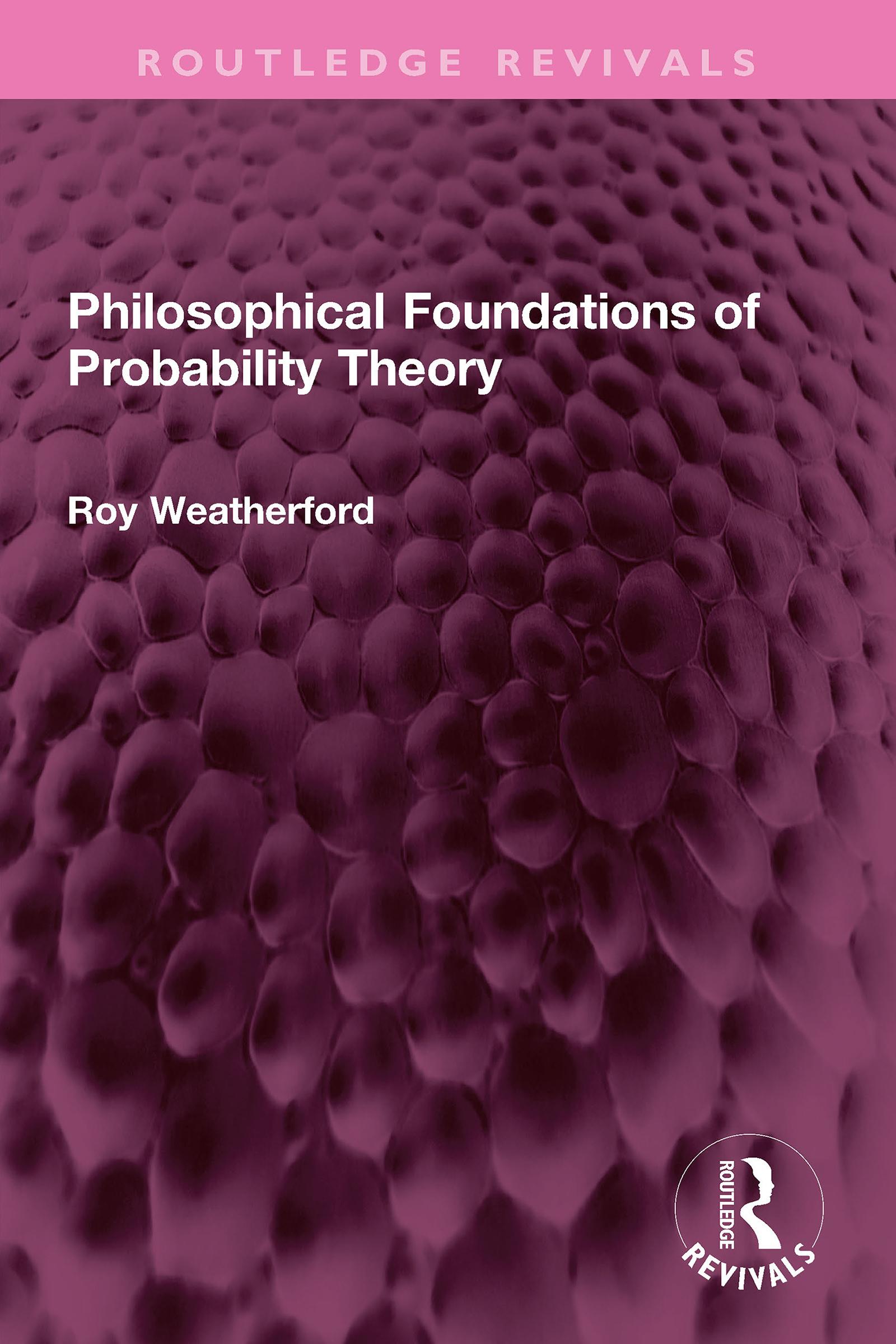
First published in 1982, Philosophical Foundations of Probability Theory starts with the uses we make of the concept in everyday life and then examines the rival theories that seek to account for these applications. It offers a critical exposition of the major philosophical theories of probability, with special attention given to the metaphysical and epistemological assumptions and implications of each. The Classical Theory suggests probability is simply the ratio of favorable cases to all equi-possible cases: it is this theory that is relied on by gamblers and by most non-specialists. The A Priori Theory, on the other hand, describes probability as a logical relation between statements based on evidence. The Relative Frequency theories locate it not in logic but among empirical rates of occurrence in the real world, while the Subjectivist Theory identifies probability with the degree of a person’s belief in a proposition. Each of these types of theory is examined in turn, and the treatment is unified by the use of running examples and parallel analyses of each theory. The final chapter includes a summary and the author’s conclusions. This book is an essential read for scholars and researchers of Philosophy.
Paga facilmente con carta, Klarna, Apple Pay o Google Pay. Non sei soddisfatto? Hai sempre 14 giorni per il rimborso. Leggi di più nei nostri termini. Per qualsiasi domanda, scrivici a hello@memmo.org.
Memmo rende lo studio più facile, ovunque tu sia nel mondo. Qui trovi i tuoi libri di testo e strumenti di studio intelligenti, tutto in un unico posto: riassunti, quiz, podcast e flashcard. E poi c'è Ted, il tuo compagno di studio che risponde a ogni tua domanda. Oltre 50.000 studenti studiano già qui: è stato creato per aiutarti a imparare più velocemente e a stressarti meno.