
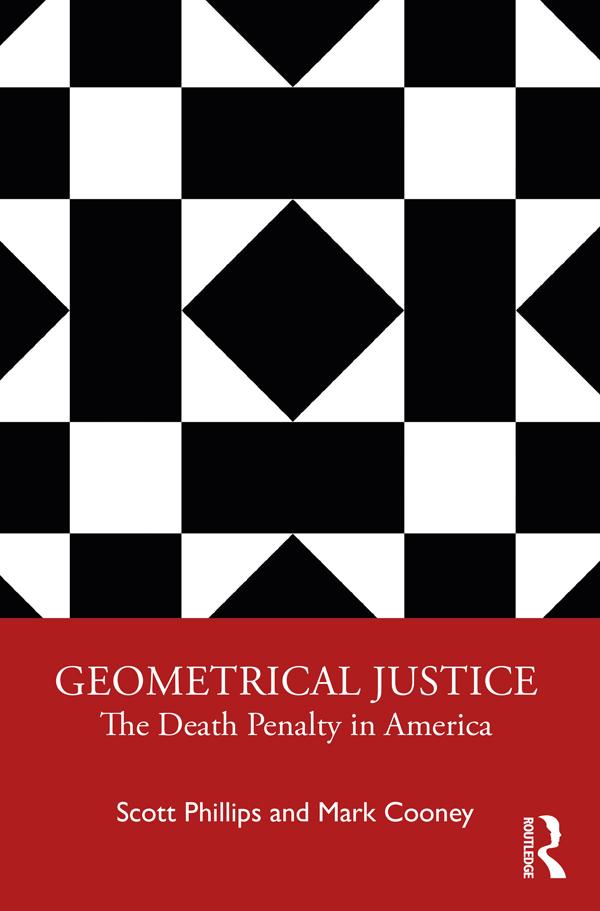
Legal decisions continue to mystify: why was this person sentenced to 20 years in prison, but that person to just 10 years for the same crime? Why did one person sue for civil damages, but another let the matter drop? Legal rules are supposed to answer these questions, but their answers are radically incomplete. Wouldn’t it be wonderful to have a theory that predicted and explained legal decisions?
Drawing on Donald Black’s theoretical ideas, Geometrical Justice: The Death Penalty in America addresses these issues, focusing specifi cally on who is sentenced to death and executed in the United States. The book explains why some murders are more serious than others and how the social characteristics of defendants, victims, and jurors aff ect case outcomes. Building on the most rigorous data in the field, the authors reveal wide discrepancies in capital punishment – why one person lives, but another person dies.
Geometrical Justice will be of interest to those engaged in criminal justice, criminology, and socio- legal studies, as well as students taking courses on sentencing, corrections, and capital punishment.
Paga facilmente con carta, Klarna, Apple Pay o Google Pay. Non sei soddisfatto? Hai sempre 14 giorni per il rimborso. Leggi di più nei nostri termini. Per qualsiasi domanda, scrivici a hello@memmo.org.
Memmo rende lo studio più facile, ovunque tu sia nel mondo. Qui trovi i tuoi libri di testo e strumenti di studio intelligenti, tutto in un unico posto: riassunti, quiz, podcast e flashcard. E poi c'è Ted, il tuo compagno di studio che risponde a ogni tua domanda. Oltre 50.000 studenti studiano già qui: è stato creato per aiutarti a imparare più velocemente e a stressarti meno.