
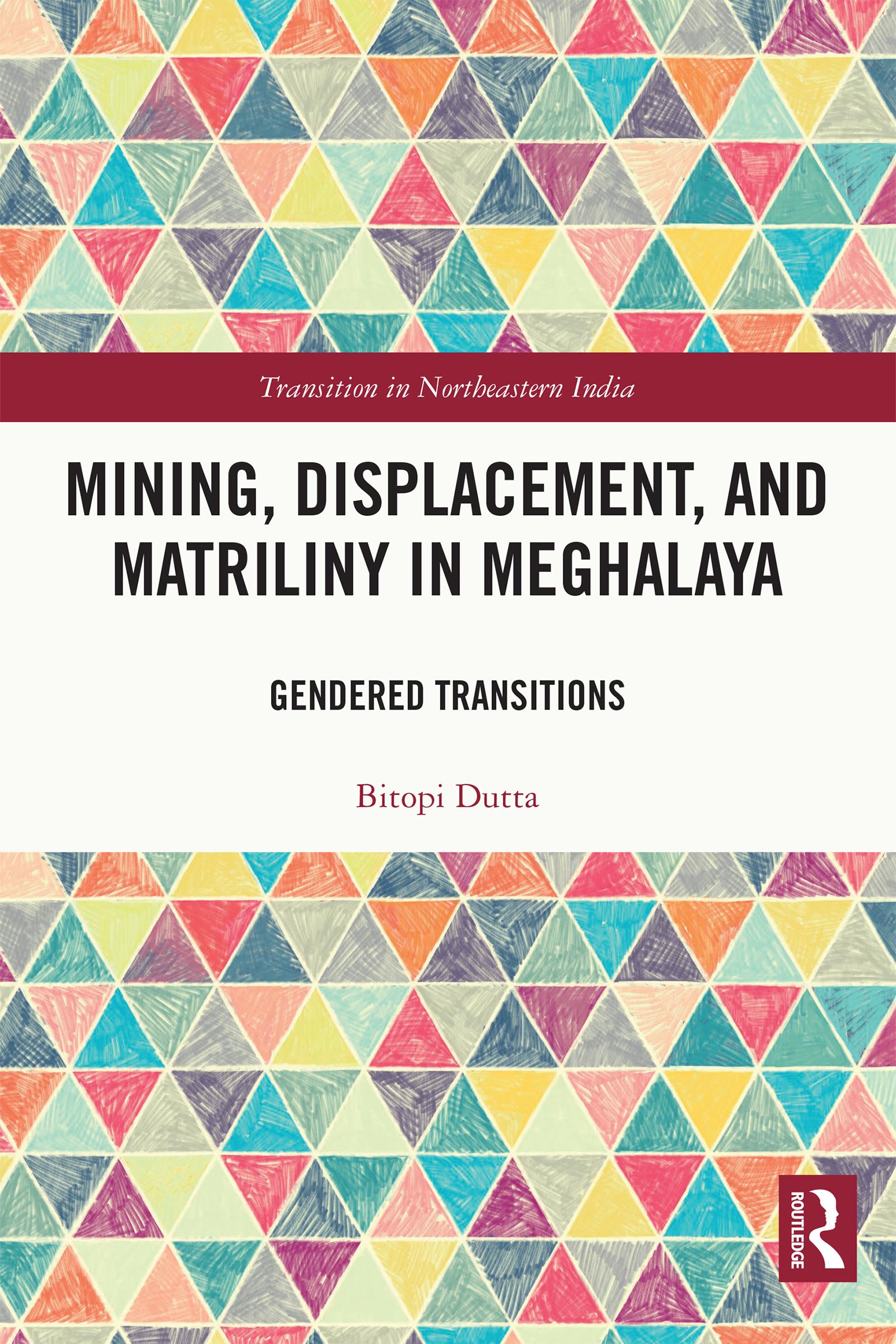
This book studies how Development-Induced Displacement (DID) radically restructures gender relations in indigenous tribal societies. Through an indepth case study of the Indian state of Meghalaya, one of the few matrilineal societies of the world, it analyses how people cope with conflicts in their perception of self, family, and society brought on by the transition from traditional modes of living to increased urbanisation, and how these experiences are different for men and women. It looks at the ways in which this gendered change is experienced inter-generationally in different contexts of people’s lives, including work and leisure activities. The book also investigates people’s attitudes towards matrilineal structures and their perception of change on matriliny where mining has played a role in building their view of their matrilineal tradition.
Drawing on extensive interviews with individuals directly affected by this phenomenon, the book, part of the Transition in Northeastern India series, makes a significant contribution to the study of DID. It will be useful for scholars and researchers of urbanisation, gender studies, Northeast India studies, development studies, minority studies, public policy, political studies, and sociology.
Paga facilmente con carta, Klarna, Apple Pay o Google Pay. Non sei soddisfatto? Hai sempre 14 giorni per il rimborso. Leggi di più nei nostri termini. Per qualsiasi domanda, scrivici a hello@memmo.org.
Memmo rende lo studio più facile, ovunque tu sia nel mondo. Qui trovi i tuoi libri di testo e strumenti di studio intelligenti, tutto in un unico posto: riassunti, quiz, podcast e flashcard. E poi c'è Ted, il tuo compagno di studio che risponde a ogni tua domanda. Oltre 50.000 studenti studiano già qui: è stato creato per aiutarti a imparare più velocemente e a stressarti meno.