
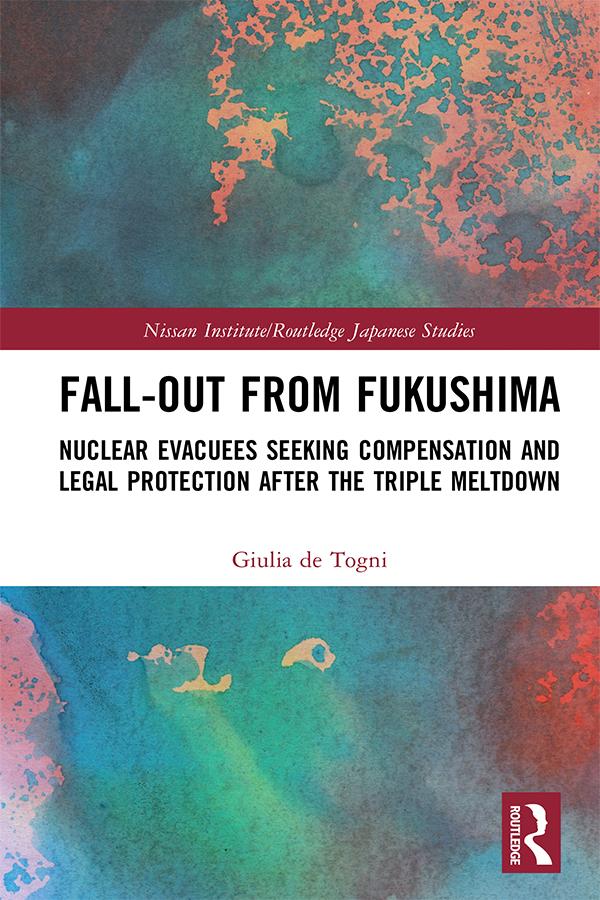
This book shows how the Fukushima plaintiffs have challenged narratives of safety and risk containment produced by TEPCO and the Japanese government through offering new empirical data on risk perceptions and life choices of some nuclear evacuees.
Considering the Fukushima evacuees’ disappearance from public discourse in Japan, the book engages with theoretical writings on risk, neoliberal governmentality and citizen science. Chapters draw on a wide range of anthropologically-related methodologies including socio-linguistics, participant observation, and qualitative interviews. Themes of self-governance, resistance, gender, kinship, class and social change surface throughout, setting the Fukushima experience in a broad historical, social, and comparative context. This is the first ethnographic account of the Fukushima litigation and the first extensive qualitative study documenting the worldviews and living conditions of nuclear evacuees who moved outside Fukushima Prefecture, with a particular focus on underrepresented groups (single mothers, elderly and disabled evacuees). The history of industrial disasters and the role of citizens in shaping environmental policy in Japan is also evaluated.
Fall-out from Fukushima sets out to be a manifesto for understanding and supporting post-nuclear disaster societies, and will appeal to students and scholars of social, legal, and linguistic anthropology, science and technology studies, as well as Japanese studies.
Paga facilmente con carta, Klarna, Apple Pay o Google Pay. Non sei soddisfatto? Hai sempre 14 giorni per il rimborso. Leggi di più nei nostri termini. Per qualsiasi domanda, scrivici a hello@memmo.org.
Memmo rende lo studio più facile, ovunque tu sia nel mondo. Qui trovi i tuoi libri di testo e strumenti di studio intelligenti, tutto in un unico posto: riassunti, quiz, podcast e flashcard. E poi c'è Ted, il tuo compagno di studio che risponde a ogni tua domanda. Oltre 50.000 studenti studiano già qui: è stato creato per aiutarti a imparare più velocemente e a stressarti meno.