
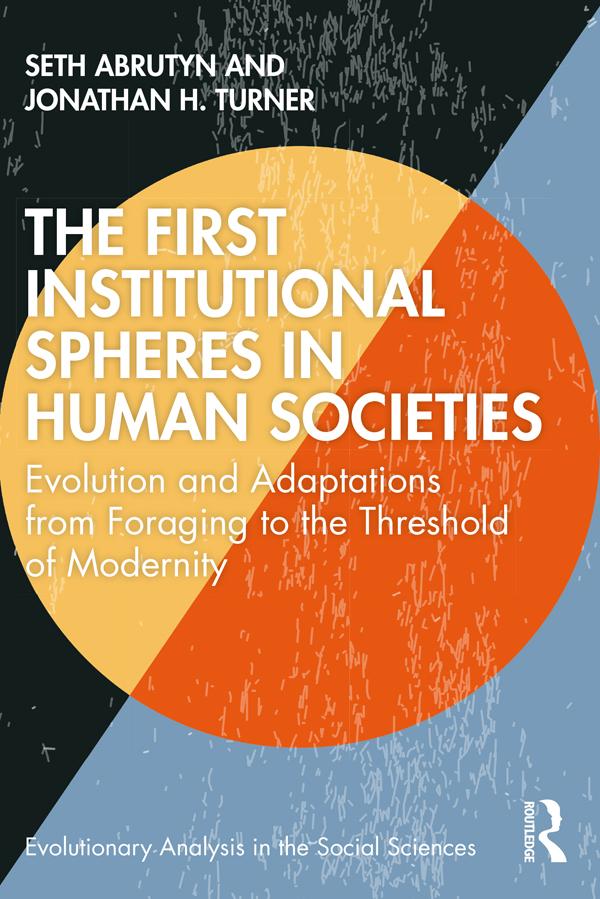
Few concepts are as central to sociology as institutions. Yet, like so many sociological concepts, institutions remain vaguely defined. This book expands a foundational definition of the institution, one which locates them as the basic building blocks of human societies—as structural and cultural machines for survival that make it possible to pass precious knowledge from one generation to the next, ensuring the survival of our species. The book extends this classic tradition by, first, applying advances in biological evolution, neuroscience, and primatology to explain the origins of human societies and, in particular, the first institutional sphere: kinship. The authors incorporate insights from natural sciences often marginalized in sociology, while highlighting the limitations of purely biogenetic, Darwinian explanations. Secondly, they build a vivid conceptual model of institutions and their central dynamics as the book charts the chronological evolution of kinship, polity, religion, law, and economy, discussing the biological evidence for the ubiquity of these institutions as evolutionary adaptations themselves.
Paga facilmente con carta, Klarna, Apple Pay o Google Pay. Non sei soddisfatto? Hai sempre 14 giorni per il rimborso. Leggi di più nei nostri termini. Per qualsiasi domanda, scrivici a hello@memmo.org.
Memmo rende lo studio più facile, ovunque tu sia nel mondo. Qui trovi i tuoi libri di testo e strumenti di studio intelligenti, tutto in un unico posto: riassunti, quiz, podcast e flashcard. E poi c'è Ted, il tuo compagno di studio che risponde a ogni tua domanda. Oltre 50.000 studenti studiano già qui: è stato creato per aiutarti a imparare più velocemente e a stressarti meno.