
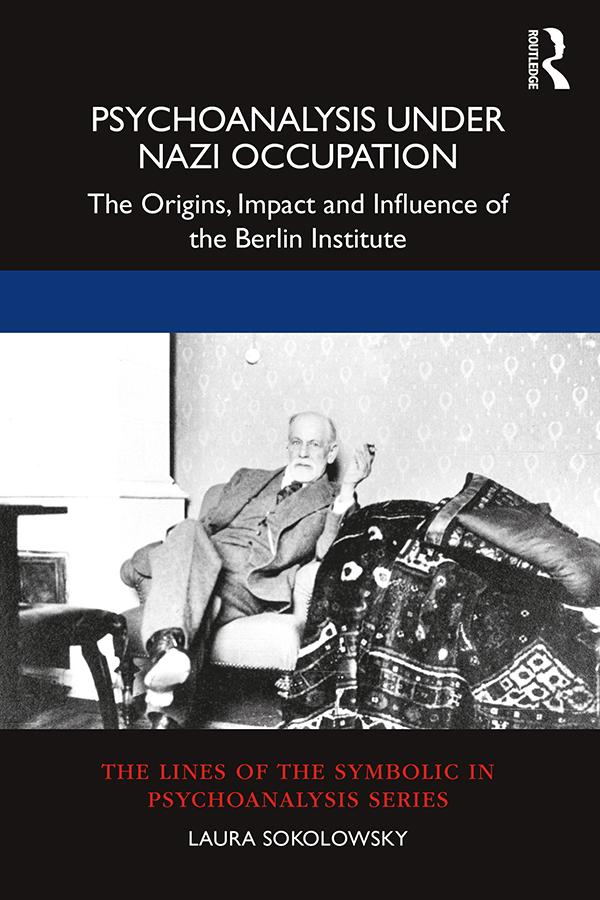
Laura Sokolowsky’s survey of psychoanalysis under Weimar and Nazism explores how the paradigm of a ‘psychoanalysis for all’ became untenable as the Nazis rose to power.
Mainly discussing the evolution of the Berlin Institute during the period between Freud’s creation of free psychoanalytic centres after the founding of the Weimar Republic and the Nazi seizure of power in 1933, the book explores the ideal of making psychoanalysis available to the population of a shattered country after World War I, and charts how the Institute later came under Nazi control following the segregation and dismissal of Jewish colleagues in the late 1930s. The book shows how Freudian standards resisted the medicalisation of psychoanalysis for purposes of adaptation and normalisation, but also follows Freud’s distinction between sacrifice (where you know what you have given up) and concession (an abandonment of position through compromise) to demonstrate how German psychoanalysts put themselves at the service of the fascist master, in the hope of obtaining official recognition and material rewards.
Discussing the relations of psychoanalysis with politics and ethics, as well as the origin of the Lacanian movement as a response to the institutionalisation of psychoanalysis during the Nazi occupation, this book is fascinating reading for scholars and practitioners of psychoanalysis working today.
Paga facilmente con carta, Klarna, Apple Pay o Google Pay. Non sei soddisfatto? Hai sempre 14 giorni per il rimborso. Leggi di più nei nostri termini. Per qualsiasi domanda, scrivici a hello@memmo.org.
Memmo rende lo studio più facile, ovunque tu sia nel mondo. Qui trovi i tuoi libri di testo e strumenti di studio intelligenti, tutto in un unico posto: riassunti, quiz, podcast e flashcard. E poi c'è Ted, il tuo compagno di studio che risponde a ogni tua domanda. Oltre 50.000 studenti studiano già qui: è stato creato per aiutarti a imparare più velocemente e a stressarti meno.