
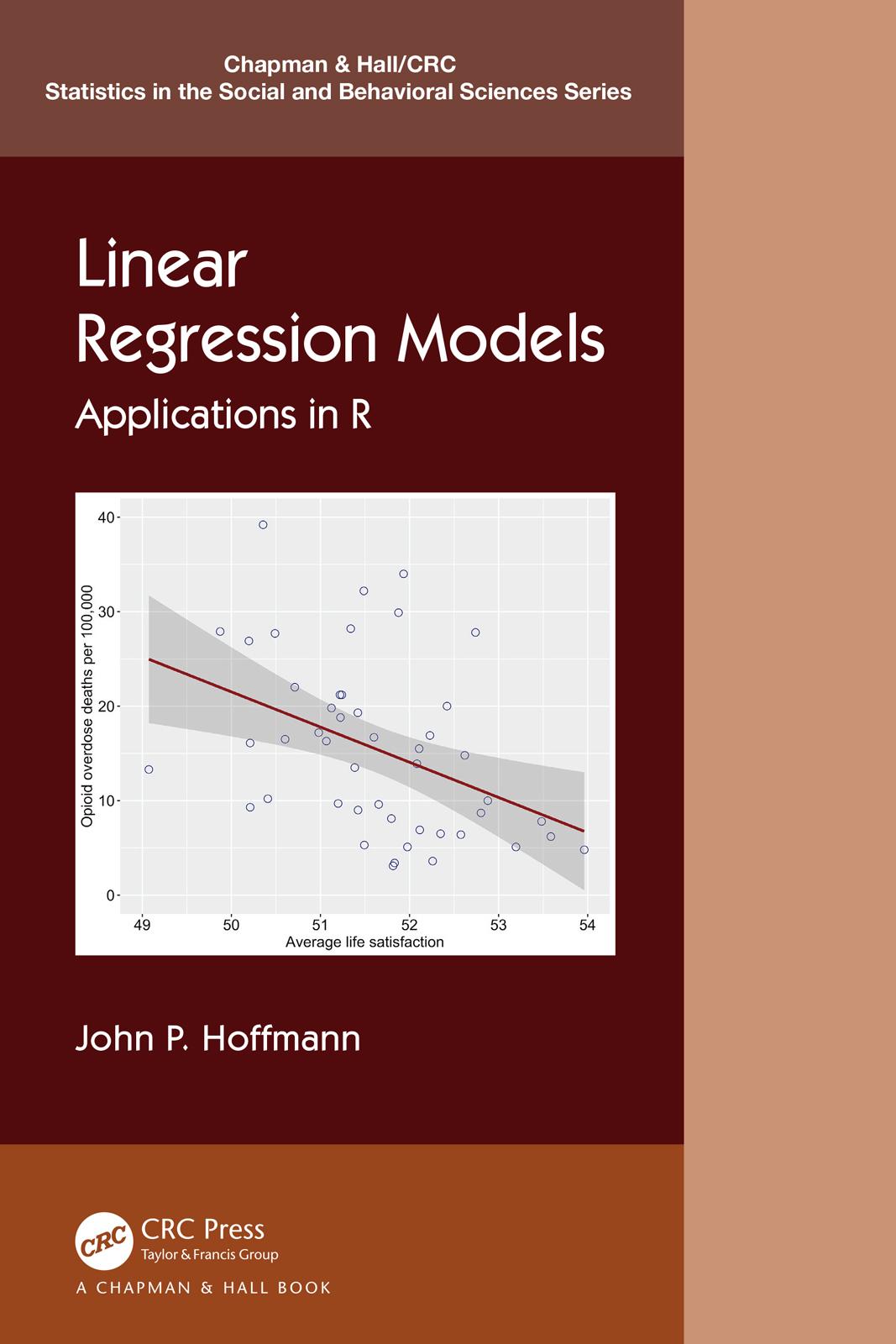
Research in social and behavioral sciences has benefited from linear regression models (LRMs) for decades to identify and understand the associations among a set of explanatory variables and an outcome variable. Linear Regression Models: Applications in R provides you with a comprehensive treatment of these models and indispensable guidance about how to estimate them using the R software environment.
After furnishing some background material, the author explains how to estimate simple and multiple LRMs in R, including how to interpret their coefficients and understand their assumptions. Several chapters thoroughly describe these assumptions and explain how to determine whether they are satisfied and how to modify the regression model if they are not. The book also includes chapters on specifying the correct model, adjusting for measurement error, understanding the effects of influential observations, and using the model with multilevel data. The concluding chapter presents an alternative model—logistic regression—designed for binary or two-category outcome variables. The book includes appendices that discuss data management and missing data and provides simulations in R to test model assumptions.
Features
- Furnishes a thorough introduction and detailed information about the linear regression model, including how to understand and interpret its results, test assumptions, and adapt the model when assumptions are not satisfied.
- Uses numerous graphs in R to illustrate the model’s results, assumptions, and other features.
- Does not assume a background in calculus or linear algebra, rather, an introductory statistics course and familiarity with elementary algebra are sufficient.
- Provides many examples using real-world datasets relevant to various academic disciplines.
- Fully integrates the R software environment in its numerous examples.
The book is aimed primarily at advanced undergraduate and graduate students in social, behavioral, health sciences, and related disciplines, taking a first course in linear regression. It could also be used for self-study and would make an excellent reference for any researcher in these fields. The R code and detailed examples provided throughout the book equip the reader with an excellent set of tools for conducting research on numerous social and behavioral phenomena.
John P. Hoffmann is a professor of sociology at Brigham Young University where he teaches research methods and applied statistics courses and conducts research on substance use and criminal behavior.
Paga facilmente con carta, Klarna, Apple Pay o Google Pay. Non sei soddisfatto? Hai sempre 14 giorni per il rimborso. Leggi di più nei nostri termini. Per qualsiasi domanda, scrivici a hello@memmo.org.
Memmo rende lo studio più facile, ovunque tu sia nel mondo. Qui trovi i tuoi libri di testo e strumenti di studio intelligenti, tutto in un unico posto: riassunti, quiz, podcast e flashcard. E poi c'è Ted, il tuo compagno di studio che risponde a ogni tua domanda. Oltre 50.000 studenti studiano già qui: è stato creato per aiutarti a imparare più velocemente e a stressarti meno.