
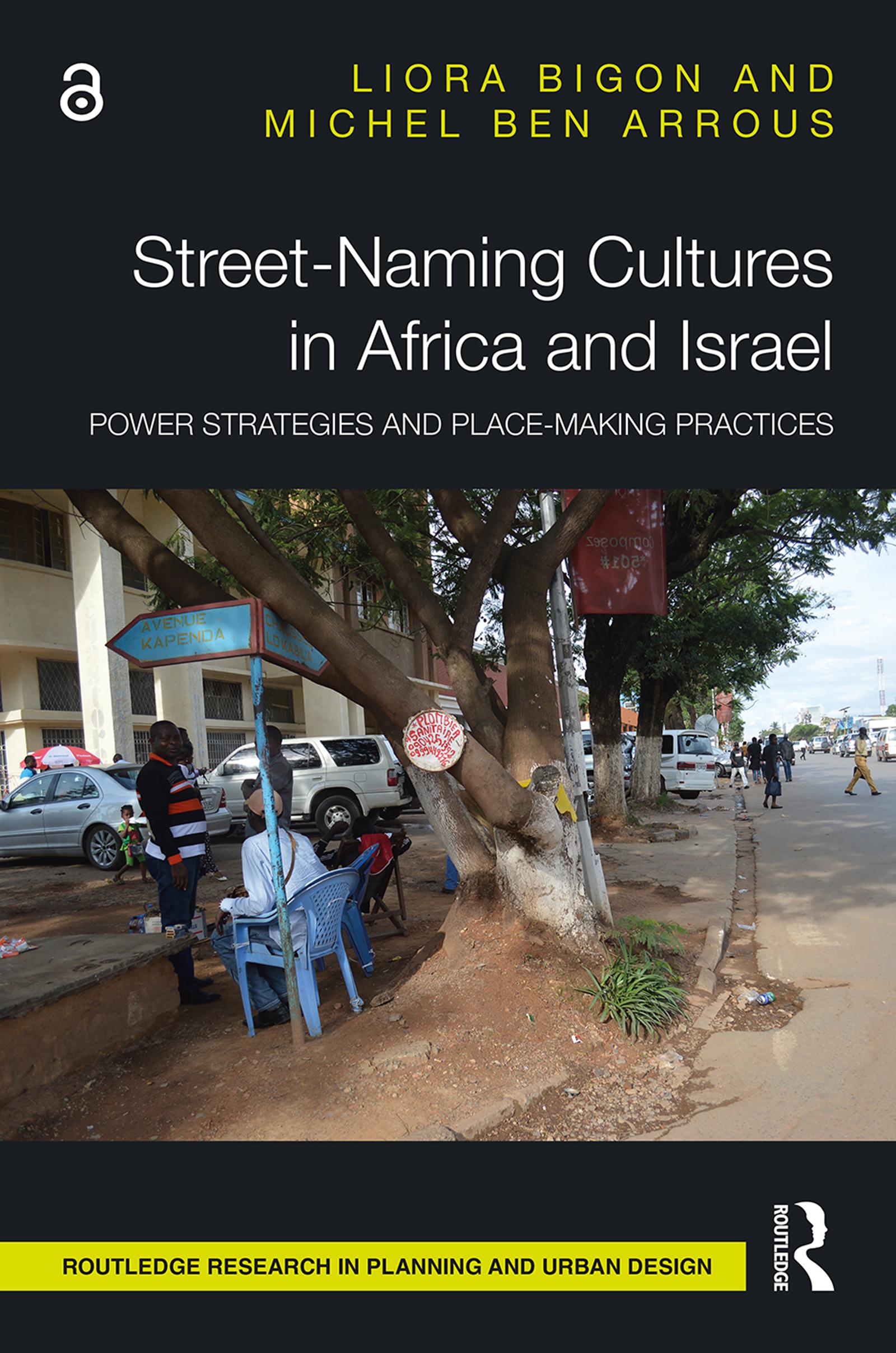
This book is focused on the street-naming politics, policies and practices that have been shaping and reshaping the semantic, textual and visual environments of urban Africa and Israel. Its chapters expand on prominent issues, such as the importance of extra-formal processes, naming reception and unofficial toponymies, naming decolonisation, place attachment, place-making and the materiality of street signage. By this, the book directly contributes to the mainstreaming of Africa’s toponymic cultures in recent critical place-names studies. Unconventionally and experimentally, comparative glimpses are made throughout between toponymic experiences of African and Israeli cities, exploring pioneering issues in the overwhelmingly Eurocentric research tradition. The latter tends to be concentrated on Europe and North America, to focus on nationalistic ideologies and regime change and to over-rely on top-down ‘mere’ mapping and street indexing. This volume is also unique in incorporating a rich and stimulating variety of visual evidence from a wide range of African and Israeli cities. The materiality of street signage signifies the profound and powerful connections between structured politics, current mundane practices, historical traditions and subaltern cultures.
Street-Naming Cultures in Africa and Israel is an important contribution to urban studies, toponymic research and African studies for scholars and students.
Chapters 1 and 2 of this book are freely available as a downloadable Open Access PDF under a Creative Commons Attribution-Non Commercial-No Derivatives 4.0 license available at http://www.taylorfrancis.com/books/e/9781003173762
Paga facilmente con carta, Klarna, Apple Pay o Google Pay. Non sei soddisfatto? Hai sempre 14 giorni per il rimborso. Leggi di più nei nostri termini. Per qualsiasi domanda, scrivici a hello@memmo.org.
Memmo rende lo studio più facile, ovunque tu sia nel mondo. Qui trovi i tuoi libri di testo e strumenti di studio intelligenti, tutto in un unico posto: riassunti, quiz, podcast e flashcard. E poi c'è Ted, il tuo compagno di studio che risponde a ogni tua domanda. Oltre 50.000 studenti studiano già qui: è stato creato per aiutarti a imparare più velocemente e a stressarti meno.