
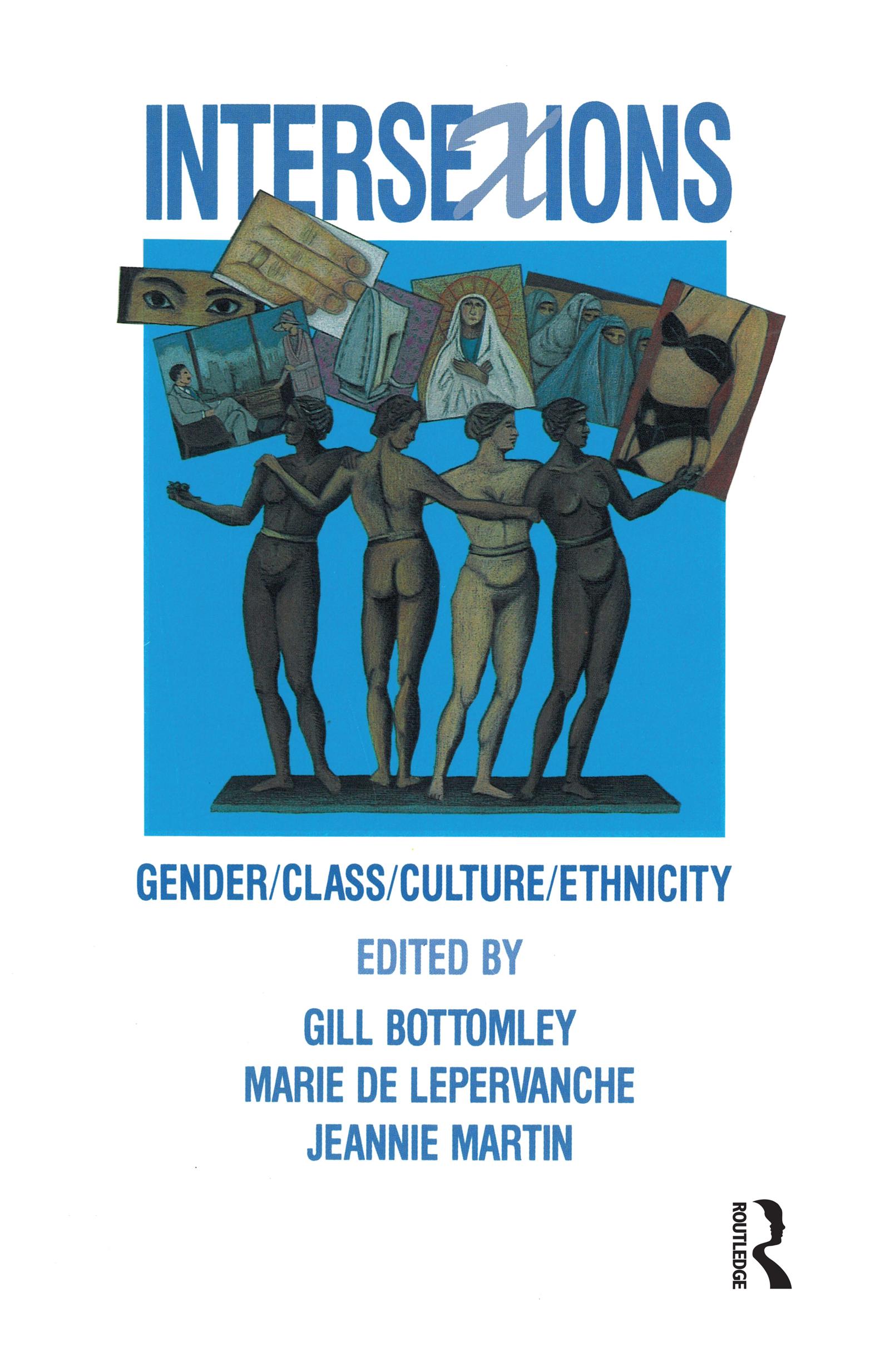
Do writings about ethnicity, class and gender form a 'holy trinity' or challenge previous unidimensional analyses?
Intersexions accepts the triple perspective but goes further. One aim is to understand the processes by which relations of power are maintained, reproduced and resisted. Intersexions also examines modes of representation: within social theory, feminism, development theory and discussions of capitalism and postcolonialism, as well as dominant ideological notions of caste, domesticity and 'success'.
The writers' approaches are all critical but concerned also with providing alternatives. Comparative and specific analyses are combined, attention is paid to the written and spoken material of the people 'represented' and their own positions as commentators examined. Topics range from discussions of family ideology and paid and domestic work, to analyses of writings by Aboriginals, Vanuatuans and second generation Greek Australians and critiques of the cultural construction of gender and ethnicity in Bangladesh, India and Indonesia.
Themes recur and overlap. Unitary categories are questioned and the processes by which relations described as 'class', 'ethnic', 'cultural' and 'gender' intersect and interact are demonstrated.
Paga facilmente con carta, Klarna, Apple Pay o Google Pay. Non sei soddisfatto? Hai sempre 14 giorni per il rimborso. Leggi di più nei nostri termini. Per qualsiasi domanda, scrivici a hello@memmo.org.
Memmo rende lo studio più facile, ovunque tu sia nel mondo. Qui trovi i tuoi libri di testo e strumenti di studio intelligenti, tutto in un unico posto: riassunti, quiz, podcast e flashcard. E poi c'è Ted, il tuo compagno di studio che risponde a ogni tua domanda. Oltre 50.000 studenti studiano già qui: è stato creato per aiutarti a imparare più velocemente e a stressarti meno.